
This post contains affiliate links. As an Amazon Associate, Millennial Skin earns from qualifying purchases at no extra cost to you.
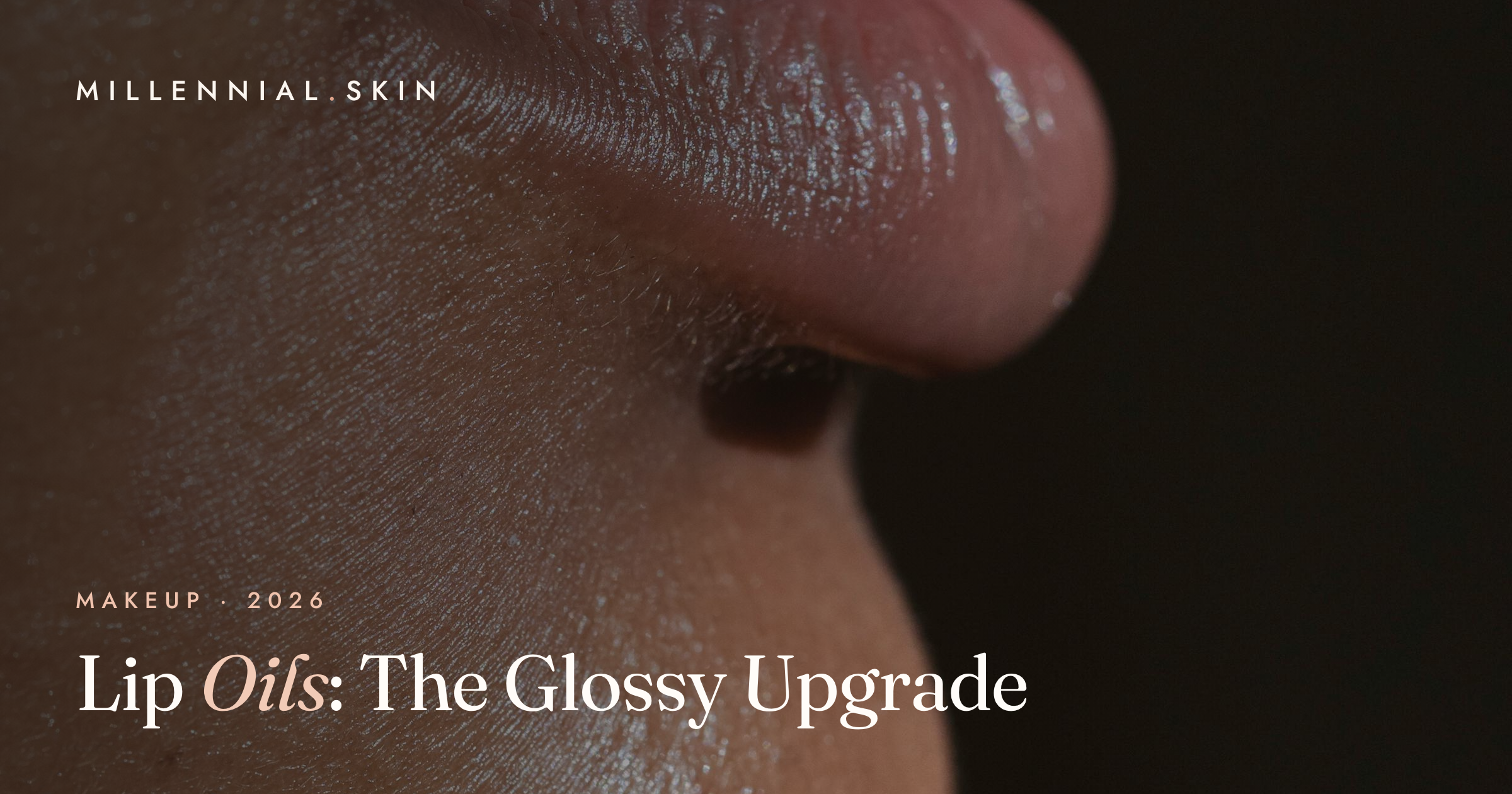
If your lip routine still involves a sticky gloss that rips off every time you touch your coffee cup, you’re behind the curve. Lip oil quietly overtook traditional lip gloss as the go-to glossy finish in 2026 — and once you understand what it actually does, the swap makes total sense. It’s glossy, it’s nourishing, and it does not stick to your hair. Here’s everything you need to know.
What is a lip oil?
A lip oil is a lip product formulated with a base of nourishing plant oils — think jojoba, castor, rosehip, or vitamin E — designed to deliver glossy shine while conditioning the lips at the same time. Unlike traditional gloss, which achieves its shine through thick, sticky polymers, lip oil gets there with lightweight oils that absorb rather than sit on the surface. The result: a glossy, glass-lip finish that actually feels comfortable to wear all day.
Lip oil vs. lip gloss vs. lip balm: what’s the difference?
All three products aim to make your lips look and feel better, but they work in completely different ways. Here’s the at-a-glance breakdown:
| Product type | What it does |
|---|---|
| Lip oil | Glossy shine + nourishing oils, non-sticky |
| Lip gloss | High shine, often tacky |
| Lip balm | Seals and heals, low shine |
| Tinted lip oil | Sheer color + conditioning care |
The key differentiator is the formula. Gloss relies on adhesives and thick gels to create shine; lip oil uses the reflective properties of the oils themselves. That’s why lip oil moves with you instead of grabbing onto everything in a ten-foot radius.
Do lip oils actually hydrate your lips?
Yes — with one honest caveat. Lip oils are genuinely nourishing because most are built on oils (jojoba, vitamin E, castor, rosehip) that condition and soften the lip tissue. They’re not an occlusive treatment like a thick balm, so they won’t repair severely cracked lips on their own. But for everyday maintenance and conditioning, they do more real work than a traditional gloss, which sits on top without feeding the skin at all. Think of lip oil as the glossy hybrid that actually earns its place in your bag.
Tinted vs. clear lip oil: which should you choose?
Clear lip oils are the purest version of the format: maximum shine, zero color commitment, easy to layer over anything. They’re ideal if you want to throw one product on and go, or if you prefer to build your lip look in other ways. Tinted lip oils add a sheer wash of color — usually a soft pink, berry, or nude — that looks “your lips but better” while delivering the same nourishing benefits. They’ve become one of the most-loved finishes among the most popular makeup brands right now, from luxury to drugstore. If you’re unsure where to start, choose a tinted version close to your natural lip color — it’s the most flattering and the most forgiving.
Who are lip oils actually for?
Honestly? Almost everyone. Lip oils are the rare makeup-meets-skincare product that flatters a wide range of skin tones, ages, and lip types. They’re especially well suited for:
- Dry or dehydrated lips: the oils condition while you wear them, so you’re treating and looking good at the same time.
- Mature lips: the non-sticky formula doesn’t feather or bleed into fine lines the way traditional gloss can. If that’s a concern, our guide on why makeup cracks at fine lines and how to fix it is worth a read before you apply.
- Minimal-makeup people: a tinted lip oil is a complete one-step lip look with no other products required.
- Gloss lovers who hate the stick: same payoff, none of the grip.
The best lip oils to try in 2026
From the luxury counter to the drugstore aisle, these four lip oils cover every budget and preference.
| Product | Best for |
|---|---|
| Dior Lip Glow Oil | Luxury treat — the formula that started the trend |
| e.l.f. Glow Reviver Lip Oil | Best drugstore option, fraction of the price |
| Kosas Wet Lip Oil Plumping Treatment Gloss | Plumping and treatment benefits in one |
| NYX Fat Oil Lip Drip | Trendy shades at a drugstore price point |
How to layer a lip oil with liner or lipstick without sliding
Lip oil over liner or lipstick is one of the best combos in your routine — but there’s a right way to do it. First, apply your liner or lipstick and let it set completely (30 seconds for satin formulas, a full minute for matte). Then tap — don’t swipe — a small amount of lip oil over the center of your lips and press them together gently. Tapping rather than dragging keeps your liner crisp and stops the oil from pushing pigment around. One more thing: less is more. A light layer gives you the glossy payoff without turning your liner into a blur. If you over-apply, blot once with a tissue and you’re back to perfect.
When is a lip balm still the better choice?
Lip oil wins on daily wearability and gloss, but lip balm still has its lane. If your lips are cracked, peeling, or severely dry, reach for a thick balm with occlusive ingredients (like petrolatum or shea butter) at night — it’ll seal in moisture and repair the barrier in a way a lightweight oil can’t. Balm is also the better call right before bed, when you want maximum overnight recovery with zero product migration. The smartest routine: balm overnight, lip oil during the day.
Lip oil FAQ
Can you wear lip oil over lipstick?
Yes — applying a dab of lip oil over lipstick gives it a glossy, dimensional finish. Tap it on rather than swiping to keep your lip color in place.
Do lip oils make your lips look bigger?
The shine creates an optical illusion of fullness, similar to gloss. Some formulas (like the Kosas Wet Lip Oil) add a plumping ingredient for extra lift beyond just the visual effect.
How long does lip oil last on the lips?
About 1–3 hours of visible gloss, depending on eating and drinking. It’s easy to reapply — and because the formula is non-sticky, reapplying mid-day feels like a treat rather than a chore.
Is lip oil safe to use every day?
Yes. Most lip oils are formulated with gentle, skin-safe oils and are completely fine for daily use. Check the ingredient list if you have a nut allergy, since some formulas use almond or hazelnut oil.
What’s the difference between lip oil and lip serum?
Lip oils focus on shine and daily conditioning; lip serums typically target specific concerns like deep hydration, plumping, or fading lip lines with active ingredients. They’re complementary — layer serum first, oil on top.
Can I use lip oil as a makeup primer?
It can work as a light base for tinted products, but use just a thin layer and let it absorb for a minute first. A heavy application before liner or lipstick will cause sliding.
The bottom line: lip oil is the glossy upgrade your routine has been waiting for — it gives you the shine of a gloss without the stick, while actually conditioning your lips in the process. Start with a tinted version close to your natural shade and layer it over a balm on nights when your lips need extra love.
Leave a Reply