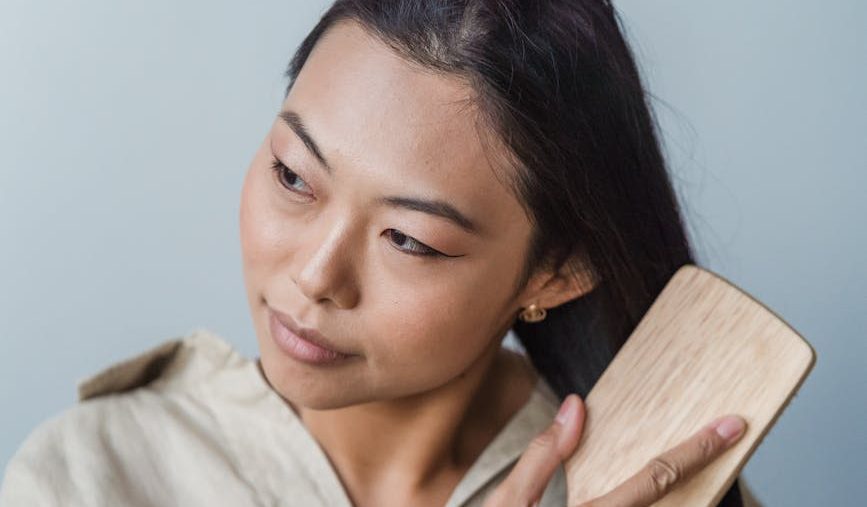
Brushing wet hair has long been considered damaging, but modern hair science shows the issue isn’t moisture—it’s friction, tension, and tool choice. Understanding how hair behaves when wet explains why wet brushes exist, how they work differently, and when brushing damp hair can actually reduce breakage rather than cause it.
Why Wet Hair Is More Vulnerable Than Dry Hair
Hair undergoes significant structural change when it becomes wet. Water penetrates the hair shaft, causing it to swell and stretch as hydrogen bonds temporarily break and reform. In this state, hair is more elastic but also more fragile, meaning it can stretch farther before snapping—often without obvious warning. This increased flexibility makes wet hair especially susceptible to mechanical damage when pulled, twisted, or brushed aggressively. The outer cuticle layer, which protects the inner cortex, lifts slightly when wet, increasing friction between strands. This is why improper brushing on wet hair has historically led to breakage, fraying, and split ends. The vulnerability isn’t caused by water itself, but by how force is applied while the hair structure is temporarily altered.

What a Wet Brush Is Designed to Do Differently
A wet brush is engineered to accommodate the physical properties of damp hair rather than fight against them. The defining feature is flexible, widely spaced bristles that bend and release under tension instead of pulling hair taut. This flexibility allows resistance to be distributed across strands rather than concentrated at a single point, reducing snap-related damage. Many wet brushes also have rounded or softened bristle tips that glide over lifted cuticles rather than catching them. The result is less friction, fewer tangles turning into knots, and reduced stress on the hair shaft. The brush doesn’t make wet hair invincible—it simply lowers the mechanical forces that cause damage during detangling.
Why Traditional Brushes Increase Breakage on Damp Hair
Traditional brushes were designed for dry, stable hair structures, not for hair in its most elastic state. Firm bristles and densely packed designs don’t adapt to resistance, which means the hair absorbs the full force of pulling. On wet hair, this often leads to overextension, especially at weak points along the shaft where breakage is most likely to occur. The lifted cuticle catches more easily, creating micro-tears that weaken the hair over time even if breakage isn’t immediately visible. This is why the old advice to never brush wet hair developed—it was based on using the wrong tools for the job, not on an inherent flaw in brushing damp hair itself.
How a Wet Brush Supports Healthier Detangling Over Time
Using a wet brush encourages gentler detangling habits that benefit hair long term. Because the brush releases tension instead of forcing it through knots, users are less likely to tug, rush, or apply excessive pressure. This reduces cumulative mechanical stress, one of the primary contributors to hair thinning and breakage over time. When paired with conditioner or leave-in products that improve slip, a wet brush can significantly reduce daily wear on hair strands. This is especially important for people with longer hair, textured hair, or hair prone to tangling, where repeated pulling compounds damage. Over time, minimizing mechanical stress preserves strand integrity, resulting in hair that retains length and strength more effectively.
Who Benefits Most From Using a Wet Brush
While wet brushes are marketed broadly, certain hair types benefit more than others. Hair that is fine, color-treated, chemically processed, or naturally textured tends to be more vulnerable to breakage and therefore gains the most protection from flexible bristle design. Curly and wavy hair, which tangles more easily when wet, often responds better to detangling methods that respect elasticity rather than resist it. People experiencing shedding, postpartum changes, or stress-related hair fragility may also benefit from reducing tension during detangling. However, even resilient hair types experience cumulative damage over time, making gentler tools a preventative measure rather than a corrective one.
A More Realistic Way to Think About Brushing Wet Hair
The question isn’t whether brushing wet hair is “good” or “bad”—it’s whether the method matches the biology. Hair damage is driven primarily by tension, friction, and repetition. Wet brushing, when done with the right tool and a patient approach, reduces those stressors rather than amplifying them. That doesn’t mean aggressive brushing on soaking-wet hair is harmless, nor does it mean everyone must brush immediately after washing. It means modern hair tools exist because our understanding of hair structure has evolved. When brushing respects how hair behaves in different states, it becomes a supportive habit rather than a damaging one. Hair health is less about rigid rules and more about using tools that work with the material rather than against it.
This post is for informational purposes only and isn’t a substitute for professional medical guidance. As an Amazon Associate, I earn from qualifying purchases – at no cost to you!
Leave a Reply