
This post contains affiliate links. As an Amazon Associate, Millennial Skin earns from qualifying purchases at no extra cost to you.
If your Pinterest and TikTok feeds have been full of luminous, barely-there white nails lately, you’ve already spotted milk bath nails — the soft, sheer-milky manicure that’s become the quiet-luxury nail trend of 2026. Here’s exactly what they are, how to nail the finish at home, which products actually deliver, and how to keep them looking seamless instead of patchy.
What are milk bath nails?
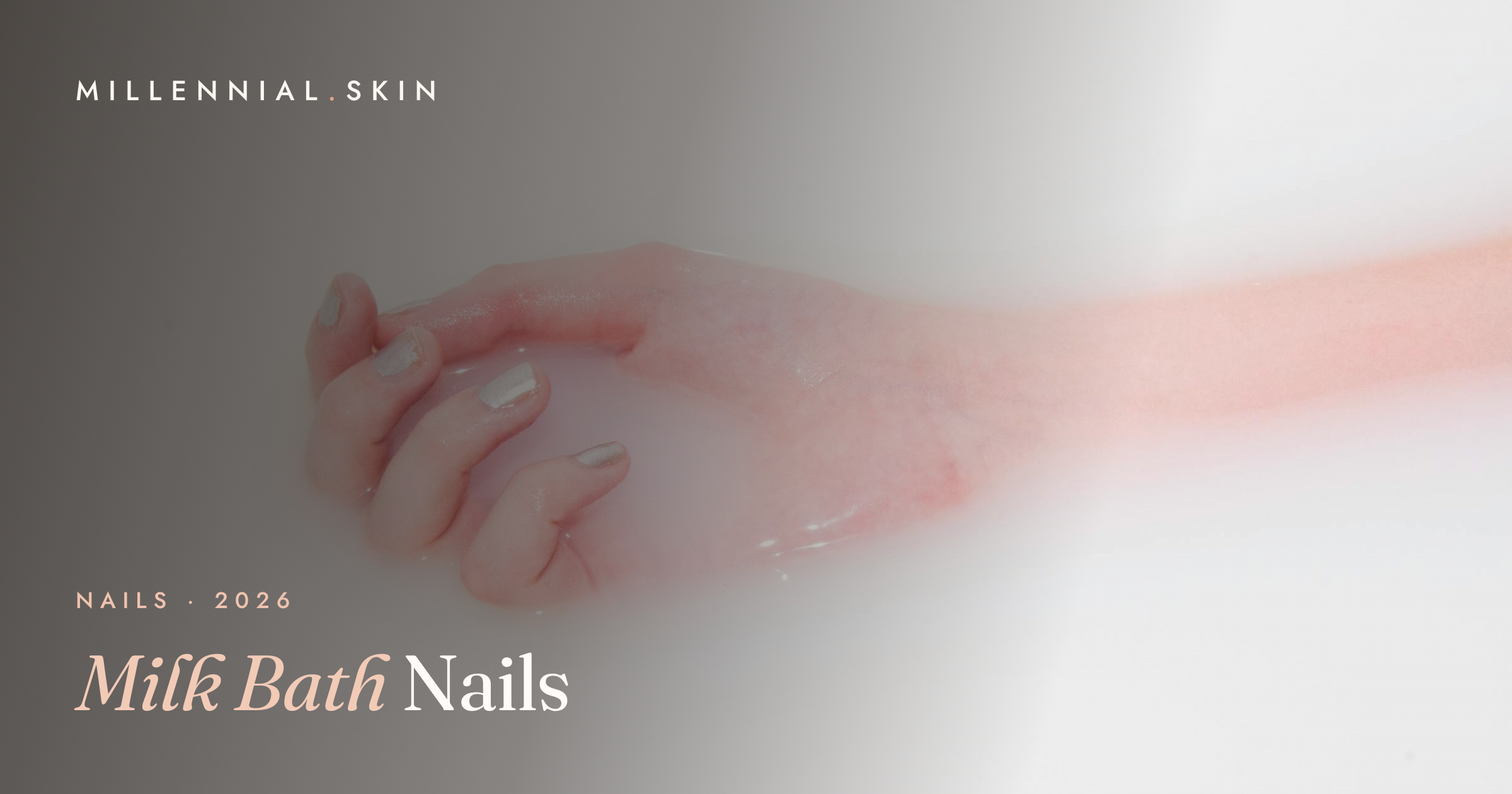
Milk bath nails are a sheer, translucent white manicure that mimics the soft, opaque look of milky water — think warm bathwater with a splash of whole milk. The finish lands somewhere between a classic French and a barely-there nude: not crisp white, not bare, but a soft, glowing in-between. The name comes from the dreamy, slightly cloudy quality of the color when built up in thin layers. Some versions add tiny dried florals or foil flakes pressed into the gel for an ethereal touch, but the base finish alone has made this one of the most-searched nail looks of the year.
What does the at-a-glance breakdown look like?
Here’s everything you need to know about milk bath nails before you reach for the polish:
| Feature | Milk bath nails |
|---|---|
| Finish | Soft, sheer milky white — translucent, not opaque |
| Technique | Thin layers built up gradually for depth and glow |
| Best for skin tones | Universally flattering; warmer tones benefit from a cream-tinted base |
| DIY-friendly? | Yes — regular polish or gel both work at home |
| Common add-ons | Pressed flowers, foil flakes, or micro pearls (optional) |
| Longevity | Up to 2 weeks with gel; 5–7 days with regular polish |
How do you build a sheer, milky finish at home?
The key to a milk bath manicure is patience with your layers — this is not a one-coat look. Start with a clear base coat to protect your natural nail and give the color something to grip. Apply your first sheer white coat in a thin, even stroke and let it dry completely before adding the next. Two to three thin coats will build that soft, milky depth without turning chalky or streaky. If you’re using a regular polish like Essie Marshmallow or OPI Funny Bunny, the sheer formula is the point — don’t try to build full opacity. Seal with a glossy top coat for that luminous finish, and reapply the top coat every two to three days to extend wear. For a complete step-by-step nail prep ritual, our guide on how to do a manicure and pedicure the right way covers everything from shaping to cuticle care.
Do milk bath nails work on every skin tone?
They do — and this is one of the reasons the trend has staying power. The translucency means your natural nail tone shows through, which actually customizes the look to your skin. On deeper skin tones, the milky white creates a soft contrast that reads chic and modern. On lighter skin tones, it gives a barely-there, clean effect. If you have warmer undertones and want a creamier, less stark result, choose a sheer white with yellow-toned warmth (like Essie Marshmallow) rather than a bright, cool white. For cooler or neutral undertones, OPI Funny Bunny’s crisp sheerness is a near-perfect match.
How do you keep milk bath nails from looking patchy?
Patchiness is the most common milk bath nail problem, and it almost always comes down to technique rather than the polish itself. Here’s what prevents it:
- Start with a clean, dry nail. Any oil or moisture left on the nail plate will cause sheer polish to skip and streak. Wipe each nail with a nail dehydrator or rubbing alcohol before your base coat.
- Use thin coats, not thick ones. A thick coat of sheer white doesn’t dry evenly — it pools at the edges and drags in the middle.
- Let each coat dry fully. Applying a second coat over a tacky first coat is the fastest route to a bubbly, uneven result.
- Wrap the tips. Swipe the brush across the very edge of your nail at the end of each coat. This seals the tip and dramatically extends wear.
Can you add florals or pressed accents?
Absolutely — and this is where the look becomes truly gallery-worthy. After your final color coat is dry but before your top coat, use tweezers to place tiny dried flowers, foil flakes, or micro pearls exactly where you want them. Gently press them flat with a dotting tool or the back of a tweezer. Then seal everything with a thick layer of glossy top coat (or a no-wipe gel top coat if you’re doing gel). The accent goes under the top coat, not on top, so it doesn’t snag or lift. Start with one accent nail per hand if you’re new to the technique — it’s a small detail that makes a big impact.
The best milk bath nail products to try in 2026
These four picks cover every approach — classic polish, gel, and the lamp to cure it all at home.
| Product | Best for |
|---|---|
| Essie Nail Polish in Marshmallow | Warm, creamy sheer white for regular polish fans |
| OPI Funny Bunny | Crisp, cool-toned sheer white — the classic salon choice |
| Beetles Sheer White Gel Polish | Longer-wearing gel with a true milky finish |
| SUNUV UV LED Nail Lamp | At-home gel curing — compact, fast, and genuinely reliable |
How to make your milk bath manicure last longer
A few simple habits will push your manicure from four days to a full week — or two weeks with gel. Always apply a fresh top coat every two to three days; this alone is the biggest wear-extender most people skip. Keep your hands moisturized but apply hand cream away from the nail edge so it doesn’t lift the polish. Wear gloves for dishes and cleaning, because hot water and soap are a manicure’s worst enemies. If you notice a small chip at the tip, file it smooth and dab on a drop of top coat to reseal before it peels further. And if you’re curious how milk bath nails compare to other clean, sculpted looks, our breakdown of Russian manicures is worth a read — both trends prioritize a precise, polished base.
Milk bath nails FAQ
Are milk bath nails the same as a French manicure?
No. A French manicure has a distinct white tip over a natural or pink base. Milk bath nails coat the entire nail in a single sheer, milky white with no visible tip line — the effect is softer and more blended from cuticle to edge.
How many coats does the milk bath look need?
Plan on two to three thin coats over a base coat. One coat is usually too sheer to read; four or more coats can turn chalky rather than milky. Two coats is the sweet spot for most formulas.
Can I do milk bath nails with regular polish instead of gel?
Yes, and many people prefer it. Essie Marshmallow and OPI Funny Bunny are both regular polish formulas that were practically made for this look. You’ll get 5–7 days of wear with good prep and a midweek top coat refresh.
Do milk bath nails work on short nails?
They actually shine on shorter nails. The soft, neutral tone makes short nails look clean and intentional rather than blunt, and the sheer finish won’t draw attention to any uneven length.
How do I remove gel milk bath nails at home?
Soak a cotton pad in acetone, press it onto each nail, and wrap with foil for 10–15 minutes. The gel will soften and lift cleanly without hard scraping, which protects your natural nail. Follow immediately with cuticle oil to rehydrate.
Can I mix milk bath nails with nail art?
Yes — the sheer white base is a canvas, not a finished look. Tiny dried florals, foil flakes, chrome powder, or a single metallic accent nail all layer beautifully over the milky base without looking overdone.
The bottom line: milk bath nails are the rare trend that’s both minimalist and detailed — a sheer, luminous white that’s quiet enough for every day but polished enough to feel intentional. Build in thin layers, seal with a glossy top coat, and press in a dried flower if you’re feeling it. It’s one of the easiest salon-quality looks to recreate at home in 2026.
Leave a Reply