
This post contains affiliate links. As an Amazon Associate, Millennial Skin earns from qualifying purchases at no extra cost to you.
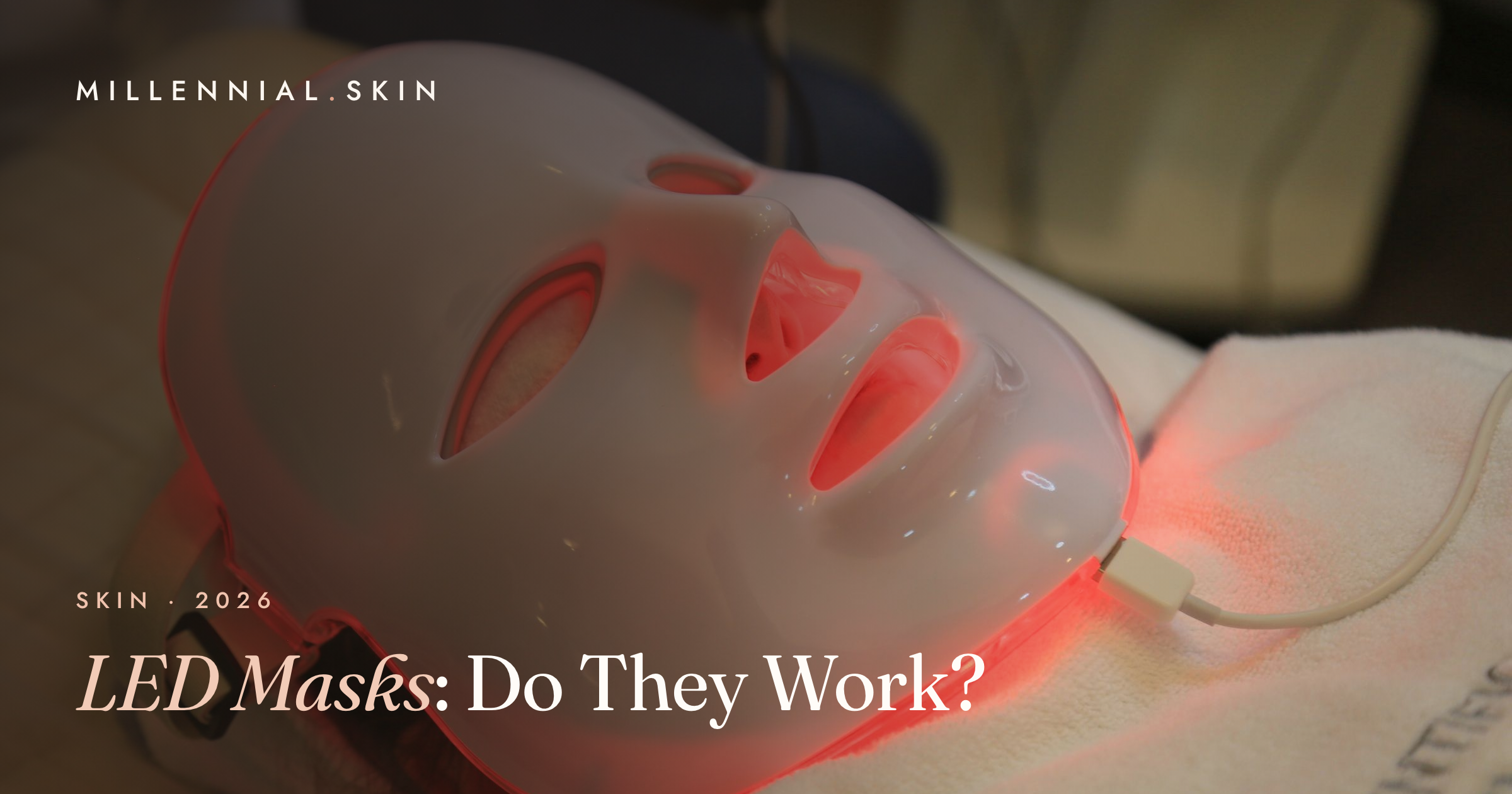
If you’ve scrolled past a glowing, sci-fi-looking face mask on your social feed and wondered whether LED light therapy masks are genuinely worth adding to your routine — or just expensive mood lighting — you’re in the right place. The short answer: there’s real science behind them, results are genuine but modest, and what you get out depends almost entirely on consistency and choosing a quality device. Here’s everything you need to know before you buy.
What are LED light therapy masks, and how do they work?
LED stands for light-emitting diode. These masks emit specific wavelengths of light that penetrate the skin at different depths and trigger different cellular responses — no UV radiation, no heat damage, just controlled, targeted light. Dermatologists have used medical-grade LED panels in-office for decades; at-home masks bring a lower-powered version of that same technology to your bathroom counter. The light doesn’t burn anything; it signals your skin cells to behave differently, which is what makes the therapy both gentle and cumulative.
What does each light color actually target?
This is the core of the technology. Different wavelengths penetrate to different depths and trigger distinct responses. Here’s the at-a-glance breakdown:
| Light color | What it targets |
|---|---|
| Red (630–660 nm) | Collagen production, skin firmness, fine lines, anti-aging |
| Blue (415–430 nm) | Acne-causing bacteria (C. acnes), breakout reduction |
| Near-infrared (800–850 nm) | Deeper tissue repair, inflammation, amplifies red light effects |
| Yellow / amber | Redness, rosacea calming (less common in consumer masks) |
Most consumer masks lead with red and blue; higher-end models add near-infrared, which enhances the depth of penetration and may improve overall results.
What does the research actually say?
The honest summary: LED light therapy has genuine scientific support, but the evidence is strongest for professional-grade devices. Red light’s case is clearest — multiple clinical studies show that consistent red-light exposure stimulates fibroblasts (the cells that manufacture collagen), resulting in measurable improvements in skin firmness and fine lines after 8–12 weeks of use. Supporting collagen from the inside at the same time is smart strategy; our guide to collagen gummies and what they actually deliver covers the internal angle. Blue light for acne is also well-documented: it activates porphyrins inside acne bacteria, destroying them without antibiotics or harsh topicals.
The important caveat: most strong trial data comes from medical devices operating at energy densities far higher than consumer masks. At-home devices are deliberately powered down for safety, so they work — just more gradually. Think steady, visible improvement over two to three months of regular use, not a dramatic transformation in a week.
How do at-home LED masks compare to in-office treatments?
In-office LED panels typically deliver 10 to 50 times more power than consumer devices, so professionals achieve results in fewer sessions. The tradeoff is cost: in-office LED runs $50–$200+ per session, and a full course requires multiple visits. A quality at-home mask costs more upfront but pays for itself within months if you use it consistently. Most dermatologists frame at-home LED as a meaningful complement to a solid routine — not a replacement for retinoids or SPF, but a real adjunct when used correctly and regularly.
Are LED light therapy masks safe? Who should avoid them?
For most healthy adults, at-home LED masks are one of the gentler skincare devices available. That said, avoid them if you take photosensitizing medications (certain antibiotics, isotretinoin, or some NSAIDs), have a history of skin cancer, have a seizure disorder triggered by pulsing or flashing light, or are pregnant (insufficient safety data exists for at-home use). People with active lupus or light-triggered rosacea should check with a dermatologist first.
Eye safety matters. Always wear the eye shields or goggles included with your mask — never look directly at lit LEDs. If your mask didn’t ship with eye protection, contact the brand for replacements before using it. This isn’t optional.
How often do you need to use an LED mask to see results?
Consistency is the single biggest factor. Most brands recommend 3–5 sessions per week during an initial 4–8 week treatment phase, then backing off to 2–3 times weekly for maintenance. A single isolated session does very little; the cumulative dose over weeks is what drives collagen changes and bacterial clearance. If you’re already doing skin cycling, LED slots in naturally on recovery nights when you’re skipping actives — for more on that approach, see our breakdown of what skin cycling is and whether it actually works.
Is the investment actually worth it?
For most people, yes — with calibrated expectations. If you want a low-risk, non-invasive way to support collagen production or reduce acne bacteria over time, a quality LED mask delivers real results. Budget at least $200–$350 for a device with meaningful power output; masks under $80 tend to be so underpowered that results are negligible. These are the four that dermatologists and aestheticians consistently recommend in 2026.
The best LED light therapy masks to try in 2026
These masks rank at the top for power output, clinical backing, and real-world results across skin types.
| Product | Best for |
|---|---|
| Omnilux Contour Face LED Mask | Clinical-grade red + near-infrared anti-aging |
| CurrentBody Skin LED Light Therapy Mask | Flexible fit, red light, strong clinical trial data |
| Dr. Dennis Gross DRx SpectraLite FaceWare Pro | Red + blue combo, quick 3-minute sessions |
| Shark CryoGlow LED Face Mask | LED + cooling cryo for calming inflammation |
How to get the most out of every session
Always use your LED mask on freshly cleansed, dry skin — serums and moisturizers can scatter or block light, reducing how much actually reaches your skin cells. Stick to the manufacturer’s recommended session time (typically 10–20 minutes); longer sessions don’t equal better results and can cause irritation. After the session your skin is primed and receptive, so apply serums and moisturizer immediately after. Wipe the panel clean between uses, store the mask away from direct sunlight, and — most importantly — set a standing phone reminder. The biggest enemy of LED therapy results isn’t the technology; it’s the mask sitting unused on a shelf two weeks after it arrived.
LED light therapy masks FAQ
How long until I actually see results?
For red light (collagen and firmness), expect visible changes around weeks 6–8 of consistent use. Blue light for acne can show improvement in 2–4 weeks, since bacterial clearance happens faster than collagen remodeling. Either way, take a baseline photo so you have something to compare against.
Can I use an LED mask alongside retinol?
Yes — apply your mask to clean, dry skin first, then follow with serums and actives after the session. Red light can actually help buffer some of retinol’s irritation over time, making them a solid long-term pairing. Just don’t apply the mask over a fresh layer of retinol.
Do LED masks work on all skin tones?
Yes. Unlike laser and IPL treatments, LED light doesn’t target melanin, so there’s no elevated risk of hyperpigmentation for deeper Fitzpatrick skin types. LED is one of the more skin-tone-inclusive device categories in at-home skincare.
Can I use red light and blue light in the same session?
Many masks offer a combined red-and-blue mode. If yours doesn’t, alternate: blue light on breakout nights, red light on anti-aging nights. Avoid using blue light daily, as it can over-dry acne-prone skin with too-frequent use.
I’m on acne medication — is LED therapy still safe?
Some acne medications, including isotretinoin and certain topical retinoids, are photosensitizing. It’s a quick question worth putting to your prescribing doctor before adding LED therapy to your routine — don’t skip that step.
What if my mask didn’t come with eye shields?
Don’t use it without eye protection. Prolonged direct LED exposure can stress the eyes over time. Contact the brand for replacement shields or source compatible protective goggles — this is a non-negotiable safety step, not an optional accessory.
The bottom line: LED light therapy masks deliver real, measurable results — modest ones, earned through consistency over weeks and months, not overnight magic. Red light supports collagen and firmness; blue light clears acne bacteria. Choose a quality device, always protect your eyes, and use it on a regular schedule: by month two, the difference is visible.
Leave a Reply