
This post contains affiliate links. As an Amazon Associate, Millennial Skin earns from qualifying purchases — at no extra cost to you.
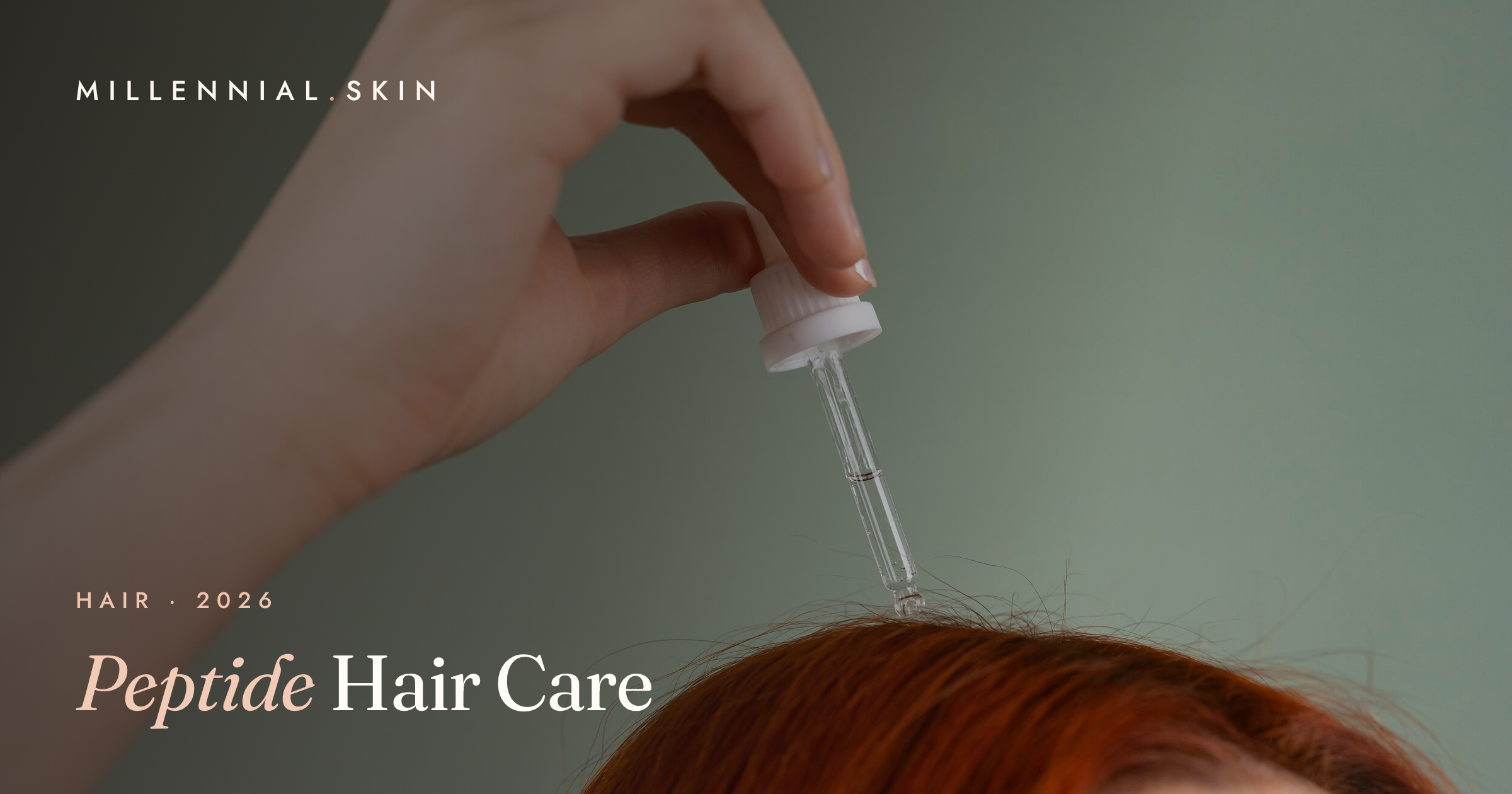
Peptide hair care refers to scalp serums, shampoos, and treatments built around short chains of amino acids — like copper peptides and biomimetic “signal” peptides — that are marketed to support a healthier scalp environment and fuller, thicker-looking, stronger-feeling hair. It’s one of the buzziest hair categories heading into 2026, borrowing the same ingredient story that made peptides a skincare staple. In this guide you’ll learn what peptide hair products actually are, how they’re supposed to work, what the evidence does and doesn’t say, and which formats are worth trying — plus honest watch-outs and a few product picks.
Peptide Hair Care at a Glance
| What it is | Scalp and hair products formulated with peptides (copper peptides, biomimetic signal peptides) to support scalp health and the look of fuller, thicker hair. |
|---|---|
| Best for | People with thinning-looking, fine, or fragile hair who want a gentle, leave-on routine to complement — not replace — proven treatments. |
| How to use | Apply leave-on serums/ampoules to a clean, towel-dried scalp daily or a few times weekly; use peptide shampoos, conditioners, and masks in the shower. |
| Watch-outs | Evidence is early and supportive, not a guaranteed regrowth fix; results are slow; possible scalp irritation; don’t expect minoxidil-level outcomes. |
What Is Peptide Hair Care?
Peptide hair care is a group of scalp- and strand-focused products that feature peptides as a hero ingredient. Peptides are short chains of amino acids — the same building blocks that make up keratin, the structural protein in your hair. In formulas, you’ll typically see two camps: copper peptides (peptides bound to copper, popularized in skincare for skin repair) and biomimetic or signal peptides, which are designed to mimic messengers your body naturally uses to coordinate skin and follicle activity.
The category overlaps heavily with the broader rise of scalp serums marketed for hair growth, but the peptide angle leans on the idea of “signaling” a healthier scalp rather than just moisturizing or exfoliating it.
How Do Peptides Work on Hair and Scalp?
The theory is that peptides act as messengers that support the scalp environment where hair grows, rather than forcing new growth directly. Because peptides are small, they’re thought to penetrate the upper layers of skin more easily than larger proteins, where they may help support the conditions follicles like — better-hydrated, less-stressed skin around the root.
- Copper peptides: often discussed for their role in supporting skin renewal and a calmer scalp, which proponents link to a healthier setting for hair.
- Signal peptides: formulated to imitate the body’s own cues, with the goal of nudging scalp cells toward a more supportive state.
- Strand-level peptides: in shampoos and masks, peptides can also bind to and reinforce the hair shaft, helping strands feel stronger and look thicker.
Important nuance: most peptide hair claims describe supporting or improving the look of hair and scalp, not clinically regrowing it. The strongest data on peptides still comes from skin research, and hair-specific evidence is earlier and more limited.
Copper Peptides vs Signal Peptides
The difference comes down to what the peptide is paired with and what it’s designed to do. Copper peptides combine a peptide with copper, an element involved in skin repair processes; they’re the more “heritage” ingredient, with a long history in skincare and a growing presence in scalp serums. Signal (biomimetic) peptides are engineered specifically to mimic the body’s natural communication molecules and are often the newer, more targeted additions in 2026 launches.
- Choose copper peptides if: you want a well-known ingredient with a track record in skin repair and a calmer-scalp story.
- Choose signal peptides if: you’re drawn to newer, follicle-targeted formulas that emphasize “messaging” the scalp.
- Either way: formulas often blend peptides with hydrators, niacinamide, caffeine, or botanicals, so the full ingredient list matters more than the peptide name alone.
Do Peptides Actually Regrow Hair?
Honestly, peptides are best viewed as supportive rather than a proven regrowth drug. Unlike minoxidil or finasteride — ingredients with extensive clinical evidence and regulatory backing for hair loss — peptides sit in the cosmetic and early-research space. Some users and small studies report improvements in hair density appearance, thickness, or scalp comfort, but the research is still limited, and results vary a lot person to person.
A realistic expectation: peptide products may help your hair look fuller and feel stronger and support a healthier scalp, but they are not a guaranteed fix for genetic or medical hair loss. If you’re dealing with significant shedding, peptides are a reasonable complement to — not a substitute for — proven treatments or a dermatologist’s plan. For people exploring volumizing options, peptides also pair conceptually with a hair filler treatment routine, though each works differently.
How Do You Use Peptide Hair Products?
For best results, apply leave-on peptide treatments to a clean scalp and use peptide cleansers and masks consistently over months, not weeks. Hair routines reward patience because the growth cycle is slow.
- Serums and ampoules: part your hair and apply directly to the scalp on damp, towel-dried skin; massage in gently and don’t rinse.
- Shampoos: lather and let it sit on the scalp for a minute or two before rinsing so the peptides have contact time.
- Conditioners and masks: focus on mid-lengths and ends to reinforce the strand and boost the look of thickness.
- Consistency: commit to at least 8–12 weeks of regular use before judging results.
- Stacking: peptides generally layer well with gentle actives, but introduce one new product at a time to spot any irritation.
Many people also pair topical routines with supportive habits like a balanced diet and, in some cases, supplements such as biotin for hair growth — just keep expectations grounded and check with a professional before adding supplements.
Who Should Try It?
Peptide hair care suits people who want a gentle, low-commitment way to support scalp health and the appearance of fullness. It’s a good fit if you have fine or fragile hair, notice early thinning, or simply want to upgrade an existing scalp routine with a trend-forward ingredient. It’s also appealing for those who prefer cosmetic, leave-on products over medicated treatments.
- Great for: fine, flat, or fragile hair; sensitive scalps wanting a calmer feel; routine-lovers who’ll stay consistent.
- Less ideal for: anyone expecting fast, dramatic regrowth, or those with significant medical hair loss who need clinically proven options.
Any Downsides?
The main downsides are managed expectations, cost over time, and the chance of irritation. Because the evidence is early, you’re partly paying for promise. Peptide products can also add up — a serum, shampoo, and mask together is a real monthly spend — and like any scalp product, they can cause redness, itching, or breakouts for some users.
- Slow, uncertain results: improvements, if any, take months and aren’t guaranteed.
- Irritation risk: patch test and stop if your scalp reacts.
- Cost creep: full routines can get pricey; you don’t need every format.
- Not a medical treatment: see a dermatologist for diagnosed hair loss.
Peptide Hair Care Product Picks
| Product | Why we like it |
|---|---|
| Copper Peptide Scalp Serum | Leave-on format that targets the scalp directly; the most popular entry point into the category. |
| Peptide Leave-In Treatment | Reinforces the strand for stronger feel and a fuller look without rinsing out. |
| Peptide Shampoo | An easy swap into your existing routine that gives peptides scalp contact time. |
| Peptide Conditioner | Pairs with peptide shampoo to smooth and bulk up the look of fine strands. |
| Scalp Peptide Ampoule | Concentrated single-use doses for a more targeted, treatment-style approach. |
| Peptide Hair Mask | A weekly deep-treatment step to strengthen and add visible body to the lengths. |
The Bottom Line
Peptide hair care is a promising, gentle way to support a healthier scalp and the appearance of fuller, stronger hair — but it’s best framed as supportive maintenance, not a miracle regrowth cure. The ingredient science is most established in skincare, and hair-specific evidence is still early, so the smartest move is to keep expectations realistic, stay consistent for a few months, and treat peptides as one helpful layer in your routine.
If you have fine or thinning-looking hair and want to experiment, start with one format — a scalp serum or a peptide shampoo — and build from there. And if you’re facing meaningful hair loss, loop in a dermatologist so peptides can complement, rather than replace, treatments with stronger proof behind them.
Leave a Reply