
It always happens at the worst time. You’re getting ready for a friend’s birthday dinner, you flip your part to the other side, and there it is under the bathroom light, a stripe of regrowth or a little cluster of grays at your temple. Your next color appointment is three weeks away. You need something tonight, and maybe something better for next month too.
Root products run from a spray that washes out in the shower to salon color you mix yourself, and the right one depends less on your budget than on how much home coloring you’ve done and liked. We’ll go from the easiest fix to the most hands-on, with tips for each. If you’re coloring your whole head, start with our at-home hair color guide instead.
Two kinds of root color
Root products come in two kinds that look alike on the shelf and act nothing alike. Temporary cover-ups are color in a spray, powder or crayon. They coat the outside of the hair, so they can rub off on a pillowcase or run in the rain, and they rinse away with your next shampoo. Permanent touch-up kits are real dye mixed with developer. They change the color inside the hair, so the result stays until it grows out, usually four to six weeks before the line shows again.
That difference decides how much a mistake costs you. A wrong shade from a spray lasts one day. A wrong shade from a kit stays right at your part until you cut it off or color over it.
Demi-permanent color sits in between and works more like a gloss. It blends grays instead of covering them, so on stubborn white regrowth it tends to fade in a few weeks and leave the same line you started with. If you’d like to soften roots rather than hide them, a root smudge or shadow root is a salon technique made for that.
Start with color that washes out
Your first root product should let you be wrong. If the shade is off, you shampoo and try again tomorrow. Pick a shade a touch darker than you think you need, since a slightly deeper root looks natural and a lighter one looks like a missed spot.
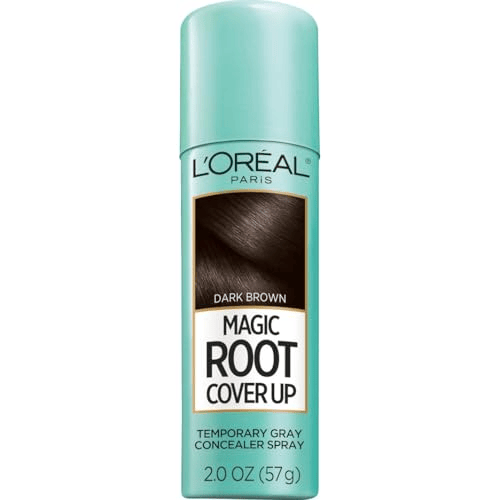
For a wide strip of regrowth, a spray is fastest. L’Oréal Paris Magic Root Cover Up Spray covers roots in seconds, costs about $10 to $15, and comes in enough shades to get close to your own. Shake it hard, hold it farther from your head than feels right, and spray in short bursts along the part. Cover your forehead with your hand or a tissue, because overspray lands on skin and on the bathroom mirror. Let it dry a minute before you touch it.
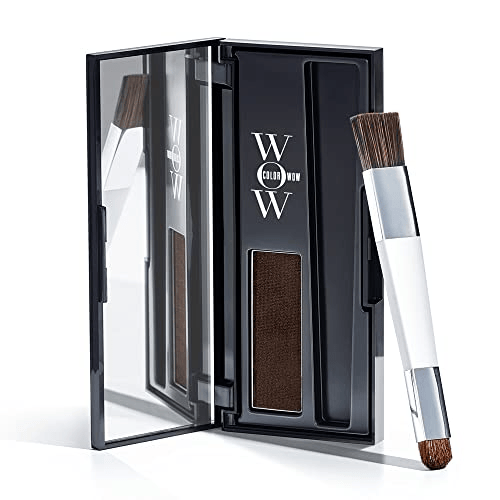
For a small spot, like a part line, the temples or a widow’s peak, powder gives you more control. Color Wow Root Cover Up goes on with a little brush and stays right where you put it, with no overspray. It also soaks up a bit of oil, which is handy on day-two hair. On grays scattered all over your head, though, it’s slow going.
Washable products can go on every day, since they come off in the shower. If you only notice your roots between salon visits, this step may be all you ever need. And if you’re wondering whether to keep hiding the grays at all, read covering gray hair vs growing it out.
Step up to a permanent root kit
You’re ready for a real touch-up kit when three things are true. You’ve colored your whole head at least once and liked it. You know the shade number you used. And you’re now spraying your part every single morning. At that point, permanent color on the regrowth saves you time instead of adding risk.
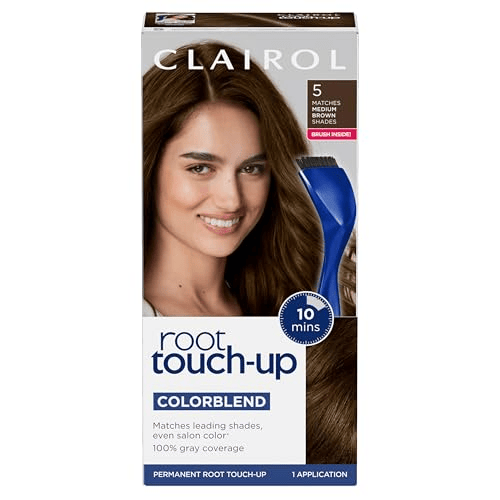

Clairol Root Touch-Up by Nice’n Easy is the easy first kit at about $8 to $12. Its shade numbers line up with Nice’n Easy, so matching your box color is simple. The brush keeps dye on the regrowth instead of the lengths, and it processes in about ten minutes. If you use L’Oréal Excellence for your full-head color, L’Oréal Paris Root Rescue is the same idea from that line, with a comb-style tip that some people find easier to steer along a part.
Use the same shade number as your box color if you can, and if you’re between two, go a little darker. Apply to dry, unwashed hair, working in small sections so you can see the line between new growth and colored hair. Keep the dye on new growth only. Pulling it through your ends every month builds darker, duller bands that are hard to fix. Very stubborn white hair may need the full processing time on the box, so set a timer.
Do the allergy test the kit describes every single time, even if you’ve used the same box for years. Reactions to hair dye can show up after many uses with no trouble. If your scalp itched, burned or swelled after any hair dye, stop using permanent color and talk to a doctor or dermatologist before you try another kit, and ask about temporary products too.
If the result turns brassy or patchy, don’t redo it the same day. How to fix box dye mistakes covers what you can correct at home, and if you’ve never done a full-head kit, read box dye done right before your first touch-up. Subscription brands sell root kits too. They work well, but they fit a full-color routine you’re already on more than a first step up from a spray.
If you see a salon colorist every eight weeks or so, stick with washable cover-ups between visits. Home dye under salon color can clash with your formula and turn your next appointment into a color correction.
Mixing salon color at home
Salon tube color, developer, a tint bowl and a brush look like the grown-up version of a root kit. A bottle of Wella Color Charm Permanent Liquid Hair Color is cheap, lasts several touch-ups, and is a favorite in a lot of salons. The full setup runs about $25 to $40.
If you’re buying it because of a video, it’s more than you need. A box kit gives you color and developer that are already matched. Salon color leaves every choice to you. The shade comes as a number you have to read correctly, the developer strength changes how well it covers gray, and every brand mixes in its own ratio. Get one of those wrong and the mistake is permanent, right at your part, where everyone looks.
There’s one great reason to go this route. If a colorist has written down your formula and you want the same shade between visits, tube color and developer is the closest match you can get at home. A Wella Color Charm 20 Volume Crème Developer is the usual partner for gray coverage, and a tint bowl and brush set makes mixing and applying a lot less messy. Ask your colorist to write the formula down, including the developer and the ratio. A guess isn’t a formula.
There’s more on keeping color fresh in our Hair archive. If you’d rather see one product compared tier by tier, that’s comparison.


