
You notice it in the shower drain first, then in the brush, then when your part looks a little wider under the bathroom light. Somewhere along the way a friend mentions she takes “a tiny pill” for her hair instead of the foam, and suddenly you’re wondering whether you should ask about it too. That pill is oral minoxidil, and this guide covers what to know before you bring it up.
Oral minoxidil is the same drug as the foam you rub on your scalp, in tablet form. The pill is only FDA-approved for severe high blood pressure that other medicines haven’t controlled, and its label says hair growth isn’t an approved use. Dermatologists who prescribe it for thinning hair use a low dose, far below the blood pressure range, and research suggests it can help people who struggle with the foam or liquid. It still comes with serious warnings about fluid buildup, a faster heart rate and extra hair on the face and body, plus a firm no on breastfeeding. Whether it’s right for you is a dermatologist’s call, not a group chat’s.
One drug, two very different forms
Minoxidil started as a blood pressure pill, and hair growth turned up as a well-known side effect at those doses. The scalp versions came later. Sold as Rogaine and store brands, they’re approved for women at 2% and 5%, and you don’t need a prescription.
The pill is another story. It comes in 2.5 mg and 10 mg tablets, it’s prescription only, and it works by widening small blood vessels. It’s approved for high blood pressure that causes symptoms or organ damage and hasn’t come down on a diuretic plus two other blood pressure drugs. It’s usually given alongside medicines that slow the heart and keep fluid off. When a dermatologist prescribes a small dose for thinning hair, that’s off-label use. It’s legal and common, but no hair loss dose or result has been reviewed by regulators.
The other big difference is where the drug goes. A pill travels through your whole body, which is why its warnings are about the heart, fluid and body hair instead of an itchy scalp.
Why dermatologists began prescribing it
The reason is practical. The foam only works as long as you keep using it, and plenty of people quit. A review by University of Miami dermatologists in the Journal of the American Academy of Dermatology named the usual reasons. Applying it twice a day is a hassle, it can change hair texture, and it can irritate the scalp.
That review pulled together 17 studies with 634 patients who took the pill as their main hair treatment, mostly for pattern hair loss. The authors concluded that low-dose oral minoxidil worked well and was well tolerated in healthy people who were struggling with the scalp versions. Many of the studies were small, though, and bigger trials are still needed to find the best dose. It looks promising, without being proven.
Side effects at low doses
The biggest safety study so far looked back at the records of 1,404 people at hair clinics in several countries who took low-dose oral minoxidil for at least three months. About two-thirds were women, and the average age was 43. Each side effect showed up this often:
- Unwanted hair growth on the face or body, 15.1%
- Lightheadedness, 1.7%
- Fluid retention, 1.3%
- Fast heart rate, 0.9%
- Headache, 0.4%
- Puffiness around the eyes, 0.3%
Extra hair was by far the most common problem, yet few people stopped because of it. Fewer than 2% stopped because of side effects of any kind, and none of the reported side effects were life-threatening.
That study has limits. It reviewed old charts instead of following people forward, and nobody took a placebo for comparison. These were screened patients under a specialist’s care, which is very different from someone splitting a blood pressure pill at home.
Warnings on the tablet label
The tablet label was written for people with severe high blood pressure on full doses. It’s still the official list of what this drug can do, and it explains why a doctor will ask about your heart first.
- Fluid buildup. The drug makes the body hold onto salt and water. At blood pressure doses, 7% of patients who didn’t have swelling at the start got it for a while.
- Faster heart rate. Minoxidil speeds up the heart, and chest pain from angina may get worse or show up for the first time.
- Fluid around the heart. This showed up in about 3% of blood pressure patients not on dialysis, mostly people with kidney problems.
- Body hair. About 80% of patients on blood pressure doses noticed fine hair getting darker, longer and thicker, starting 3 to 6 weeks in, often first on the temples, between the eyebrows and on the upper cheeks. It fades within 1 to 6 months after stopping.
- Rare reactions. Rashes, sore breasts, nausea and, rarely, severe skin reactions or low blood counts.
Call a doctor right away for a resting pulse 20 or more beats a minute above your normal, a quick weight gain of five pounds or more, or swelling in your face, hands, ankles or stomach. New trouble breathing when lying down, pain in your chest, arm or shoulder, and dizziness or fainting all count too.
Notice the gap between 80% and 15% for extra hair? Dose matters a lot, and that’s exactly why the dose belongs to a prescriber. If you’re already on a medication and noticing shedding, start with our guide to medications that can cause hair shedding.
Pregnancy and nursing
There are no good studies in pregnant women, and minoxidil should be used in pregnancy only if the benefit is worth the risk to the baby. There are reports of extra hair on newborns exposed during pregnancy, and animal studies showed lower fertility. On breastfeeding, the label is direct. Minoxidil has been found in breast milk, and it shouldn’t be given to a nursing woman. If you’re pregnant, trying or nursing, say so at the very start of the appointment. The scalp products carry their own pregnancy warning too.
Who tends to be a candidate
Dermatologists tend to consider the pill for healthy adults with pattern thinning who couldn’t stick with the foam or liquid, usually because of irritation, texture changes or the routine itself. It isn’t a first step for a sudden shed, patchy loss or thinning nobody has diagnosed yet. Those need a diagnosis, and our post on when a hair loss appointment is worth it walks through that visit. Our guide to hair thinning in women also sorts out the usual causes.
Starting with minoxidil you can buy yourself
Minoxidil for the scalp is still the version you can start without a prescription, and it’s often where a dermatologist begins anyway. Each of these is a women’s formula made to regrow hair on the scalp. Skip them if your hair loss is sudden or patchy, came after having a baby, or has no known cause, and stop and call a doctor if you get chest pain, a racing heart, sudden weight gain or swelling in your hands or feet. Our honest guide to minoxidil for women covers how to apply them.
The original once-a-day foam

Women’s Rogaine 5% Minoxidil Foam goes on once a day, which makes it a lot easier to keep up with than a twice-a-day routine. It’s unscented, and the formula leaves out propylene glycol, an ingredient that bothers some scalps. If the liquid ever irritated you, this is worth asking about first. It’s about $27.
A four-month foam supply for less
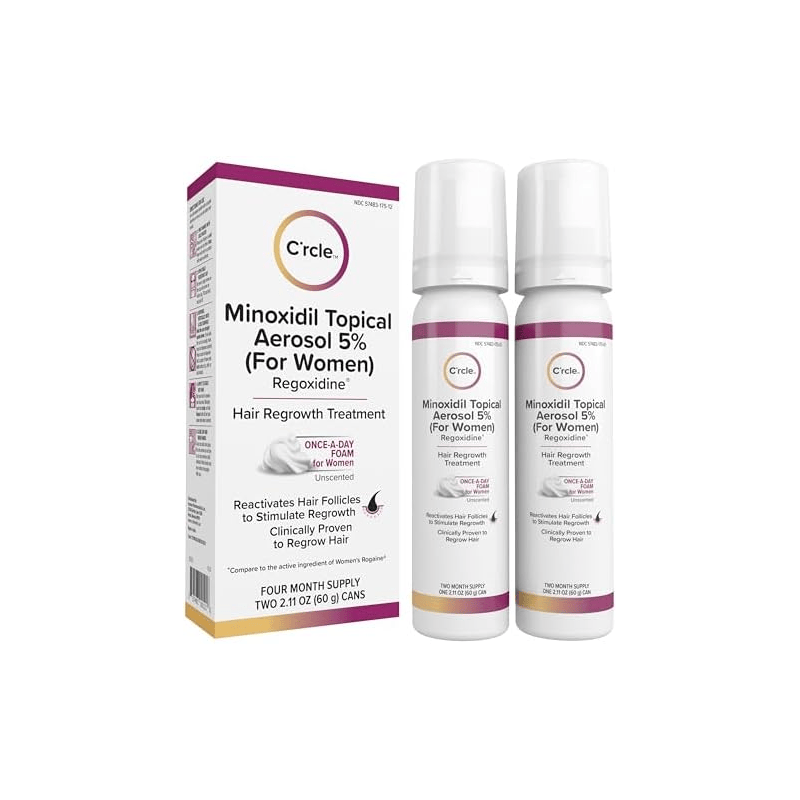
C’rcle Regoxidine Women’s 5% Minoxidil Foam has the same 5% strength and once-a-day routine, and it comes as two cans that add up to about a four-month supply. That’s handy, since you need to give minoxidil several months before judging it. It’s about $25.
The budget generic foam
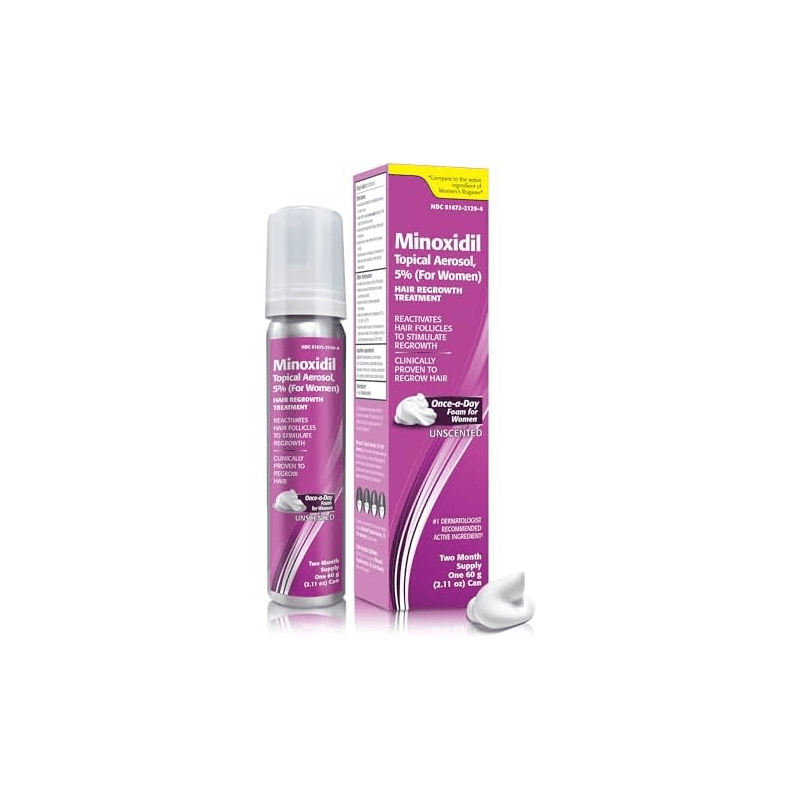
Ohm Minoxidil for Women 5% Foam is a once-a-day generic 5% foam in a single two-month can. At about $13, it’s the most affordable way to see whether minoxidil works for you before committing to more.
A gentler twice-a-day liquid
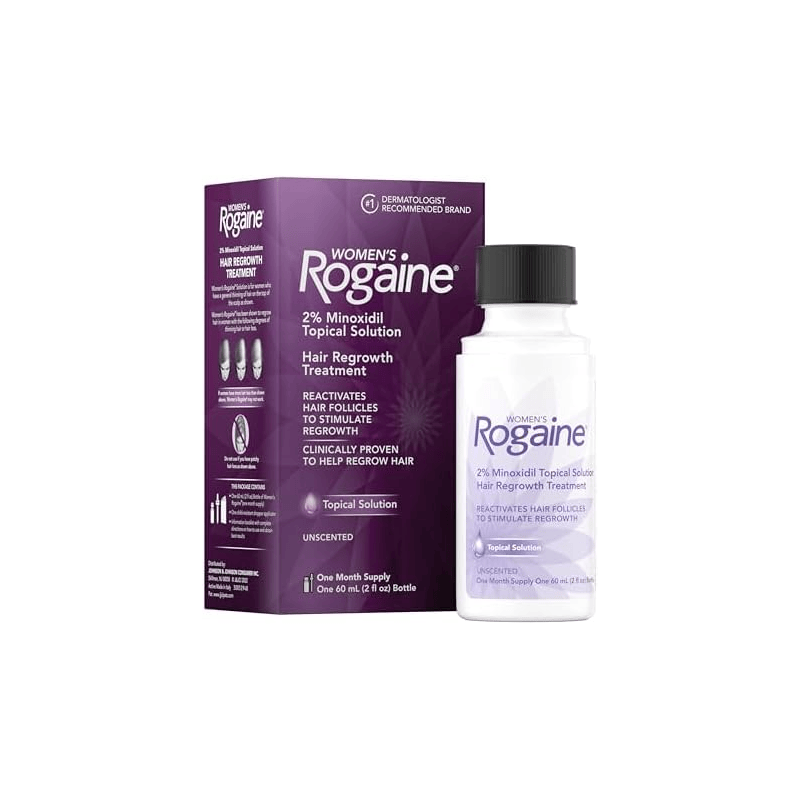
Women’s Rogaine 2% Minoxidil Solution is a lower-strength, unscented liquid with a dropper that goes on twice a day. Some women prefer a liquid because it’s easy to aim at the part line. It does contain propylene glycol, so switch to a foam if your scalp gets itchy. It’s about $29.
Bringing it up with your dermatologist
If the foam or liquid irritated your scalp, say exactly that. If you’ve only tried the liquid, a foam without propylene glycol may be worth a shot before a pill.
If you have any heart condition, low blood pressure or kidney problems, mention it before anything else, since the pill’s warnings center on the heart, fluid and kidneys. The same goes for pregnancy, trying to conceive or breastfeeding.
If extra facial hair would bother you, say so, since it was the most common side effect in the low-dose research. And if your shedding started suddenly, get it diagnosed before anyone treats it as pattern thinning.
A couple of other things people often ask about. The research hasn’t settled whether the pill beats the foam, so the pill is another option rather than an upgrade. And results from any form of minoxidil fade once you stop, while extra body hair from the pill goes back to normal within 1 to 6 months. There’s more in our hair archive.


