
It’s midnight after a friend’s wedding. You’ve washed your face twice, and there are still black smudges under both eyes like you just finished a football game. You rub a little harder and three lashes come off on the towel. Sound familiar? Waterproof mascara is made to shrug off water, so soap and scrubbing won’t budge it. It needs oil.
Once you have the right remover, patience matters more than pressure. Soak a cotton pad, hold it on your closed eye for about 10 seconds, then wipe down once. The mascara slides off and your lashes stay where they belong.
Why water and soap don’t work
Waterproof formulas use waxes and film-forming ingredients that repel water on purpose, which is how they survive a sweaty dance floor or a rainy walk to the car. Splashing and foaming only skate over that film. Oils and the oil layer in a two-phase remover break it down, so the pigment lets go of your lashes on its own instead of being dragged off.
That’s also why rubbing is such a bad idea. Scrubbing back and forth pulls on your lashes and the thin, delicate skin around your eyes. The FDA warns to be careful not to scratch your eye when you take off eye makeup, and holding a soaked pad still does more than rubbing ever will.
Picking a remover that can handle it
Regular micellar water often isn’t strong enough for waterproof mascara. If your mascara says waterproof, look for a remover that says so too. Here are three good options, from the budget bottle to the splurge.
A two-layer micellar water for less
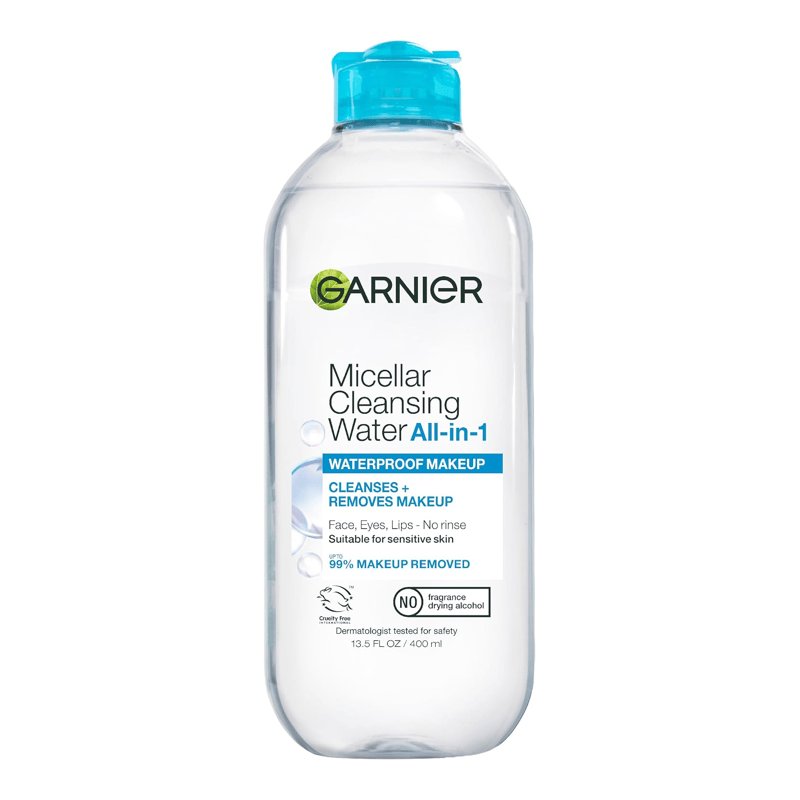
Garnier Micellar Water for Waterproof Makeup is the two-layer version of Garnier’s famous micellar water, with an oil layer floating on top that does the heavy lifting. Shake it until it looks cloudy, then use it on your eyes and the rest of your face. It’s safe for the eye area and even takes off long-wear lipstick. The big 13.5-ounce bottle runs about $9, so it lasts a good while.
An oil-free pick for sensitive eyes

If your eyes sting easily, Clinique Take The Day Off Makeup Remover for Lids, Lashes and Lips is oil-free, fragrance-free and ophthalmologist tested. Its directions are the same hold method we love: soak a pad, hold it on your lashes for 10 seconds, then wipe. The small bottle, about $11, is an easy way to try it.
The splurge for heavy liner nights
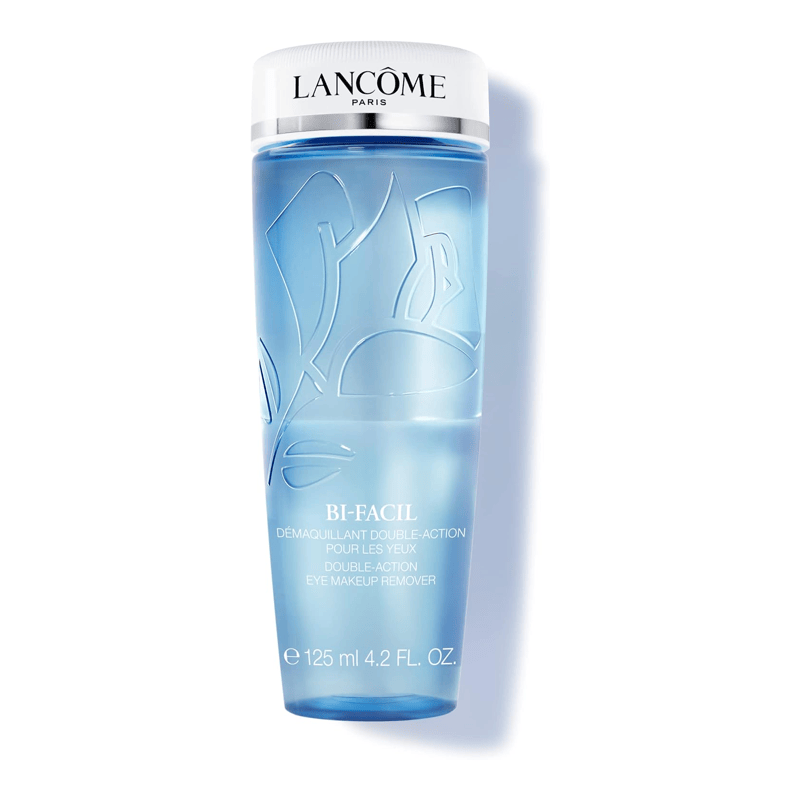
Lancôme Bi-Facil Eye Makeup Remover mixes oil and water with one shake, and it’s made for sensitive eyes and contact lens wearers. It’s the one to reach for if you wear dark shadow and liner most days, since it melts all of it in a single pass. It’s about $27.
The hold-and-wipe method
Start by washing your hands and taking out your contacts. The FDA’s contact lens advice puts lenses in before makeup and out before you remove it, which keeps remover and mascara bits from getting trapped under the lens.
Soft pads that won’t shed

Cheap pads can leave little fibers in your lashes and eyes. Shiseido Facial Cotton Pads are 100% cotton and made so the fibers don’t fluff up or stick to your face, which matters most right next to your eyes. They also hold together when they’re soaked, so you can fold one over and use the clean side. A box is about $15.
Then work through it like this:
- If your remover has two layers, shake it until it looks cloudy. The oil and water only work together.
- Soak the pad until it feels cool and wet on your lid. A half-damp pad drags.
- Close your eye and press the pad gently against the lid and lashes. Count to 10. This pause does all the work.
- Slide the pad from your lid down past the lash tips in one stroke, with no back-and-forth. Fold to a clean side and repeat if you need to.
- For the lower lashes, wet a cotton swab with remover and roll it under them from the inner corner out, keeping it on the skin and away from the eye itself.
The one-step oil cleanser option

On nights you want everything off at once, an oil cleanser handles your eyes and your whole face together. DHC Deep Cleansing Oil is an olive oil cleanser that breaks down waterproof mascara and eyeliner. Massage it over dry skin and closed eyes with dry fingertips, add a splash of water so it turns milky, and rinse. Expect a blurry minute if a little gets in your eyes. It’s about $30.
Whichever route you take, finish with a gentle face wash. Removers can leave a light film, and your eye cream or moisturizer goes on better over clean skin. If you already double cleanse, the oil can count as your first step, and our double cleansing guide explains how to pair the two.
Habits that save your lashes
Peeling flakes off with your fingernails takes lashes with them, so let the remover loosen everything first. Skip whatever’s in the kitchen or the shower, too. The FDA says not to use any cosmetic near your eyes unless it’s made for that use, and body oils or face creams that aren’t labeled for the eye area don’t belong on your lashes.
Try not to sleep in it, either. Waterproof mascara left overnight dries out and crumbles, and the flakes end up in your eyes and all over your pillowcase.
And save waterproof for the days you need it, like a wedding, a beach trip or a sad movie. Day to day, the nightly removal is harder on your lashes than a regular formula. Our post on waterproof vs regular mascara breaks down when each one makes sense.
Sensitive eyes, contacts and extensions
Choose a remover that’s fragrance-free and made for the eye area, and take your contacts out every time. If an eye product makes your eyes burn, itch or turn red, the FDA’s advice is to stop using it and see a doctor if the irritation doesn’t go away. Skip eye makeup altogether while you have an eye infection or a swollen, irritated lid.
If you have lash extensions, ask your lash tech which remover is safe for the glue before you use anything oily, since oil can loosen the bond.
For the rest of your nightly routine, our guide to how to remove makeup properly covers lips and base, and there’s more in our makeup archive.


