
Drinking olive oil before coffee sounds like the kind of wellness thing that starts out niche and suddenly becomes everyone’s new morning personality. But is it better than pouring that same olive oil over pasta, eggs or a big crunchy salad? Not really.
The olive oil shot, popularized by public figures including Ryan Seacrest and Bryan Johnson, usually means drinking a few tablespoons of extra virgin olive oil on an empty stomach. There’s no solid scientific evidence that taking it first thing gives you special health perks or detoxes your body.
I’m much more into healthy habits that slide into normal life. The ones you can keep up when your inbox is loud, dinner is vague and you’ve got five minutes to make something taste better. Luckily, olive oil already has a strong case. It just doesn’t need a shot glass.
What Is an Olive Oil Shot?
An olive oil shot is exactly what it sounds like: a small serving of olive oil swallowed straight, usually without food. Extra virgin olive oil is the usual pick because it has more antioxidants than refined olive oil.
I get why people are curious. Olive oil is linked with several health benefits, and taking a quick shot can feel like checking a wellness box before the day gets messy.
The catch is simple. Drinking it by itself hasn’t been shown to beat using it in your meals. You can get the same oil in a salad dressing, over vegetables or swirled into hummus without standing at the counter trying to hype yourself up.
Is Extra Virgin Olive Oil Better Than Regular Olive Oil?
Extra virgin olive oil has more antioxidants than refined light olive oil. It also has way more personality, from soft and smooth to grassy, spicy and peppery.
My move would be keeping a mellow bottle around for everyday cooking and a punchier one for finishing food. A good drizzle over roasted vegetables can rescue the kind of dinner that started as, “What do I even have in the fridge?”
What the research actually supports
View this post on Instagram
@olive_wellness_institute / Instagram
There are real reasons to eat more olive oil. Research published in the Journal of the American College of Cardiology found that people who had more than half a tablespoon daily had lower rates of premature death from cardiovascular disease, Alzheimer’s disease and other causes than people who rarely or never had it. That’s an association, not proof that olive oil did all the work by itself.
The FDA also allows a qualified health claim suggesting that about 1½ tablespoons of oil high in oleic acid may help reduce coronary heart disease risk when it replaces fats higher in saturated fat without increasing daily calories. Supportive, not conclusive. And the swap is the part that matters.
The Olive Wellness Institute (@olive_wellness_institute), an educational resource supported by olive industry funding, explains what sets extra virgin olive oil apart from refined kinds. Brightland Alive Extra Virgin Olive Oil, 12.7 oz, is smooth and grassy, the kind of bottle I’d put toward homemade dressing, fresh salads and anything that needs a clean finish.

Brightland Alive Extra Virgin Olive Oil, 12.7 oz
A smooth, grassy California extra virgin oil for salads and dressings.
How much makes sense, and why food wins on practicality
View this post on Instagram
@ibs_dietitian / Instagram
Cleveland Clinic suggests anywhere from one to four tablespoons of extra virgin olive oil daily, depending on calorie needs, activity level and other factors. That doesn’t mean four tablespoons needs to become your new wellness homework. Each tablespoon has about 119 calories, so a three-tablespoon shot lands around 357 calories without fiber or much fullness.
Australian dietitian Chelsea McCallum (@ibs_dietitian) has a much better butter swap: freeze olive oil, then whip it until it turns pale and creamy. Cobram Estate Classic 100% California Extra Virgin Olive Oil, 1L, has a bold, spicy flavor that makes sense on warm toast or a baked potato. This is the version I’d pick over drinking it straight every single time.
A lot of olive oil on an empty stomach can also make some people feel nauseous, bloated or uncomfortable. If you know you’ve got gallstones, another gallbladder issue, a digestive condition or a medically prescribed diet, keep portions modest and don’t make a big jump all at once.

Cobram Estate Classic 100% California Extra Virgin Olive Oil, 1L
A bold, spicy California extra virgin olive oil.
The three-to-one marinade to use instead
View this post on Instagram
@olive_wellness_institute / Instagram
A homemade marinade deserves more attention than a lot of wellness rituals, honestly. It’s fast, it makes basic food taste intentional and the formula is easy: three parts extra virgin olive oil to one part acid.
The Olive Wellness Institute (@olive_wellness_institute) uses that three-to-one ratio, and you can make it work with lemon juice, orange juice or vinegar. Add garlic, herbs, mustard, pepper or a touch of honey if you want it to feel less like a Tuesday-night panic dinner.
Keep meat or vegetables coated for at least 15 to 30 minutes before cooking, and refrigerate meat while it marinates. The oil helps keep things juicy, while the acid helps tenderize meat.
Graza Sizzle Extra Virgin Olive Oil, 25.3 oz, is a mellow cooking oil in a squeeze bottle, which is exactly the kind of packaging that makes me use something more often. Lemon, garlic and herbs would be the easy route for chicken or roasted vegetables.

Graza Sizzle Extra Virgin Olive Oil, 25.3 oz
A mellow extra virgin cooking oil in a squeeze bottle.
How to tell your bottle has gone rancid
View this post on Instagram
@oliveoilcritic / Instagram
That half-used bottle by the stove deserves a quick smell check. Olive Oil Critic (@oliveoilcritic) names a few rancid-oil clues: a waxy smell like crayons or candles, a stale nutty taste and a greasy coating that feels off in your mouth. Fresh olive oil should smell like something recognizable, whether that’s grass, herbs or green produce.
Olive oil changes after you open it, so smell and taste it here and there. Once you know what fresh oil is supposed to taste like, it’s much easier to catch the bottle that’s been hanging around too long.
For finishing food, Graza Drizzle Extra Virgin Olive Oil, 16.9 oz, is bold and early-harvest with a squeeze bottle. I’d save it for creamy soup, roasted vegetables or pasta, not a marinade where that bigger flavor can disappear.
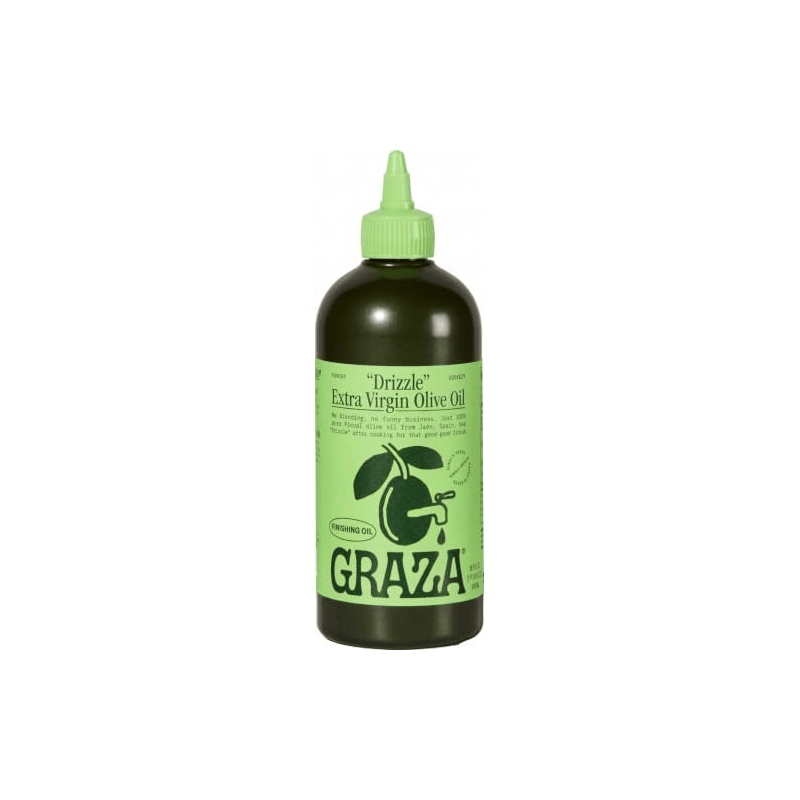
Graza Drizzle Extra Virgin Olive Oil, 16.9 oz
A bold early-harvest finishing oil in a squeeze bottle.
I’m very pro extra virgin olive oil in the kitchen. I’m just not sold on giving it its own shot glass. Pour it over food, swap it for butter when it makes sense and enjoy one less wellness ritual on your to-do list.


