
This post contains affiliate links. As an Amazon Associate, Millennial Skin earns from qualifying purchases at no extra cost to you.
If your FYP has been full of people spritzing their faces, patting on toner after toner, and claiming their skin has never looked more plump and bouncy — you’ve stumbled onto skin flooding, the hydration-layering technique that quietly became one of 2026’s most talked-about skincare methods. It sounds like a lot, but the logic is simple, the products are affordable, and the results — that soft, dewy, almost-lit-from-within look — are real.
What is skin flooding?
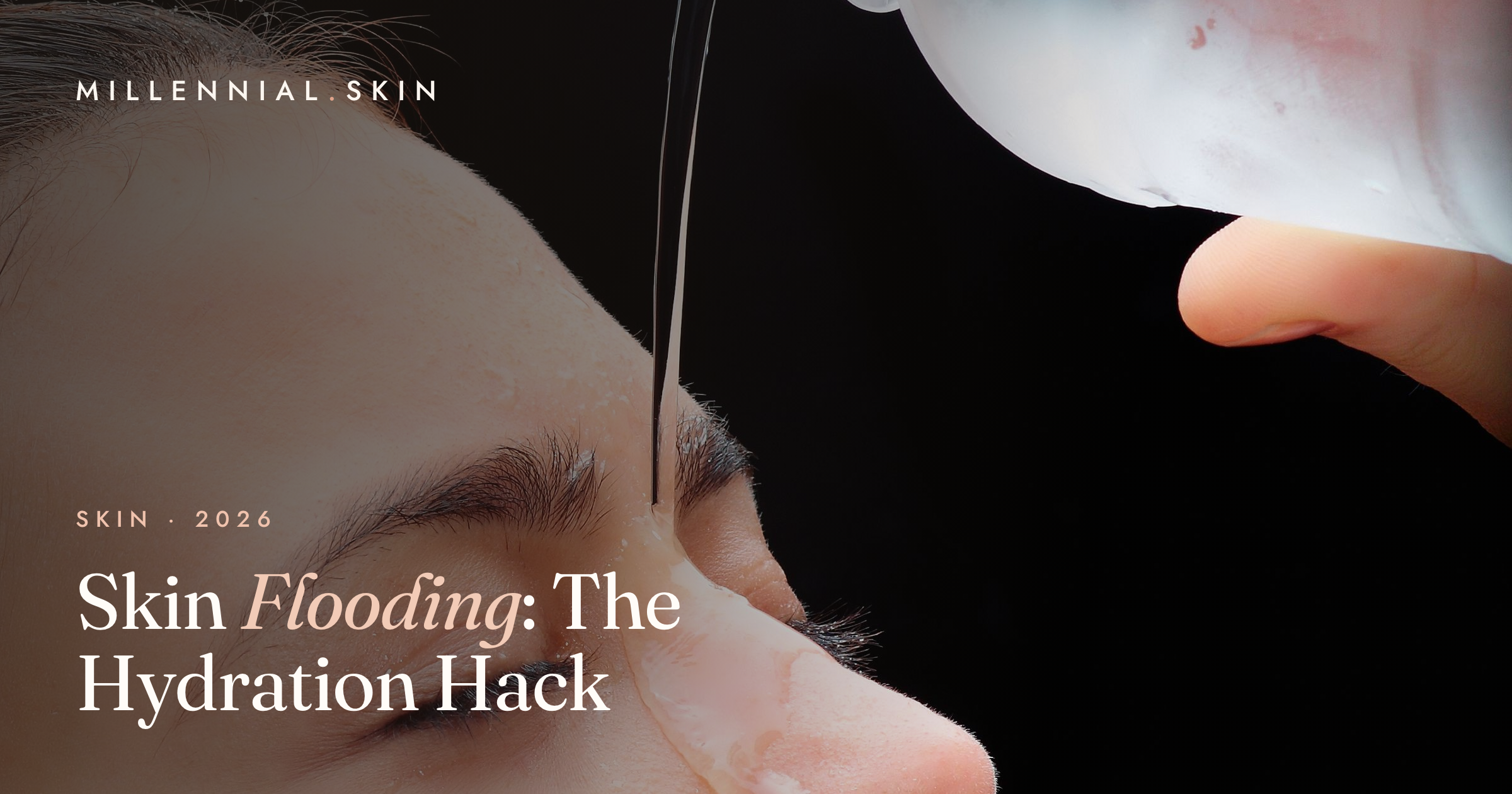
Skin flooding is the practice of layering multiple water-based humectants onto damp skin, then sealing everything in with a moisturizer. The “flooding” part is intentional: you’re saturating skin with hydration before any barrier forms, so water-loving ingredients like hyaluronic acid can pull as much moisture as possible into skin cells. It’s a method, not a product — one that turns a basic routine into a serious hydration delivery system. Here’s how the steps stack up:
| Step | What to use |
|---|---|
| Start on damp skin | Splash water or mist your face; pat to slightly damp (not dripping) |
| Hydrating toner or essence | A water-based, humectant-rich formula — glycerin, aloe, or beta-glucan |
| Hyaluronic acid serum | Layer while skin is still damp so HA has water to draw from |
| Moisturizer to seal | A cream or lotion with occlusive or emollient ingredients |
| SPF (morning only) | Broad-spectrum sunscreen as the final AM step |
How does skin flooding actually work?
The science is simpler than the trend makes it sound. Humectants — ingredients like hyaluronic acid, glycerin, and aloe vera — attract water molecules and bind them to the skin. When you apply them to already-damp skin, they have more water available to grab, which means deeper and more sustained hydration than applying to a dry surface. Layering two or three humectants amplifies the effect, and the final moisturizer locks everything in by slowing transepidermal water loss. Think of it as: soak, stack, seal. Our deep dive on hyaluronic acid versus coconut oil for hydration is a great companion read if you want to understand why your choice of humectant and sealant matters.
Skin flooding vs. slugging — what’s the difference?
They’re related but not the same. Slugging is the final occlusive step — typically a petrolatum-heavy balm applied at the very end, usually overnight — to lock in every layer beneath it. Skin flooding is the entire build-up method: the damp-skin base, the humectant layers, and then a sealant. You can absolutely slug on top of a skin-flooding routine if your skin is very dry, but skin flooding works perfectly well without a heavy occlusive, which makes it accessible for far more skin types. In practice: skin flooding is a daytime-friendly everyday method; slugging is an intensive overnight treatment.
Is skin flooding right for your skin type?
For most people, yes — and that’s part of why it spread so fast. Here’s how it plays out by skin type:
- Dry and dehydrated skin: the obvious fit. Multiple humectant layers mean lasting plumpness instead of that tight, parched feeling by midday.
- Oily skin: counterintuitively great. Dehydrated oily skin overproduces sebum to compensate for lacking water. Skin flooding addresses the water deficit without adding oil.
- Sensitive skin: stick to fragrance-free, gentle formulas and the method is low-irritation by design.
- Combination skin: concentrate the humectant layers on drier zones and keep the moisturizer lighter where you’re oilier.
One caveat if you’re acne-prone: skip thick occlusives as your sealant during the day. A gel-cream or lightweight lotion seals just as effectively without the congestion risk. And if you’ve been skimping on the toner step entirely, our piece on why skipping toner wrecks your skin barrier explains exactly why that first humectant layer is non-negotiable in this method.
The best skin flooding products to try in 2026
You don’t need a ten-step haul to skin flood effectively. These four products cover every step of the method, from first humectant to final seal.
| Product | Best for |
|---|---|
| Klairs Supple Preparation Toner | The first humectant layer — gentle, pH-balancing, and deeply hydrating |
| The Ordinary Hyaluronic Acid 2% + B5 | The core humectant serum — multi-weight HA for surface and deep plumping |
| CeraVe Moisturizing Cream | The barrier-sealing step — ceramides + hyaluronic acid lock everything in |
| Tower 28 SOS Daily Rescue Facial Spray | Mid-routine refresh or damp-skin reset — great for sensitive and reactive skin |
How to avoid pilling and over-hydration when skin flooding
Two things trip people up: pilling (product balls up on the skin) and overloading (too many layers leading to congestion or milia). Both are avoidable with a few rules.
- Never skip the damp skin base. Applying humectants to dry skin is the number-one cause of pilling — the layers sit on top of each other rather than absorbing together.
- Pat, don’t rub. Rubbing disrupts layers that are mid-absorption. Press each product in with your palms or fingertips.
- Less per layer, not more. A few drops of toner, a few drops of serum. You’re stacking thin layers, not applying thick ones.
- Wait 20–30 seconds between layers. It doesn’t need to feel bone-dry, just no longer tacky.
- Cap at three layers before moisturizer. Toner or essence, serum, moisturizer. More layers doesn’t equal more hydration — it just raises your congestion risk.
- Save heavy occlusives for nighttime. A light lotion or gel-cream is the right daytime seal; petrolatum balms belong in your PM routine.
Skin flooding FAQ
What exactly is skin flooding?
Skin flooding is a layering technique where you apply multiple water-based humectants (toner, essence, hyaluronic acid serum) onto damp skin, then seal with moisturizer to lock hydration in. The goal is to maximize how much water your skin absorbs before the barrier is closed.
How often should I do skin flooding?
Every day — morning and evening. It’s gentle enough for daily use at both ends of your routine. If your skin is very dehydrated, you may want to stick to the PM routine at first and see how your skin responds before adding it in the morning too.
Can I skin flood if I use actives like retinol or acids?
Yes, and it actually helps. Humectant layers can buffer the dryness and irritation that actives sometimes cause. Apply your actives after your toner or essence but before your hyaluronic serum, so they’re sandwiched between hydrating layers rather than landing directly on a dry barrier.
Is skin flooding the same as the 7-skin method?
Similar idea, but the 7-skin method specifically means applying toner or essence seven times in succession. Skin flooding is broader — it refers to layering different humectant products (toner, then serum, then moisturizer) on damp skin. You can incorporate the 7-skin approach as your toner step inside a flooding routine if you want extra intensity.
Do I need expensive products to skin flood effectively?
No. The technique matters more than the price tag. A glycerin-rich drugstore toner, The Ordinary’s Hyaluronic Acid serum, and a basic moisturizer with ceramides will out-perform a careless routine using luxury products. Focus on the method: damp skin, thin layers, seal at the end.
Does skin flooding replace my moisturizer?
No — the moisturizer is the essential final step. Humectants alone can actually pull moisture out of skin in dry environments if there’s nothing to seal them in. Your moisturizer is what converts all those layers into lasting hydration rather than temporary surface plumping.
The bottom line: skin flooding earned its viral status because it works — and because it works for almost everyone. Start with damp skin, layer your humectants thin, seal with a moisturizer, and give your routine a week to show you what properly hydrated skin actually feels like.
Leave a Reply