
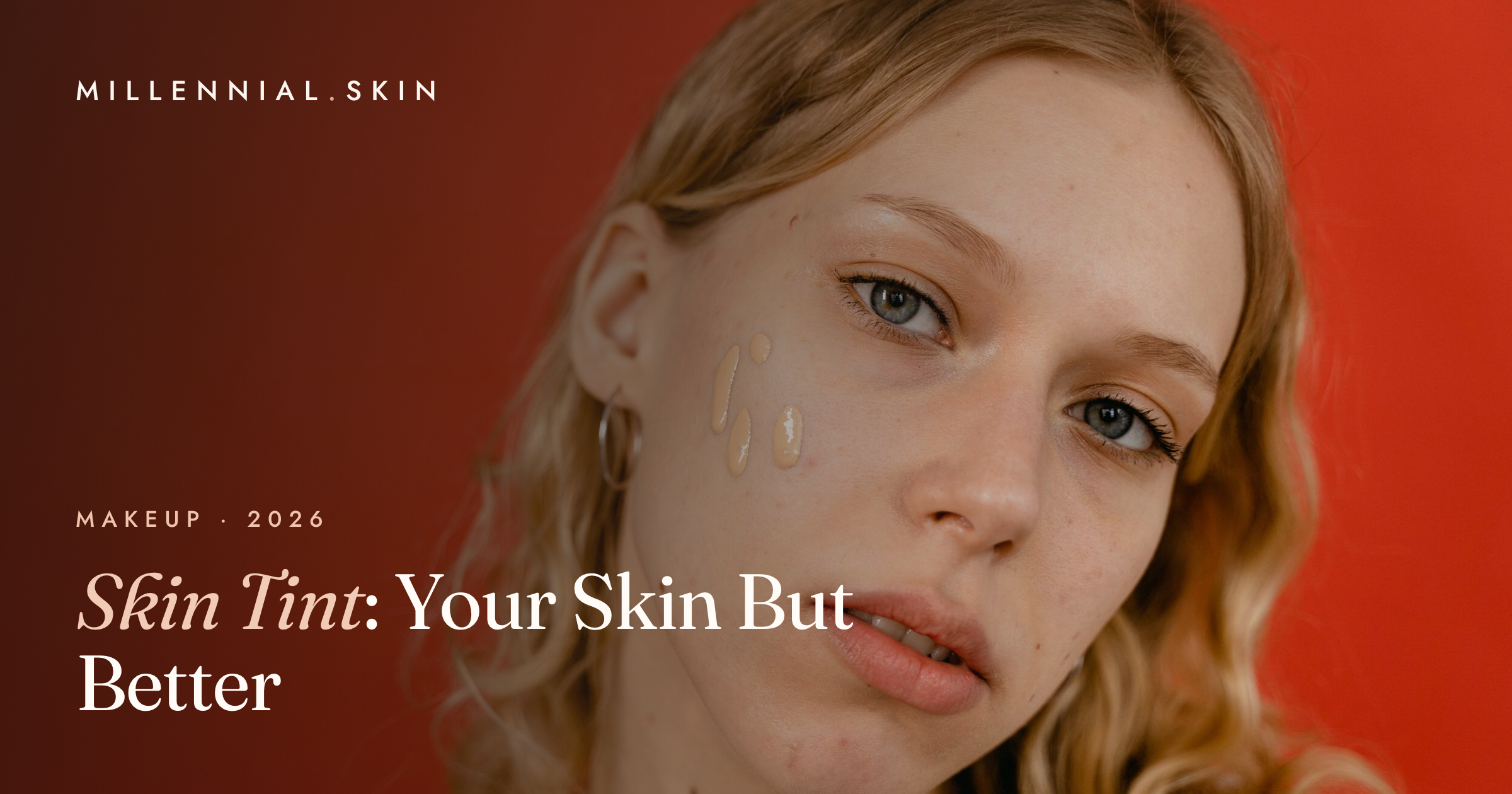
This post contains affiliate links. As an Amazon Associate, Millennial Skin earns from qualifying purchases at no extra cost to you.
The beauty world has quietly undergone a shift. Heavy-coverage foundation is no longer the default, and the opaque matte finish that defined early 2010s makeup has given way to something altogether more wearable: the skin tint. Part lightweight base, part skincare delivery system, skin tints are designed to even out tone without masking it — letting texture, freckles, and natural luminosity show through. If you’ve been curious about whether a skin tint belongs in your routine, this guide covers everything from formulation differences to application technique to the best options available right now.
What Is a Skin Tint, Exactly?
A skin tint is a sheer, low-pigment base product designed to add a wash of color correction and a healthy glow rather than build visible coverage. Think of it as foundation dialed down to its most minimal expression — a product that blends into skin so completely that the result reads as “your complexion, but more even” rather than “makeup.”
Most skin tints are fluid in texture, often water-based or serum-like, and formulated with a higher ratio of skincare ingredients than traditional foundations. They typically offer buildable sheer-to-light coverage, meaning one layer evens overall tone while a second layer dabbed on specific spots can address mild discoloration without looking layered or cakey.
The category sits at the intersection of tinted SPF, treatment serum, and foundation — which is exactly why it has become the base of choice for people who want something between bare skin and a full face of makeup.
How Does a Skin Tint Differ From a Tinted Moisturizer or Foundation?
These three products look similar on a shelf but behave quite differently on skin — and the distinctions matter when you’re deciding which one to reach for.
| Skin Tint | Tinted Moisturizer | Foundation | |
|---|---|---|---|
| Coverage | Sheer to light, buildable | Sheer, mostly non-buildable | Light to full, highly buildable |
| Finish | Skin-like, often luminous | Natural, sometimes dewy | Varies: matte, satin, or luminous |
| Skincare Benefit | High — actives (vitamin C, niacinamide), SPF common | Moderate — hydration focus | Low to none in most formulas |
| Texture | Serum-like, very fluid | Moisturizer with pigment added | Thicker, more pigment-dense |
| Best For | Even-ish skin, skin-first aesthetic | Dry skin, very casual everyday wear | Any coverage need, including full |
The clearest distinction is coverage architecture. Foundation is built to cover; tinted moisturizer is built to hydrate with a hint of color; a skin tint is built to unify tone while staying as close to bare skin as possible. A skin tint typically carries fewer pigments and more emollients, humectants, or active ingredients than either of the other two — which changes not just how it looks but how it functions throughout the day.
Why Skin Tints Are the 2026 Base of Choice
The rise of skinimalism — the skincare-led approach to beauty that prioritizes skin health over heavy product layering — made skin tints inevitable. As consumers invested more in serums, sunscreens, and targeted treatments, the idea of covering that work with an opaque foundation started to feel counterproductive. Skin tints work with that philosophy rather than against it.
Many 2026 formulas now carry SPF 30–50, vitamin C, hyaluronic acid, or niacinamide, meaning the product actively contributes to skin health rather than simply sitting on top of it. That dual functionality is a significant part of the category’s appeal, particularly among shoppers trying to cut steps without cutting results.
The aesthetic itself aligns with where beauty culture has landed: lived-in, effortless, radiant. The glass-skin movement of the early 2020s created an enduring appetite for bases that enhance skin rather than transform it. Skin tints deliver that look without requiring a 12-step application process or heavy-duty product layering. For morning routines built around intention rather than excess, they make practical sense. This skin-forward finish also pairs naturally with the kind of dimension-building covered in this cream and liquid bronzer guide — when your base already looks like skin, adding warmth with a buildable bronzer creates a full look without any heaviness.
Who Gets the Most Out of a Skin Tint — and Who Might Need More
Skin tints work across skin types, but results and formula choices shift depending on what your skin is doing.
Normal to dry skin tends to show the most flattering results with skin tints. Dewy formulas amplify natural moisture and read as genuinely luminous rather than oily. Oily skin can absolutely wear skin tints successfully — the key is choosing a satin or more matte finish formula, applying over a pore-minimizing primer, or setting the T-zone with a light dusting of translucent powder. Mature skin often benefits from skin tints over heavier foundations, which can settle into fine lines. The thinner formula moves with skin rather than emphasizing texture, and the skincare ingredients in many formulas pull double duty throughout the day.
Where skin tints fall short: persistent redness, significant post-acne marks, deeper discoloration, or melasma that genuinely needs concealing will likely require a concealer underneath or a base with more pigment load. The appeal of skin tints is flexibility, not rigidity — layering a concealer on specific spots under or over a skin tint is a practical and common approach.
How to Apply a Skin Tint for a Seamless Finish
Application is where skin tints diverge most sharply from foundation, and using standard foundation habits with a skin tint is the most common mistake made with the category.
Start with your fingers. The warmth of your hands activates emollients and presses the formula into skin rather than sitting on top of it. Work outward from the center of the face using light, upward pressing motions rather than dragging or rubbing. A damp makeup sponge comes second — use it to press (not drag) the product in and blur edges around the hairline and jaw. Unlike foundation, skin tints don’t require precision blending because the formula is designed to be forgiving at the edges.
Buffing brushes tend to dilute coverage on skin tints and can disrupt the seamless, skin-like finish the formula is designed to create. Save them for higher-coverage products. Most skin tints are formulated to work with just 3–5 drops for the full face — start with less than you think you need and build if necessary. Over-application makes the formula harder to blend and can cause patchiness on dry areas.
How to Build Coverage and Make Your Skin Tint Last
The “buildable” claim on most skin tints is real, but it requires a specific approach to work well. Rather than applying a second layer all over the face, concentrate additional product only where you actually need it — typically around the nose, chin, and any discoloration — and blend outward from that spot with a fingertip.
For longevity, a light dusting of translucent powder over the center of the face sets the product without disrupting the skin-like finish. A setting spray misted on top immediately afterward reactivates the formula and prevents separation or oxidation throughout the day. Layering a skin tint directly over a still-tacky serum or facial oil will reduce its staying power; let any treatment products absorb fully (3–5 minutes) before applying.
Primers formulated for skin-like finishes — rather than heavy silicone-based pore fillers — work well underneath a skin tint if you need more staying power without adding coverage. If you’re finishing the look with a flush of color, the draped sunset blush technique reads particularly natural over a skin tint base, since there’s no opaque product film to fight against — the blush blends directly into skin rather than sitting on top of a layer of makeup.
Tinted Serums with SPF and Actives: The Skincare-Makeup Hybrid Category
The most compelling segment of the skin tint market right now is the tinted serum with meaningful SPF — products that function as genuine skincare hybrids rather than simply tinted sunscreens wearing a serum label. These products operate as the last step in a skincare routine rather than the first step in a makeup routine, and that distinction changes how you think about both layering and ingredient load.
ILIA’s Super Serum Skin Tint carries SPF 40 alongside niacinamide and hyaluronic acid in a sheer, skin-matching formula that now comes in over 30 shades. Saie’s Glowy Super Gel delivers a radiance-boosting finish with a hyaluronic acid base in a barely-there, gel-textured formula that suits sensitive skin well. On the accessible end, e.l.f.’s Halo Glow Liquid Filter — which can function as a standalone skin tint or a mixer — has become a widely-recommended entry point for the category. Neutrogena’s Purescreen+ brings the tinted SPF angle to a drugstore price point with a mineral sunscreen base that avoids the white cast common in earlier mineral tinted products.
For anyone trying to simplify a morning routine without sacrificing either skin health or appearance, a tinted serum with SPF is the single most efficient product to reach for. It replaces a standalone sunscreen, a hydrating serum, and a base — and the result is the kind of glowing, skin-forward finish that required multiple steps to achieve just a few years ago.
| Product | Type | SPF | Coverage | Best For |
|---|---|---|---|---|
| ILIA Super Serum Skin Tint | Tinted serum | SPF 40 | Sheer to light | Skincare-first routines; normal to dry skin |
| Saie Glowy Super Gel | Gel skin tint | None | Sheer | Sensitive or dry skin; luminous finish seekers |
| e.l.f. Halo Glow Liquid Filter | Liquid filter / skin tint | None | Sheer, glowy | Budget-friendly entry into the category; all skin types |
| Neutrogena Purescreen+ Tinted Mineral Sunscreen | Tinted mineral SPF | SPF 30+ | Sheer | Drugstore SPF solution; oily or acne-prone skin |
Skin Tint FAQ
Can you wear a skin tint as your only base product?
Yes — for most people on most days, a skin tint alone is sufficient. If your skin is relatively even-toned and you’re comfortable with a natural finish, a skin tint applied with fingers and set with a light powder (if needed) is a complete base. Those with more pronounced discoloration or redness may want to spot-apply a concealer underneath before adding the skin tint on top.
Is a skin tint the same thing as a BB cream?
They overlap but aren’t identical. BB creams (originally “blemish balm” creams) were designed with moderate coverage and a heavier moisturizing base. Skin tints are generally sheerer, more serum-like in texture, and more focused on a skin-identical finish. The best current skin tints also tend to carry higher-quality active ingredients than most BB creams, though the line between categories has blurred as both have evolved.
Do skin tints work on oily skin?
They can, with the right formula and a few application adjustments. Look for skin tints with a satin rather than dewy finish, apply over a primer that controls shine, and set the T-zone with translucent powder. A setting spray with a matte or balancing finish helps lock the product down throughout the day. Avoid applying a skin tint directly over still-active facial oils or thick moisturizers — let your base skincare fully absorb first.
Should you wear SPF underneath a skin tint that already has SPF?
If your skin tint carries SPF 30 or higher and you apply it thoroughly across all sun-exposed areas of the face, it can function as your primary sun protection in a routine context. That said, most dermatologists recommend a dedicated sunscreen underneath for daily outdoor exposure, since most people don’t apply enough skin tint to reach the labeled SPF. For low-sun-exposure days, a high-SPF skin tint alone is a reasonable tradeoff.
Are skin tints a good option for mature or textured skin?
Generally, yes. Heavy foundations can settle into fine lines, creases, and textured areas in a way that draws attention to them rather than softening them. Skin tints are thin enough that they move with skin rather than sitting in it, which tends to produce a more flattering result on mature complexions. A slightly more luminous formula — rather than one with any matte finish — helps skin look plump and healthy rather than flat.
Leave a Reply