
This post contains affiliate links. As an Amazon Associate, Millennial Skin earns from qualifying purchases — at no extra cost to you.
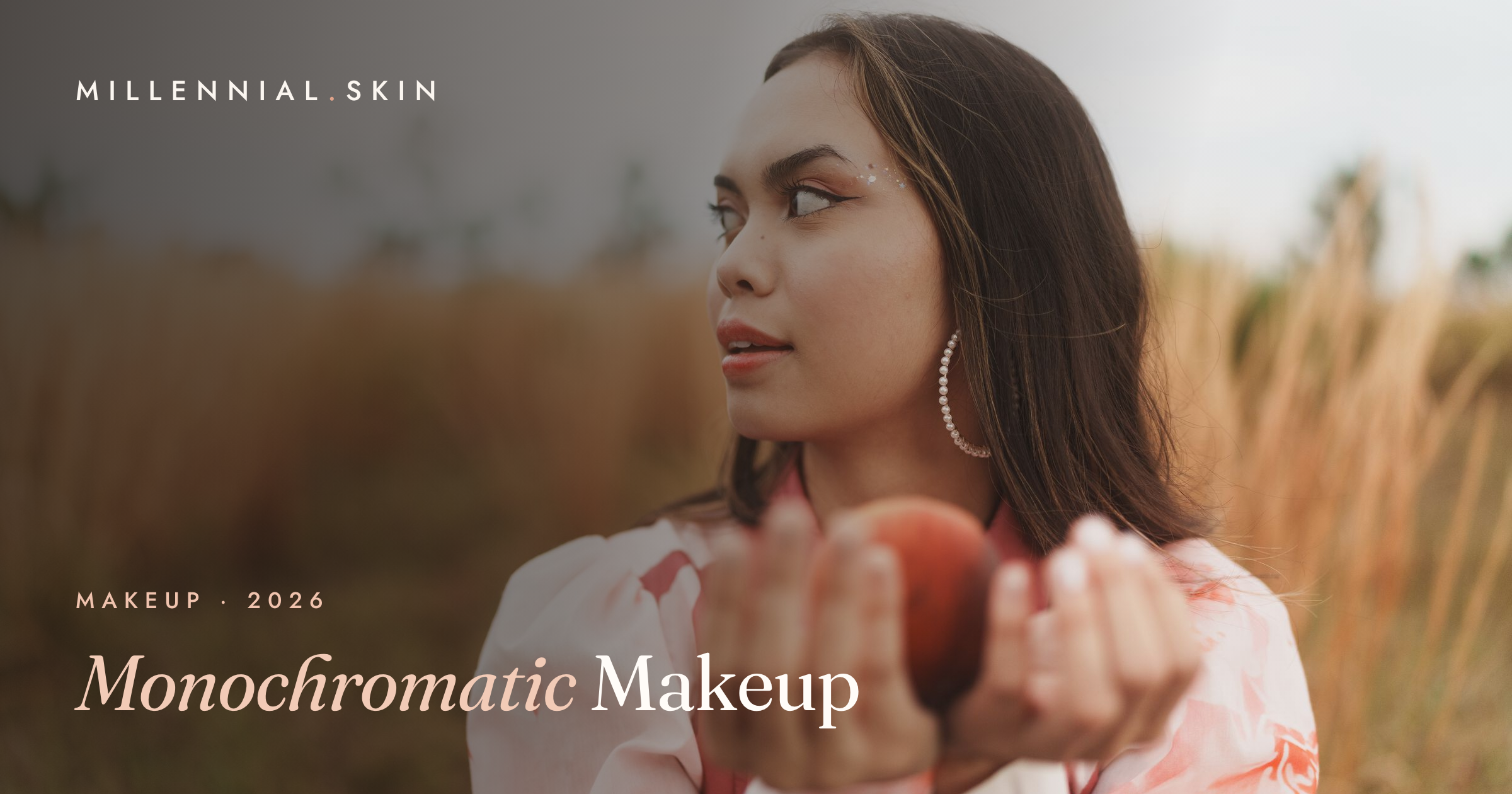
Monochromatic makeup is the practice of wearing one cohesive shade family across your eyes, cheeks, and lips to create a face that looks polished without looking done. It is one of the most flattering and fastest approaches to everyday color because every feature reinforces the next, and the most accessible version of it starts with cream products and your fingertips. If you have ever reached for a cream blush to swipe across your lips on the way out the door and thought the result looked better than your usual routine, that instinct is the entire method.
| What it is | One coordinated shade family worn across eyes, cheeks, and lips for a unified, effortless look |
|---|---|
| Best for | Minimalists, busy mornings, anyone who wants a polished result without complexity |
| Key products | Cream blush sticks, multi-use color sticks, cream eyeshadow, tinted lip balms |
| Time needed | 5–10 minutes |
| Vibe | Effortless, quietly editorial, confident without effort |
What exactly is monochromatic makeup, and why is it so flattering?
Monochromatic makeup is flattering because the human eye reads tonal harmony as health — when the same warmth or coolness repeats across the face, the result registers as natural flush rather than product. The technique draws from basic color theory: hues from the same family unify features, while mismatched colors across cheeks, lips, and eyes fragment the face and make individual products obvious. That cohesion is why a single soft coral worn across lids, cheeks, and lips reads as glowing skin rather than a full face of makeup.
The look is also genuinely forgiving. Slight variations in intensity — more concentrated on the cheeks, sheerer on the lids — fall completely within the same tonal range and appear natural rather than mismatched. There is no need for precise blending or complementary color theory because the constraint is already built in: everything shares a family.
How do you choose the right shade family for your undertone?
The most reliable way to find your monochromatic shade is to match the product’s undertone to your skin’s undertone — warm undertones pair with corals, terracottas, and warm roses; cool undertones pair with berries, mauves, and true pinks; neutral undertones can borrow from either direction depending on the occasion.
- Warm undertones (yellow, golden, peachy): Peach, coral, terracotta, and warm rose enhance natural warmth and create the sun-kissed glow monochromatic makeup is known for.
- Cool undertones (pink, red, bluish): Berry, raspberry, dusty mauve, and soft plum create a porcelain-cool contrast that photographs cleanly.
- Neutral undertones: Dusty rose, soft brick, and warm nude move between seasons without clashing — the safest starting point for anyone new to the method.
- Olive undertones: Terracotta, rust, and warm brick flatter without going ashy. Avoid anything with a strong blue base, which can read muddy against olive skin.
- Deep skin tones: Rich berry, brick red, and deep terracotta are especially striking because the contrast deepens the overall luminosity. Look for fully pigmented cream formulas that show up without heavy layering.
If you are new to monochromatic makeup, a warm peach-rose is the most forgiving starting shade — it sits between warm and cool and flatters the widest range of undertones. Once you find the shade that makes your skin look lit from within, replicate it across all three features.
What is the step-by-step for a monochromatic face?
The most efficient order is skin prep, then cheeks, eyes, and lips — in that sequence you calibrate intensity as you go and ensure everything reads with consistent softness before you leave the house.
- Step 1 — Hydrate: Moisturized skin is not optional for cream formulas. Apply moisturizer and let it fully absorb before adding any color — cream products cling to dry patches and blend unevenly on a dehydrated surface.
- Step 2 — Base (optional but recommended): A sheer skin tint creates the “skin but better” canvas that makes monochromatic color read as effortless rather than bare. See our full breakdown of how to choose a lightweight skin tint that enhances without masking for guidance on pairing coverage with cream color.
- Step 3 — Cheeks first: Apply a cream blush stick to the apples and blend upward toward the temples with fingertips. Start lighter than you think you need — you can build, but you cannot easily remove.
- Step 4 — Eyes: Tap a cream eyeshadow in a matching tone over the lids with one fingertip. A single wash of color is all this look requires — no cut crease, no liner, no blending brush.
- Step 5 — Lips: Finish with a tinted lip balm in the same shade family. It adds just enough color to tie the face together while keeping the overall effect fresh rather than heavy.
- Step 6 — Final check: Step back and assess the full face. The goal is gradient harmony, not uniformity. Cheeks can be medium, eyes lighter, lips sheer-to-medium — variation within the family is what prevents the look from reading as flat.
Which products make monochromatic makeup easiest?
A cream blush stick, a multi-use color stick, a cream eyeshadow palette, and a tinted lip balm cover every feature in the monochromatic method and are the four product types most worth keeping in a streamlined kit.
| Product | Why we like it |
|---|---|
| Cream Blush Stick | Fingertip-blendable, buildable pigment; works on cheeks and doubles as a quick eye wash |
| Multi-Use Color Stick | One product for eyes, cheeks, and lips — the fastest monochromatic kit possible |
| Cream Eyeshadow Palette | Curated tonal shades in one compact; lets you add subtle depth across the lids without guesswork |
| Tinted Lip Balm | Sheer finish that ties the look together; comfortable enough for all-day wear without reapplication |
Which shade families work best for different occasions?
Soft peach, apricot, and warm rose are the most versatile everyday shades because they read as enhanced skin tone rather than deliberate color, which translates naturally across casual, professional, and social settings. The intensity — not the technique — is the only variable that needs to change as the occasion shifts.
- Everyday / office: Soft peach, warm blush pink, or nude rose. Light pigment load; looks polished rather than made-up.
- Weekend / casual: Warm coral or peachy terracotta. More presence, same five-minute effort.
- Evening / dinner: Deep rose, berry, or dusty mauve. Same method, richer application and a slightly more saturated lip.
- Editorial / statement: Brick red or burnt sienna applied more intensely on the cheeks, with a sheerer lip that keeps the look wearable rather than severe.
Shifting from day to night requires no change in technique — simply apply a heavier layer of the same products, or choose a deeper shade within the same color family. A sheer apricot tinted balm during the day can become a deeper coral-berry in the evening while maintaining the same tonal harmony.
Why do cream textures make monochromatic makeup work better than powder?
Cream formulas blend together on skin in a way powder formulas cannot replicate, which is why they are the backbone of any effective monochromatic look. Powder products — blush, eyeshadow, matte lipstick — sit on top of skin as distinct textures and make individual products visually obvious. Creams sink into skin, pick up the same light, and appear to merge together, which is precisely the optical effect monochromatic makeup depends on for its seamlessness.
Cream color also rewards skin prep in ways powder does not. A hydrated face acts as the ideal canvas: product glides on evenly, blends without patchiness, and lasts better because it bonds to hydrated skin cells rather than sitting on a dry, flaking surface. Heavy foundation underneath works against this — it creates a barrier between the cream color and skin and breaks down the melted quality the look needs. Sheer skin tints and tinted moisturizers are the stronger pairing, and if blush placement is something you want to think through more carefully, see our piece on fixing blush placement for a balanced, proportional face.
What mistakes should you avoid with monochromatic makeup?
The most common mistake is choosing a shade that fights your undertone rather than working with it — a cool-toned berry on deeply warm skin reads gray rather than rosy, and a warm terracotta on very cool undertones can appear muddy at the edges. When testing a shade, swatch it on the inner wrist near a vein: the product should amplify what is already present, not contrast it.
- Going fully matte: Matte finishes across all three features flatten the face and remove any sense of life or glow. At least one product — usually the eyes or lips — should carry a soft sheen or balm finish for dimension.
- Skipping moisturizer: There is no workaround for a dehydrated base when using cream formulas. Dry patches will catch pigment and look patchy from the first application.
- Using identical intensity on every feature: Wearing the exact same pigment load on cheeks, eyes, and lips makes the look appear costume-like or theatrical. The classic ratio is medium on cheeks, light on eyes, and sheer-to-medium on lips.
- Mixing undertone directions within the same color family: Warm coral cheeks and a cool berry lip are both technically “pink” but will visually clash. The undertone must travel in one direction — warm with warm, cool with cool — across all three features.
- Over-applying from the start: Cream formulas are far easier to build up than to remove once set. Start with a thin layer, blend completely, then assess before adding more product.
FAQ
Does monochromatic makeup work for deep skin tones?
Yes — monochromatic makeup works beautifully on deep skin tones, particularly with rich berries, brick reds, and deep terracottas that create striking warmth and luminosity against deeper complexions. The key is to select deeply pigmented cream formulas, since sheerer products may not deliver enough visible color for the tonal cohesion the look depends on.
Can you do a monochromatic look with powder products?
You can, but the result will be less seamless than a cream-based approach because powder textures sit on the surface of skin rather than blending into it. If powder is preferred, choose satin or shimmer finishes rather than matte, and apply a hydrating primer first to encourage the products to merge more convincingly.
How do you prevent a monochromatic look from appearing flat or washed out?
Add textural contrast within the same color story — a glossy tinted lip balm against a satin cheek finish, or a soft cream highlighter at the tops of the cheekbones that shares the overall warmth of the look. Variation in finish, not in shade, is what builds dimension without disrupting tonal harmony.
Is monochromatic makeup flattering for mature skin?
It is one of the most recommended techniques for mature skin because cream textures hydrate and visually blur fine lines in a way powder products cannot, and tonal harmony produces a natural lifting and glowing effect without layering on heavy product. A slightly lighter hand on the lids and a sheeer lip tend to be the most wearable adjustments for mature complexions.
What is the fastest possible monochromatic look for a busy morning?
A multi-use color stick applied with fingertips to cheeks, lids, and lips — in that order — takes under five minutes and requires no brushes, palettes, or additional steps. Follow with a swipe of tinted lip balm over the color on the lips for longer wear, and the entire face is finished with two products.
Leave a Reply