
This post contains affiliate links. As an Amazon Associate, Millennial Skin earns from qualifying purchases — at no extra cost to you.
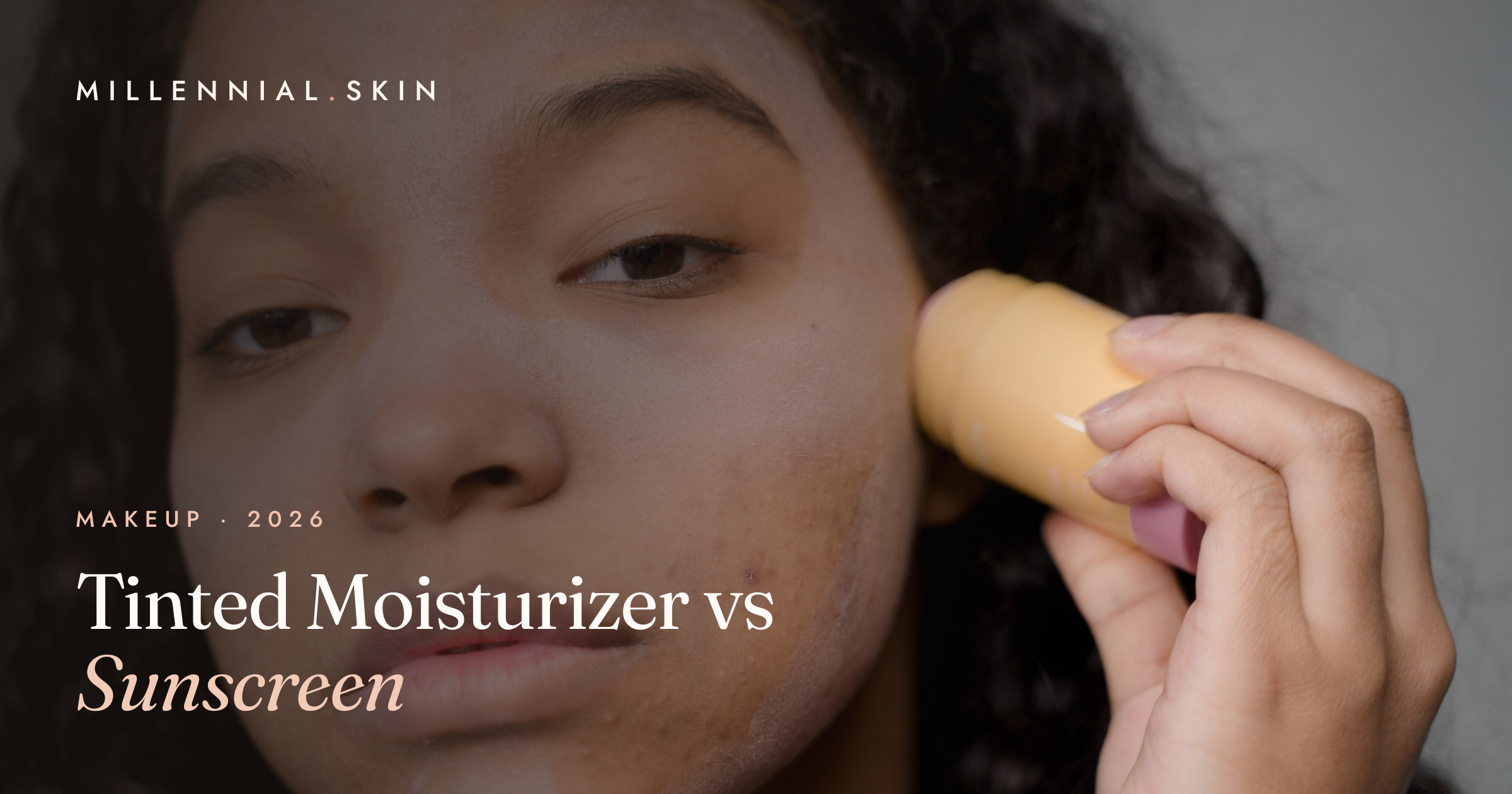
The short version: a tinted moisturizer is a lightweight base that evens out your skin tone, while a tinted sunscreen is a sun protectant with a sheer wash of color — and for summer, the tinted sunscreen wins because it delivers rated SPF and your skin actually needs that protection in June. The two look almost identical on the shelf and feel similar on your face, which is exactly why they get confused. But one of them is built to shield you from UV damage, and the other is mostly a makeup product that happens to glow. Knowing the difference is the line between “I have a nice base” and “I’m genuinely protected on a 90-degree day.”
Here’s the catch that trips everyone up: a tinted moisturizer usually does not contain SPF unless the label specifically lists a number. So if you reach for a tinted moisturizer as your only step before heading outside, you may be walking around with zero sun protection and no idea. Let’s break down what each one really does, where each shines, and how to build a summer base that’s both pretty and protective.
Tinted Moisturizer vs Tinted Sunscreen at a Glance
| Tinted Moisturizer | Tinted Sunscreen | |
|---|---|---|
| What it is | A hydrating base with a hint of pigment to even skin tone | A broad-spectrum sunscreen with sheer color built in |
| Coverage | Sheer to light; blurs redness and unevenness | Sheer to light; evens tone while shielding skin |
| Sun protection | Usually none unless an SPF number is printed on the label | Rated SPF (typically SPF 30–50), broad-spectrum UVA/UVB |
| Finish | Dewy, skin-like, natural | Natural to satin; mineral formulas can read matte |
| Best for | Quick, no-makeup-makeup days when SPF comes from another step | Summer, beach days, and anyone who wants color and protection in one |
What Is a Tinted Moisturizer?
A tinted moisturizer is a moisturizer with a small amount of pigment mixed in. Its job is hydration first, light color second — it softens redness, blurs uneven patches, and gives skin a healthy, lit-from-within look without the weight of foundation. Think of it as the gym shorts of your makeup bag: comfortable, low-effort, easy to throw on.
- Primary job: moisturize and lightly even out tone for a fresh, natural face.
- Finish: dewy and skin-like, which is why it reads so effortless.
- The big caveat: most tinted moisturizers contain no SPF. Some do — but only if a number is printed on the packaging. Never assume.
What Is a Tinted Sunscreen?
A tinted sunscreen is sunscreen first, with a sheer veil of color added so you get protection and a polished base in a single step. Most are mineral formulas built on zinc oxide and titanium dioxide, and the tint does double duty: it cancels the chalky white cast those minerals are notorious for while evening out your complexion.
- Primary job: protect against UVA and UVB rays with a rated, broad-spectrum SPF.
- Bonus: iron oxides in many tinted formulas also help defend against visible light — useful if you deal with melasma or stubborn dark spots.
- The win: you get color and certified sun protection without layering two products.
Which Gives More Coverage?
They’re remarkably close — both land in the sheer-to-light range, so neither is a true foundation replacement. Tinted moisturizer tends to feel slightly more like makeup, blurring redness with a dewy softness. Tinted sunscreen leans more “skin” than “makeup,” though mineral pigments can still even things out impressively. If you want real coverage from either, layer a little concealer where you need it rather than piling on more product. For a fuller face, both pair well with the kind of effortless, one-shade approach in our monochromatic makeup guide.
Which Protects Your Skin Better?
Tinted sunscreen, without question — it’s the only one of the two guaranteed to protect you, because SPF is its entire reason for existing. A tinted moisturizer might offer protection, but only if the label lists an SPF, and even then the amount you apply for a sheer base is often less than the lab-tested dose. In summer, with longer days and stronger UV, this matters more than at any other time of year.
- Tinted sunscreen: rated broad-spectrum SPF, tested for both UVA (aging) and UVB (burning) rays.
- Tinted moisturizer: protection only if SPF is stated — otherwise treat it as cosmetic, not protective.
- Either way: apply enough. A pea-sized dab won’t cut it; you need about a nickel-sized amount for the face, reapplied every two hours of sun exposure.
Can You Use Both?
Yes — and pairing them is one of the smartest summer moves you can make. Use a dedicated broad-spectrum sunscreen (tinted or untinted) as your protective layer, then add a tinted moisturizer on top if you want a little more glow or color. The order matters: skincare, then sunscreen, then your tinted base. If you’d rather keep it to one step, a tinted sunscreen handles both jobs at once. And don’t forget the spots people skip in summer — ears, neck, and your part line. Our roundup of viral makeup actually worth the hype includes a few hybrid SPF bases worth a look.
Which Is Better for Oily vs Dry Skin?
It depends on your skin type — dry skin tends to love a tinted moisturizer, while oily skin usually does better with a tinted mineral sunscreen. The deciding factor is finish: dewy products flatter dry skin and emphasize oil, while satin or soft-matte formulas keep shine in check.
- Dry skin: reach for a dewy tinted moisturizer (and add SPF separately), or a tinted sunscreen labeled hydrating.
- Oily or combination skin: a mineral tinted sunscreen with a satin-to-matte finish keeps shine down and won’t slide off in the heat.
- Sensitive or breakout-prone skin: mineral (zinc/titanium) tinted sunscreens are typically the gentlest pick. Pair with a soft lip moment like our blurred lips look for a low-effort summer face.
Product Picks
| Product | Why we like it |
|---|---|
| Tinted Mineral Sunscreen SPF 50 | Broad-spectrum zinc-based protection with a sheer tint that cancels white cast — the do-it-all summer base. |
| Hydrating Tinted Moisturizer | Lightweight, dewy color for no-makeup days. Layer over SPF for an effortless, glowy finish. |
| Broad-Spectrum Facial SPF 50 | An untinted standalone sunscreen for full protection under any base — the layer your tinted moisturizer needs. |
| Translucent Setting Powder | Locks down a dewy base and tames midday shine without flattening your glow. |
| Beauty Sponge | Presses sheer bases into skin for a seamless, streak-free finish — and makes reapplying SPF over makeup far easier. |
| SPF Setting Spray | A quick top-up of protection over your finished face — the easiest way to reapply sunscreen at midday. |
The Bottom Line
If you only buy one product for summer, make it a tinted sunscreen — it gives you color and the rated, broad-spectrum protection your skin genuinely needs when the UV is high. A tinted moisturizer is a lovely, lightweight base, but treat it as cosmetic unless its label clearly states an SPF, and always back it up with a dedicated sunscreen. The smartest setup is both: protect first, then add glow. Either way, apply enough, reapply through the day, and don’t skip the easy-to-forget spots. Your summer skin — and your future self — will thank you.
Leave a Reply