
This post contains affiliate links. If you buy through them, we may earn a small commission — at no extra cost to you.
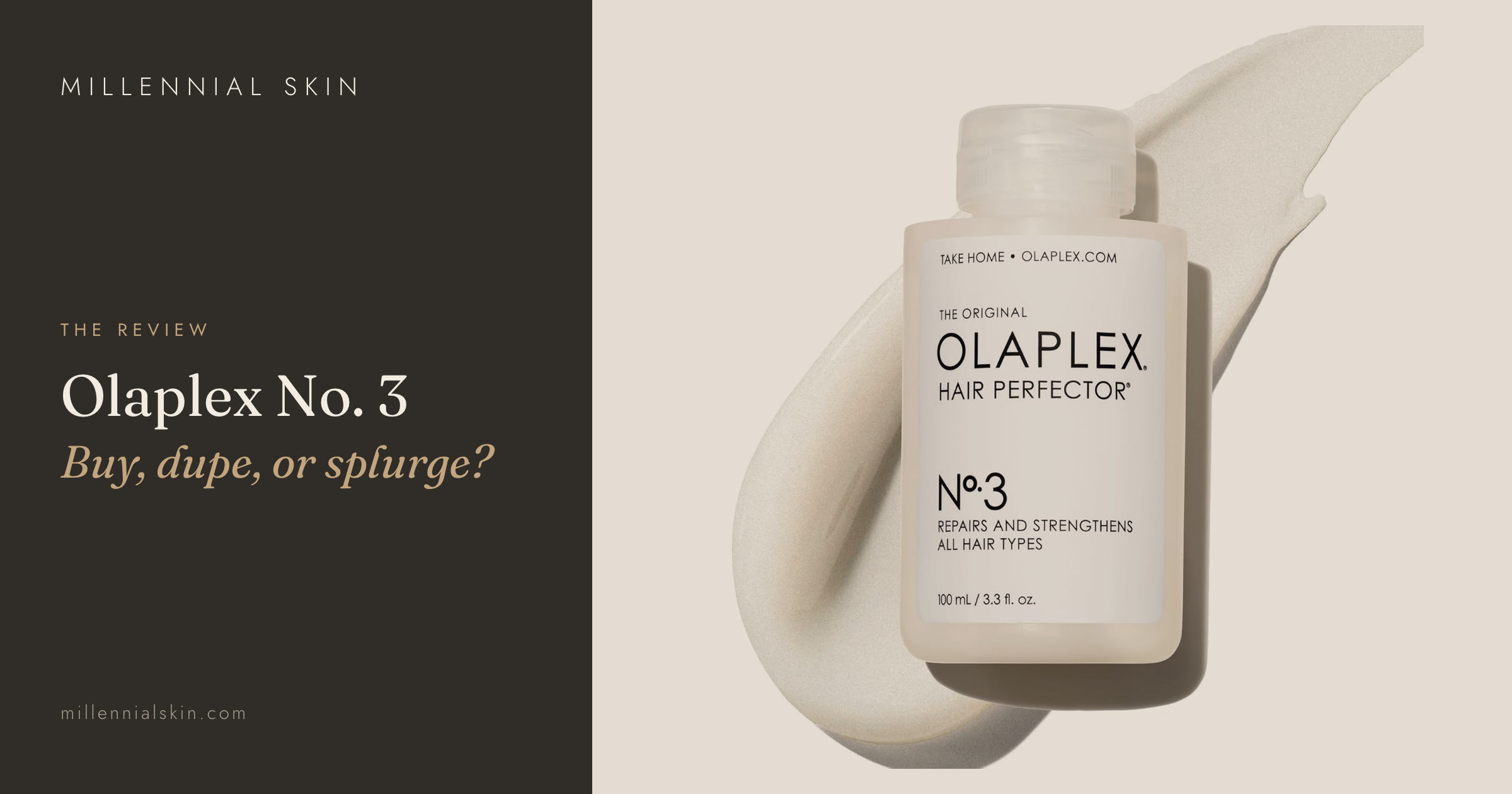
Olaplex No. 3 Hair Perfector is the product that made “bond repair” a household phrase. It’s all over TikTok, it’s a salon staple, and damaged-hair girls swear by it. But at around $30 for a small bottle — and it’s a pre-shampoo treatment, not a quick mask — is it actually worth buying? Or can a $13 drugstore bond repair do the job, and is the buzzy $75 splurge better? In this Buy, Dupe, or Splurge breakdown, we help you decide.
The quick verdict: buy, dupe, or splurge?
Short on time? Here’s the fast answer, with the link to shop each option:
| Option | Best for | Where to shop |
|---|---|---|
| Buy — Olaplex No. 3 (~$30) | You have color-treated, bleached, or heat-damaged hair and want the proven original bond builder. | Shop Olaplex No. 3 → |
| Dupe — L’Oréal Elvive Bond Repair (~$13) | You want bond-repair benefits on a budget, or milder damage that doesn’t need the strongest option. | Shop the dupe → |
| Splurge — K18 Leave-In Molecular Repair Mask (~$75) | You want the fastest, leave-in repair (4 minutes, no rinse) for seriously over-processed hair. | Shop the splurge → |
Want the full picture first? Here’s what it does, who needs it, and how the dupe and splurge really compare.
The quick facts
| Product | Olaplex No. 3 Hair Perfector |
|---|---|
| Price | ~$30 for 3.3 oz |
| What it is | A pre-shampoo bond-building treatment |
| Best for | Color-treated, bleached, chemically or heat-damaged hair |
| How often | Once or twice a week |
| Our rating | 4.5 / 5 |
What Olaplex No. 3 actually is
Olaplex No. 3 is not a conditioner and not a mask — it’s a weekly treatment you use before you shampoo. It’s built around Olaplex’s patented bond-building technology, which works to repair the broken internal bonds in your hair that get damaged by bleach, color, chemical services, and heat styling. Over time, those repaired bonds mean stronger, less brittle, better-behaved hair. It’s the at-home version of the No. 1 and No. 2 treatments your stylist uses during a color service.
Who it’s for
This is made for damaged hair. If you color or bleach your hair, use hot tools regularly, or your ends feel dry, brittle, gummy, or snap easily, you’re the target audience. Healthy, virgin hair that’s never been processed won’t see as dramatic a difference — it’s a repair treatment, not a shine serum. All hair types and textures can use it, from coily to straight.
How to use it
Apply it to damp, towel-dried (not soaking) hair, concentrating on the mid-lengths and ends where damage lives. Leave it on for at least 10 minutes — longer is fine and often better for very damaged hair. Then shampoo and condition as usual. Use it once or twice a week. The most common mistake is treating it like a rinse-out conditioner in the shower; it needs that pre-wash dwell time to do its job.
Does it actually work?
For genuinely damaged hair, yes. With consistent use, most people notice less breakage, smoother texture, and hair that feels stronger and looks healthier over a few weeks. It’s not an overnight fix and it won’t “undo” split ends (nothing truly does — you still need trims), but as an ongoing strength-builder it earns its cult status. If your hair isn’t damaged, you may find it underwhelming, which is exactly why it’s not for everyone.
Pros and cons
| Pros | Cons |
|---|---|
|
|
The dupe: L’Oréal Elvive Bond Repair
If you want bond-repair benefits without the salon price, L’Oréal’s Elvive Bond Repair line is the drugstore go-to at around $13. It uses citric acid and a bonding complex to help strengthen and smooth, and reviewers with mild-to-moderate damage often find it does the job for a fraction of the cost. It’s less concentrated than Olaplex and comes as a full system (pre-shampoo, shampoo, conditioner, leave-in), so it’s a gentler, more affordable entry point rather than a like-for-like clone. Shop the dupe on Amazon →
The splurge: K18 Leave-In Molecular Repair Mask
The buzziest upgrade is K18 at around $75. Its big selling point is convenience and speed: it’s a leave-in that works in about four minutes with no rinsing, using a peptide to help reverse damage from bleach, color, and heat. Fans of very over-processed hair love how fast and lightweight it is, and how little product you need (a small amount goes a long way, which softens the sticker shock over time). If you want the most cutting-edge, lowest-effort repair, this is the splurge. Shop the splurge on Amazon →
Frequently asked questions
Is Olaplex No. 3 worth it?
If your hair is color-treated, bleached, or heat-damaged, yes — it’s the proven original bond builder and delivers real strength over time. On healthy, undamaged hair, you won’t see much, so it’s not worth it for everyone.
What is a cheaper alternative to Olaplex No. 3?
L’Oréal Elvive Bond Repair (~$13) is the best-known drugstore dupe, offering bond-repair benefits at a fraction of the price, though it’s less concentrated.
How often should you use Olaplex No. 3?
Once or twice a week, applied to damp hair before shampooing and left on for at least 10 minutes. More often won’t repair faster and isn’t necessary.
The bottom line: buy, dupe, or splurge?
If your hair is genuinely damaged, buy Olaplex No. 3 — it’s the proven original and it works. On a budget or with milder damage? The L’Oréal Elvive dupe gets you real bond-repair benefits for around $13. And if you want the fastest, leave-in, lowest-effort repair for seriously over-processed hair, the K18 splurge is worth it. Whichever you pick, pair it with heat protectant and regular trims for the best results. Shop Olaplex No. 3 on Amazon →
As an Amazon Associate we earn from qualifying purchases. Prices are approximate and were accurate at the time of writing — check the retailer for the current price.
Leave a Reply