
The best foundation for rosacea is the one your cheeks hardly notice is there. That usually means something light and fragrance-free that you can build up in thin layers, so the pink fades without giving touchy skin a new reason to flare. Our first choice is Clinique Redness Solutions Makeup SPF 15, a fragrance-free liquid that Clinique calls safe for skin with rosacea. If you want to spend less, the Neutrogena Sensitive Skin Serum Foundation is a gentle place to start, and if you have a deeper skin tone, bareMinerals gives you by far the most shades. Foundation hides redness while you wear it, but calming the rosacea itself is a job for a dermatologist.
What rosacea-prone skin wants from makeup
The American Academy of Dermatology (AAD) says dermatologists often point people with rosacea toward water-based or powder makeup, since those formulas are less likely to irritate. The National Rosacea Society likes mineral makeup for a similar reason, because it tends to leave out the ingredients that sting. It suggests an oil-free foundation in whatever coverage you like.
After that, the ingredient list tells you more than any pretty claim on the front of the box. Dermatologists suggest steering clear of alcohol, camphor, fragrance, glycolic acid, lactic acid, menthol, sodium lauryl sulfate and urea. Look for “fragrance-free” rather than “unscented,” too. Every product in this roundup clears that bar.
A sheer layer of green, then your real shade
Green sits across from red on the color wheel, so a thin green layer quietly cancels some of the pink before your foundation goes on. The National Rosacea Society suggests a sheer green-tinted base as a good first step, and even better if it has UVA and UVB protection built in. Our roundup of green color correctors has more choices, along with tips for keeping green from making your skin look gray.
Then match your foundation to your actual skin, not the redness. Our guide to matching your foundation shade shows you how to test along your jaw in daylight.
EltaMD UV Physical, sunscreen with a hint of tint

EltaMD UV Physical Broad Spectrum SPF 41 is about $50 for 3 ounces. It’s an all-mineral sunscreen with zinc oxide and titanium dioxide and a light tint that evens out skin tone. It’s made for sensitive skin and for oily to normal skin, and it’s fragrance-free, paraben-free, hypoallergenic and won’t clog pores.
This is the swap for anyone who wants one product in the morning instead of two. The tint helps hide the white cast that plain zinc can leave behind. Since there’s only one tint, treat it as a sheer evener rather than full coverage. Our sunscreens for rosacea roundup has more mineral options, including EltaMD’s green-tinted version.
MDSolarSciences Tinted Crème for barely-there days
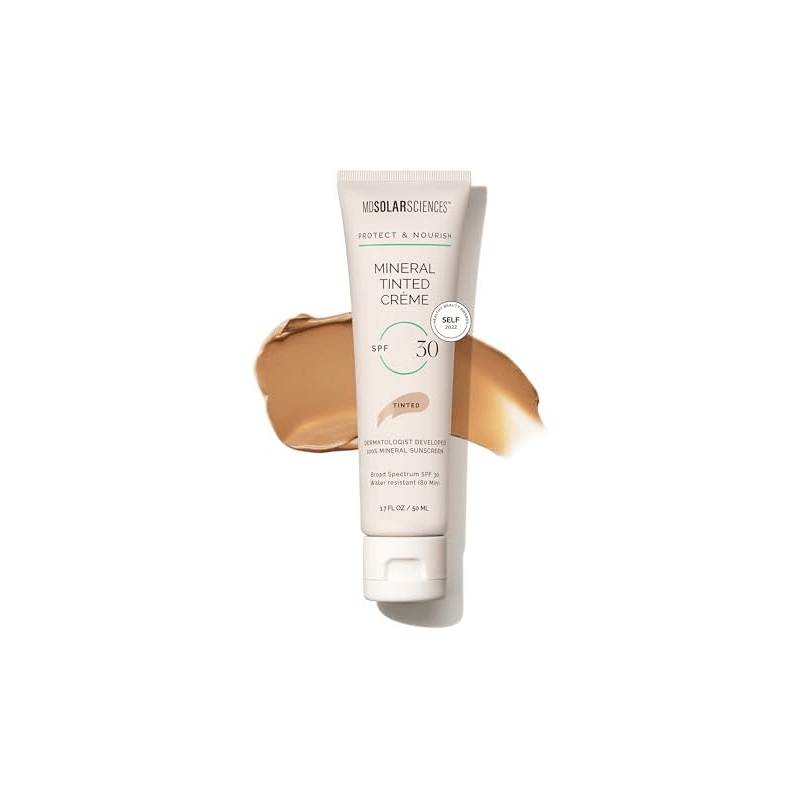
MDSolarSciences Mineral Tinted Crème SPF 30 costs about $36 for 1.7 ounces. It’s a sheer tinted mineral sunscreen with 17% zinc oxide and 2% titanium dioxide, plus vitamin C and a few plant extracts. It’s water resistant for 80 minutes, free of synthetic fragrance, and safe for sensitive skin, including skin prone to rosacea.
The tint is light enough to wear on its own or under foundation. If you have a deep skin tone, try a little first, since a single tint can’t suit everyone.
Clinique Redness Solutions Base, the green primer
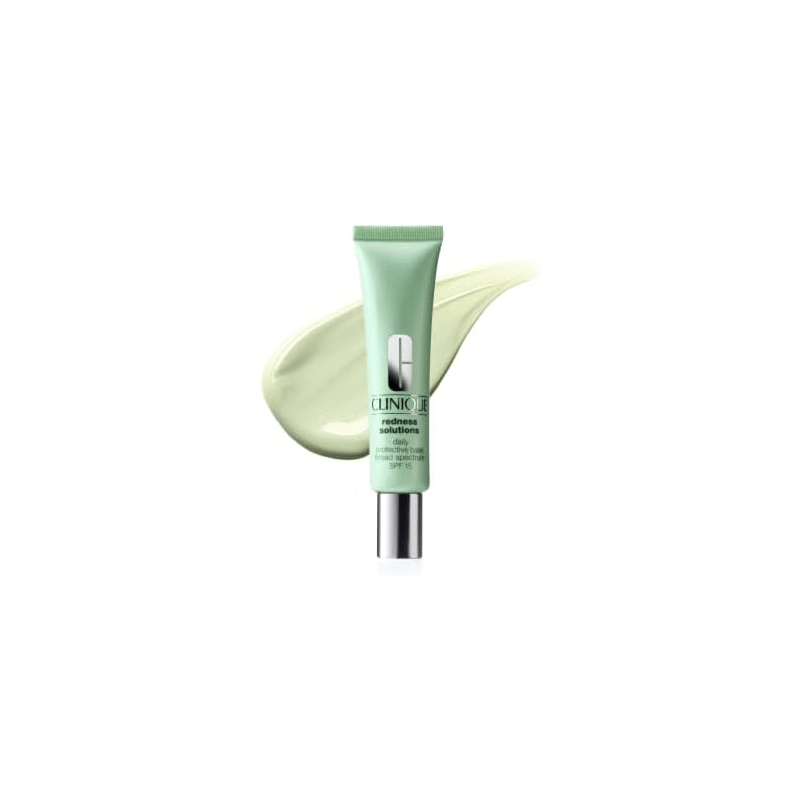
Clinique Redness Solutions Daily Protective Base SPF 15 is about $36 for 1.35 ounces. It’s an oil-free primer with a sheer green tint, and its SPF comes from mineral sunscreens. Clinique calls it appropriate for skin with rosacea, and it’s fragrance-free. It earns a spot next to the Clinique foundation below because it does a different job.
Smooth it on after moisturizer and before foundation. If redness still peeks through your usual base, correcting first means you won’t need to keep piling on more coverage to hide it.
Clinique Redness Solutions Makeup, our top pick
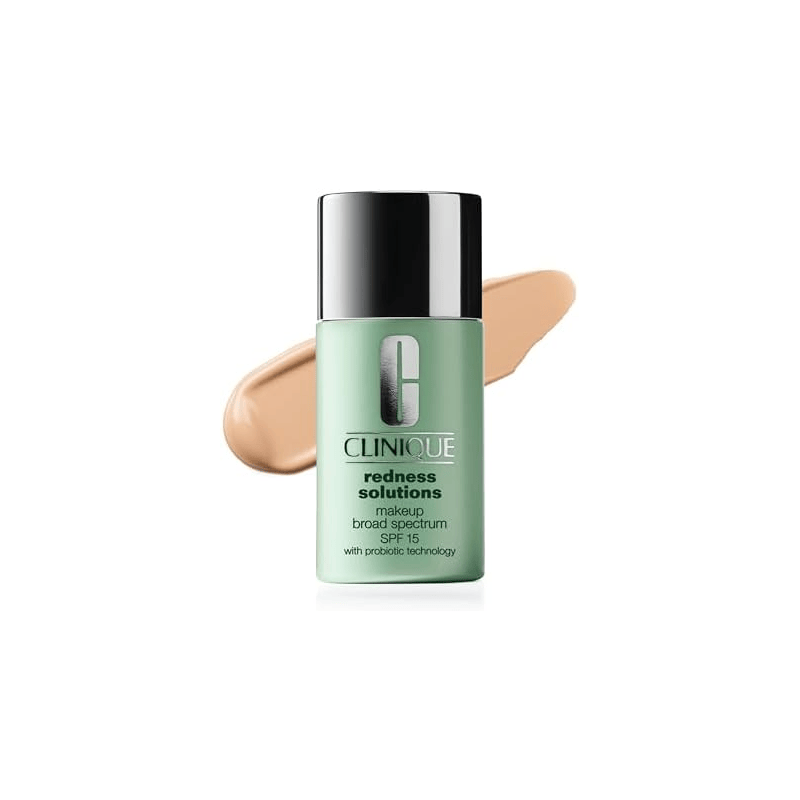
Clinique Redness Solutions Makeup SPF 15 runs about $30 for 1 ounce, though prices move. It’s a color-correcting liquid with medium coverage and a natural finish, made and Clinique says it’s safe for skin with rosacea. It’s fragrance-free and made without parabens, phthalates, SLS or SLES.
Tiny yellow and green pearls in the formula handle the correcting, so you get the green step and your foundation in one bottle. The one drawback is the shade range. There are six shades, from Calming Alabaster to Calming Honey, and they all lean light. If you’re fair to medium, this is the one to try first, and if you’re deeper, the bareMinerals further down will suit you much better.
Neutrogena Sensitive Skin Serum Foundation for a gentle start
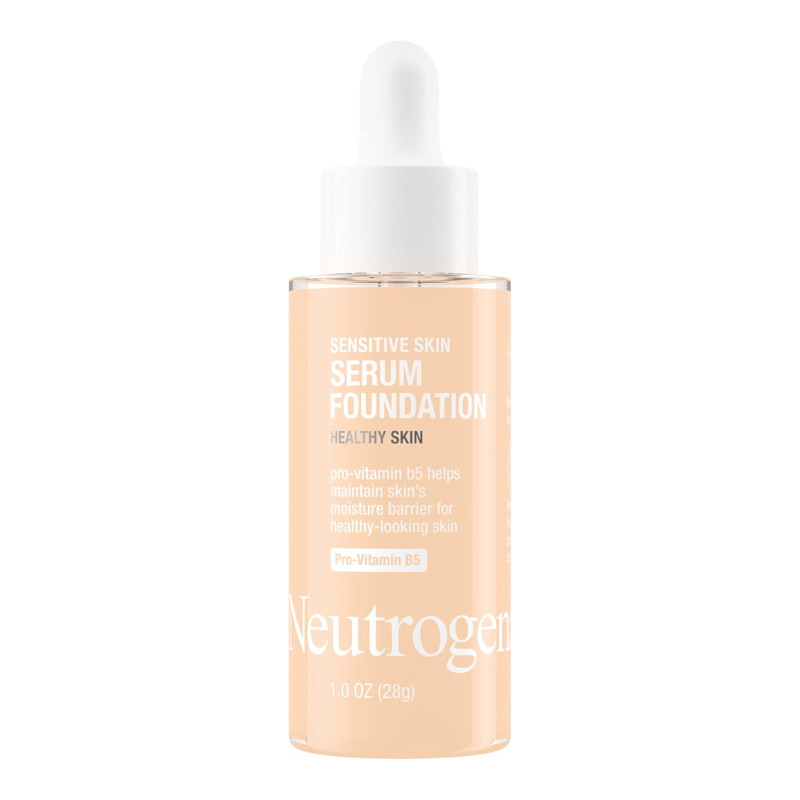
Neutrogena Healthy Skin Sensitive Skin Serum Foundation costs about $16 for 1 ounce. It’s a serum-style liquid with sheer coverage you can build, made for sensitive skin, with pro-vitamin B5 mixed in. It leaves out fragrance, alcohol, dye, parabens and sulfates, and it won’t clog pores.
It’s color correcting and made to visibly tone down redness, and the shades run from light to deep. There’s no SPF, so put your sunscreen on underneath. This is a smart pick if your redness is on the mild side, you like your skin to show through, and you’d rather not spend $30 to find out if you even like foundation.
bareMinerals Original Loose Powder for the widest shade range
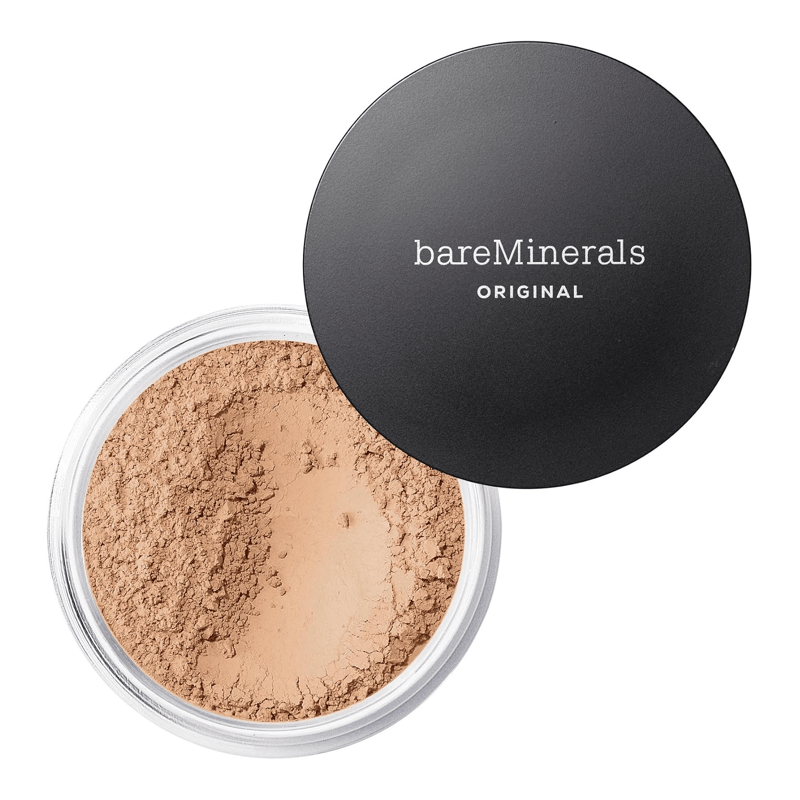
bareMinerals Original Loose Powder Foundation SPF 15 is about $40 for a 0.28-ounce jar, and it has only five ingredients. Two minerals give it the SPF, two more give it a soft glow, and iron oxides supply the color. It’s talc-free, made without synthetic fragrance, hypoallergenic and won’t clog pores.
The shade range is the reason it made the list. You get 30 shades, from Fair 01 to Deepest Deep 30, sorted into cool, neutral and warm undertones. Swirl your brush in the lid, tap off the extra, and buff it on in small circles, adding thin layers until the redness softens. The finish is glowy rather than matte, so if your skin tends to shine by lunch, one of the matte options below may make you happier.
Physicians Formula Mineral Wear, the budget powder

Physicians Formula Mineral Wear Talc-Free Airbrushing Pressed Powder is about $12. It’s a very fine pressed mineral powder that leaves skin looking smooth and airbrushed, and it’s fragrance-free, hypoallergenic, talc-free and paraben-free.
It only comes in three shades, Translucent, Beige and Creamy Natural, so unless one of them happens to match you, it works best for setting a liquid and for touch-ups during the day. For that job, it’s the cheapest option here.
How to wear it without a flare
Try it somewhere small first. Dab anything new on your neck or inner arm for several days before it goes near your face. If it burns, stings or itches, put it aside, however glowing the reviews are.
Keep the routine short. A tinted sunscreen that stands in for both sunscreen and foundation means one less product sitting on your skin all day.
Go easy with your tools. The National Rosacea Society suggests a soft brush, or a damp sponge that you press and roll over the skin instead of dragging it. Our brush vs sponge vs fingers guide walks through each tool.
Don’t lean on SPF 15 as your sunscreen. The AAD recommends a broad-spectrum SPF 30 or higher for rosacea-prone skin, and three of the products here stop at SPF 15. Wear a proper sunscreen under those, or reach for one of the tinted sunscreens instead.
Take it off gently at night. A mild cleanser and a soft pat dry are plenty. If a foundation needs scrubbing to come off, it isn’t the right one for this skin.
Matching the pick to your skin
If you’re fair to medium and your cheeks stay pink most of the time, start with the Clinique Redness Solutions Makeup, since it corrects and covers in one step. If your redness is mild and you mostly want your skin to look even, the Neutrogena is a gentle choice, or you can skip foundation and wear the MDSolarSciences tinted crème on its own.
Deep and tan skin tones will have the best luck with the bareMinerals and its 30 shades. If you get oily and liquid foundation tends to slide around, try the EltaMD as your base with a press of the Physicians Formula powder on top. And when redness shows through everything, add the Clinique green primer under your foundation rather than jumping to full coverage. If makeup seems to set off flares no matter what you choose, see a dermatologist, because the trigger may not be the foundation at all. Fragrance, alcohol and menthol are the usual makeup culprits, and our guide on how to calm rosacea redness covers what helps beyond makeup. You’ll find more coverage ideas in our makeup archive.


