
It’s the middle of summer, your face is shiny before you’ve even finished your iced coffee, and the idea of a heavy cream makes you want to scream. That’s usually when people go looking for a water gel, and two jars come up again and again. One is the blue drugstore tub from Neutrogena. The other is Clinique’s pink one from the department store, which costs more than twice as much.
They’re closer than the price suggests. Both are watery, oil-free gels built on hyaluronic acid, and both shine on normal, oily and combination skin. The biggest difference is fragrance. Neutrogena’s classic Hydro Boost Water Gel has it, and Clinique’s Moisture Surge 100H doesn’t. If scent never bothers you, the cheaper jar does the same basic job. If fragrance makes your face itch or sting, Clinique is the easier pick, or you can stay at the drugstore with a fragrance-free Hydro Boost. Below we go from the lightest gel to the richest cream, so you can find the one that matches your skin and the season.
Getting more from your water gel
A water gel works best when you don’t treat it like a thick cream. Use a pea- to almond-sized amount after your serums, morning or night, and dab it onto slightly damp skin if you can. That little bit of water helps the gel spread further and gives the humectants more to hold onto, which is the whole point of this texture.
If you’re wearing makeup, give it about a minute to dry down before foundation. Moisture Surge can leave a smooth, slightly tacky finish, which is actually helpful when you want your base to grip instead of slide around by lunch. Sunscreen still goes on top in the morning, since neither classic jar is your SPF step.
For skin that’s more stressed than thirsty, keep your expectations realistic. Moisture Surge is lovely for water, but it’s light on barrier support and doesn’t add ceramides. If dry indoor air or a long flight makes your face feel tight again fast, press a richer cream or a few drops of facial oil over the gel at night.
One more sensitive-skin note: fragrance-free doesn’t mean impossible to react to. If aloe has bothered you before, or your barrier feels really irritated, patch test first before putting it all over your face.
What a water gel can and can’t do
Gels like these are mostly humectants, ingredients like hyaluronic acid and glycerin that pull water into the top layer of skin. That’s perfect for skin that feels tight but still gets shiny by noon, which is dehydrated skin. It isn’t as helpful for dry skin, the kind that flakes or feels rough, because dry skin is short on oils and needs something richer to seal water in. Our guide to dehydrated vs dry skin helps you tell the two apart.
If you’re dry, you don’t have to give up on gels. Use one as a first layer and add a richer cream on top, especially at night. Our explainer on humectants, emollients and occlusives walks through why that layering works so well.
The cool blue gel for oily skin

Neutrogena Hydro Boost Water Gel is the wetter, lighter one. It goes on like a cool, slippery gel and disappears in seconds, which is exactly what oily skin wants under makeup. It’s mostly water, silicones and glycerin, with hyaluronic acid to hold water in, and it gives 24 hours of hydration. It’s made for normal, oily and combination skin, won’t clog pores and works for acne-prone skin. This is the “Signature Fragrance” version, with fragrance and Blue 1 on the label, so look for those words on the box. At about $20 for 1.7 ounces, it’s the budget pick of the two famous jars.
The pink gel-cream for touchy skin

Clinique Moisture Surge 100H has a little more body. It’s a gel-cream that sits somewhere between a water gel and a lotion, and it sinks in in about three seconds. The formula leans on aloe bioferment, which is concentrated, fermented aloe, plus hyaluronic acid in two sizes, caffeine and a touch of vitamins C and E. It’s made for all skin types, including sensitive skin, and it’s fragrance-free and free of oil and alcohol. It does get its soft pink tint from Red 4 and Yellow 5, so it isn’t dye-free.
The 100-hour name tells you how well the formula holds water, not that you can skip a few days. Use it morning and night like any moisturizer. It has two fun extra uses, too. Smooth on a thick layer as a five-minute mask and tissue off the rest, or pat a little over makeup for a dewy look. It’s about $48 for 1.7 ounces, while the 4.2-ounce jar brings it down to around $16 an ounce, so the big jar is the better buy once you know you love it. Our full Moisture Surge review has a splurge pick too.
Hydro Boost and Moisture Surge, line by line
| Fact | Hydro Boost Water Gel | Moisture Surge 100H |
| Price per ounce (changes often) | About $11.75 | About $28, or about $16 in the 4.2 oz jar |
| Texture | Ultra-light, cooling gel | Light gel-cream |
| Fragrance | Yes | No |
| Color added | Blue 1 | Red 4 and Yellow 5 |
| Pores | Noncomedogenic | Non-acnegenic |
A fragrance-free Hydro Boost for drier skin
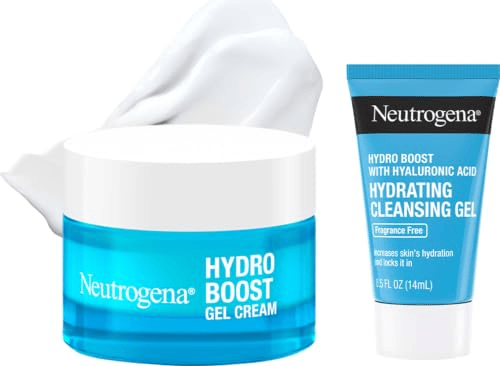
If you love the Hydro Boost price but not the scent, Neutrogena Hydro Boost Gel Cream Fragrance Free is the one to grab. It’s thicker than the Water Gel and made for normal to dry and sensitive skin, with no fragrance and no dye. Along with hyaluronic acid, it has amino acids and a little urea to help skin hold onto water. It runs about $22 and comes with a trial-size cleanser, which is a nice bonus for a travel bag.
The richest of the bunch for winter
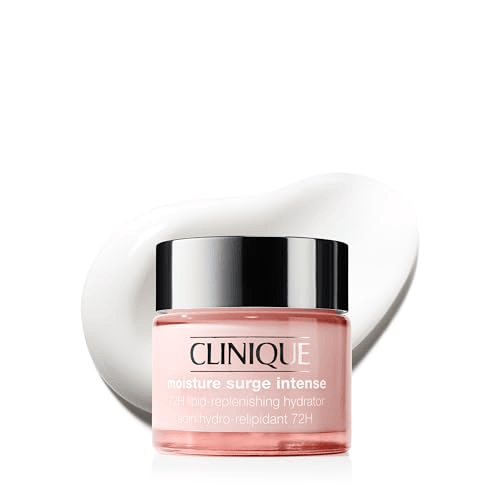
For dry or combination skin that gets flaky when the heat kicks on, Clinique Moisture Surge Intense 72H is the cozier cousin of the pink jar. It adds squalane, cholesterol and a bit of petrolatum, which help seal moisture in instead of only pulling it toward the surface. It’s fragrance-free with no synthetic colors. About $49 for 2.5 ounces, and it’s a good one to swap in when the weather turns cold.
Picking the jar that fits your face
If your skin is oily and doesn’t react to much, the classic Hydro Boost Water Gel is light, cheap and great under makeup. If fragrance has ever made your face sting or itch, go with Moisture Surge 100H, or the fragrance-free Hydro Boost Gel Cream to stay at the drugstore. Combination skin that wants a bit more cushion will like Moisture Surge’s gel-cream feel. And if your skin is dry or gets flaky in winter, skip straight to the Gel Cream or Moisture Surge Intense.
We’ve called Hydro Boost a dupe for Moisture Surge before, and it fits as long as fragrance isn’t a problem for you. It’s a similar product, not a copy. Moisture Surge adds aloe bioferment and caffeine and leaves out the scent, while Hydro Boost is thinner and cheaper.
A few things to keep in mind
Neither gel has SPF, so put sunscreen on top every morning. If you have acne-prone skin, both are made not to clog pores, but if fragrance tends to set off your breakouts, stick with one of the fragrance-free options. If you react to dyes, the two classic jars both add color, so read the full label and patch test along your jaw for a few days before it goes on your whole face.
And if your skin stays tight, flaky or itchy no matter what you put on it, a dermatologist can check for things like eczema that need more than a moisturizer.


