
It’s late, the dishwasher is humming, and your face still feels tight even though you put moisturizer on an hour ago. That tight, papery feeling is where marula oil earns its place. It’s a rich oil that sinks in better than you’d expect, and a few drops pressed over your night cream can leave dry skin feeling soft by morning. It’s also great on the dry ends of your hair and on rough cuticles.
Marula isn’t a fit for every face, though, and the reason comes down to what the oil is made of. Below you’ll find what it does, who should go slow with it, how to use it on your face and hair, and three bottles worth a look.
Where marula oil comes from
Marula oil is pressed from the nut inside the marula fruit, which grows in southern Africa. Women in parts of South Africa have rubbed it into their skin for generations, and today it shows up in lotions, lipsticks and foundations as well as in pure bottles.
Research on it is small but encouraging. A South African study on healthy women found it didn’t irritate their skin, raised moisture levels on dry skin and formed a light seal on normal skin that slowed water loss. That’s the main job of a good face oil, and marula does it well. The study didn’t look at acne, eczema, rosacea, wrinkles or dark spots, so skip any bottle that promises to fix those.
It’s a natural match for skin that drinks up product by lunch, including skin in your late 30s and beyond. MedlinePlus notes that skin makes less oil after menopause, which makes it harder to stay moist. A rich oil on top of moisturizer helps with that dry, tight feeling. For more options, see our list of the best face oils for dry skin.
Why it doesn’t suit every face
About 70% of marula oil’s fat is oleic acid, with only a small amount of linoleic acid. That mix is what makes it feel so cushiony. Research on plant oils suggests oleic acid can weaken the skin barrier with steady use, while linoleic acid helps keep it strong. That doesn’t mean marula will hurt you, but if your skin is already raw or flaky, a lighter oil may be the safer bet.
- Acne-prone skin. The AAD says many skin and hair products contain oils that can cause breakouts. Marula is about as rich as face oils get, so go slow. Squalane oil is a gentler place to start.
- Very oily skin. Your face likely doesn’t need it, but your hair ends might still love it.
- Eczema, rosacea or an irritated barrier. Wait until your skin calms down, and ask your dermatologist first if you’re being treated for a skin condition.
Patch test before it goes on your face. The AAD’s method is to put a little on a quarter-sized spot on the inside of your arm twice a day for seven to 10 days. If the skin turns red, itchy or swollen, wash it off and don’t use it again. If breakouts are your worry, test it on a small patch of your jaw for a couple of weeks too.
Picking a bottle
Look for “cold-pressed” and “unrefined” on the label. Cold pressing skips heat, and unrefined oil keeps more of what the nut started with. Pure marula oil should list one ingredient, often written as Sclerocarya birrea seed or kernel oil. All three of these fit the bill.
An easy first bottle for face, hair and body
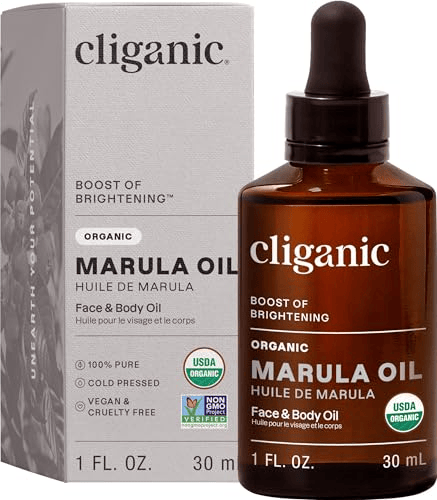
Cliganic Organic Marula Oil is a single-ingredient organic oil made for face, hair and body, and at about $10 it’s a low-risk way to see how your skin feels about marula. Keep a bottle by the bathtub for elbows and the backs of your arms, too.
Cold-pressed and simple for everyday use
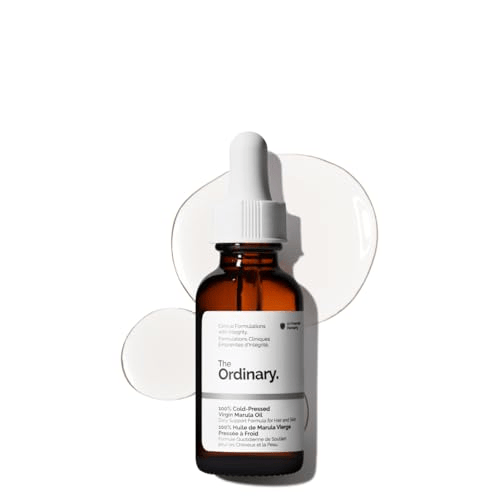
The Ordinary 100% Cold-Pressed Virgin Marula Oil is pure virgin marula seed oil, cold-pressed and unrefined. Use a few drops on your face once a day, or work it through damp, clean hair. It’s about $11 and a great pick if you like simple formulas with nothing extra.
A splurge made for mixing
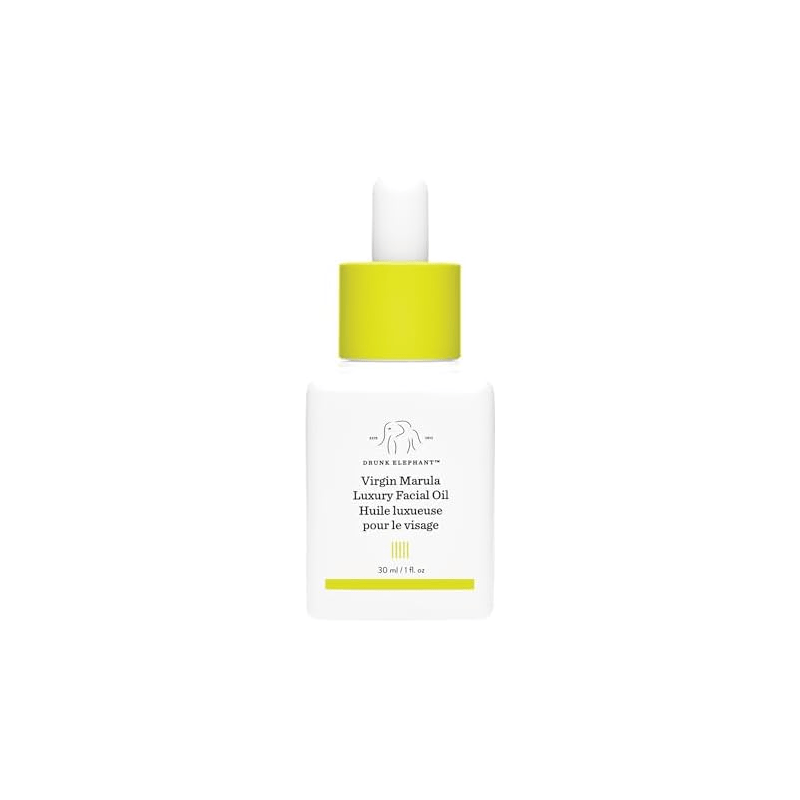
Drunk Elephant Virgin Marula Luxury Facial Oil is 100% unrefined marula kernel oil with no fragrance or essential oils, and it’s made to mix right into your other products, like a drop in your moisturizer or foundation. It works on hair and cuticles too. At about $72, it’s the pretty bottle for your vanity. If you’d like the same idea for less, our Drunk Elephant dupes post has options.
Using it on your face
Two or three drops cover your whole face. Warm them between your fingertips and press them into your skin instead of rubbing.
Night is the easiest time. Cleanse, then use your serum and moisturizer, and finish with the oil to seal everything in. If you use retinol, there’s no known clash, so put the retinol on first and the oil last. You can also mix a drop into your moisturizer in your palm if you’d rather skip a step.
Mornings work on very dry skin. Use one drop, give it a few minutes to sink in, and put sunscreen on top. A heavy layer under makeup can make it slide around by midday.
Don’t count on it to replace your moisturizer. Oil holds water in, but it doesn’t add much on its own, and skip it on broken or cut skin.
Hair, hands and everywhere else
On hair, stick to the ends. Rub a drop or two between your palms and smooth it over damp or dry ends, keeping it away from your hairline if you break out there. The AAD says oil from hair products can clog pores along the forehead. Oil softens split ends, but it can’t fix them; a trim does that, and hair dusting is the gentle way to get one.
A single drop rubbed into dry cuticles, elbows or rough knuckles works too, or mix a drop into your body lotion after a shower.
Keeping it fresh
Plant oils go stale over time. Keep the cap tight and store the bottle somewhere cool and dark, like a drawer, not a sunny bathroom windowsill. If it starts to smell sharp, sour or different from when you opened it, it’s time for a new bottle.


