
The first time I squeezed pure sea buckthorn oil out of a dropper, I honestly thought I’d bought a bad bottle. It’s this deep, almost neon orange, closer to a highlighter than anything I’d put on my face. Use a little too much and your face can look a bit yellow for a few hours. And if you go to bed on a white pillowcase, the stain may stick around a lot longer than that (mine never fully came out).
The color comes from the same pigments that make carrots orange. Under all that orange there’s a rich mix of fatty acids, and that’s the part that leaves dry, dull skin soft and comfortable. A few drops really is plenty. If the color is a dealbreaker for you, the right bottle gets you the softness with no tint at all, so don’t write it off yet.
A thorny shrub with two different oils
The plant itself is a tough, thorny shrub that grows in cold, dry places and gets covered in tiny orange berries. I’d assumed “sea buckthorn oil” was one thing. It isn’t. You get two oils from it, and they’re pretty different.
Oil pressed from the berry pulp is the bright one. It has lots of carotenoids, along with a fatty acid called palmitoleic acid, which you’ll often see sold as “omega-7.” Oil pressed from the seeds is much paler and higher in other fatty acids and vitamin E.
That’s why I’d look hard at the name on the bottle before buying. “Berry” or “fruit” oil will be the strong orange kind, while a “seed” oil is lighter and a lot less likely to tint. Plenty of bottles mix the two, and the name is usually the only place you’ll find out which you’ve got.
What it does on your skin
Mostly it’s the fatty acids. They help your skin hold on to water. That’s why dry or tight skin can feel softer within a few days of adding an oil, which honestly surprised me. Per Cleveland Clinic, a face oil can help very dry or irritated skin. It forms a light barrier on top, and that slows down water loss. Tight face by lunchtime? Flaky bits around your nose in winter? I get both, and that’s the kind of skin an oil like this is good for.
You’ll probably run into much bigger claims about this oil, like that it fades dark spots, clears acne or protects you from the sun. I went and read up on it, and most of the research behind those claims was done in cells and animals. The human studies so far are small. So I’d buy it as a rich moisturizing oil and leave it at that.
It also isn’t sunscreen, even though carotenoids sometimes get talked up that way online. Keep wearing your usual SPF every morning.
Who should go easy
If your skin is acne-prone, or you have seborrheic dermatitis, Cleveland Clinic suggests thinking twice about face oils. With rosacea, they say to be careful too. I’ve had oils break me out in the past, and if that’s you as well, a lighter option like squalane oil may suit you better. Very oily skin probably doesn’t need the extra oil at all.
Any plant oil can cause an allergic reaction in some people, and there’s no way to know ahead of time, so patch test before it touches your face. The AAD’s way of doing it is easy enough: dab a little on a quarter-sized spot, like the inside of your arm, twice a day for seven to 10 days. If you get itching, redness, bumps or swelling, stop, wash it off gently and don’t use it again. A bad reaction, or one that won’t calm down, is worth a visit to a dermatologist.
Fitting it into your night routine
I only ever use oils at night, and with this one there’s a real reason: any tint has hours to fade and nobody’s around to see it. The order is wash your face, any serum, your moisturizer, and then the oil goes on last. Retinol and vitamin C are fine with it, they just go on first. I warm one or two drops between my fingertips and press them into my skin instead of rubbing. A blended oil can take a few more drops than a pure one.
When I first started with face oils I went every other night for a week or two, just to see how my skin took it, and I’d do the same here. I also learned to let it sink in for a while before lying down, and to wash my hands after, because this stuff stains light towels and clothes. I sleep on an old pillowcase on oil nights now. If you’re confused about oil versus serum and which goes first, I get it, and our guide to facial serum vs face oil clears that up.
Store the bottle somewhere cool and dark with the cap closed. Oils go stale faster in a warm, bright bathroom, and you’ll know when it’s happened because it starts to smell sharp, like crayons, or just off. That’s your cue to replace it.
Four bottles, from no tint to full orange
I lined these up from the one I’d hand a nervous friend all the way to the pure berry oil.
The $10 bottle to start with
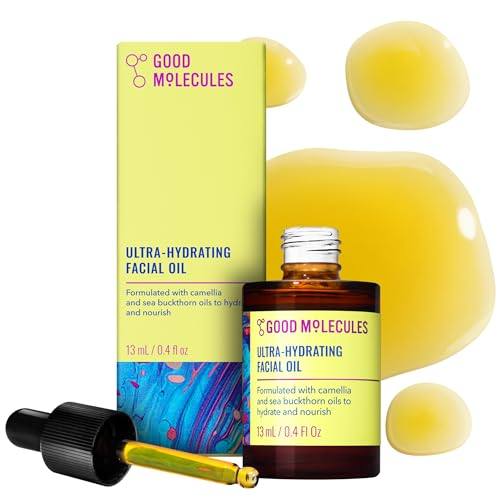
This is the bottle I’d buy for a friend who keeps saying she’s “not an oil person.” Good Molecules Ultra-Hydrating Facial Oil is 98% camellia seed oil with 2% sea buckthorn fruit oil, so the sea buckthorn is really just a small part of a soft, silky oil. Even that little bit has some natural color, so I’d still put it on at night. At about $10, it’s a cheap way to see if your skin likes face oils at all.
A splurge blend for dry skin

Herbivore Phoenix mixes rosehip and sea buckthorn oils in a pretty glass bottle that I’d happily leave out on a bathroom shelf. It’s non-comedogenic and made for normal to dry skin. Since the sea buckthorn shares the bottle with other oils, it’s much easier to wear than a pure oil. It’s about $58 for 30 mL. That’s a lot for a face oil, and I’d keep it for winter when skin is at its driest. There are more like it in our list of the best face oils for dry skin.
Pure seed oil with a softer color
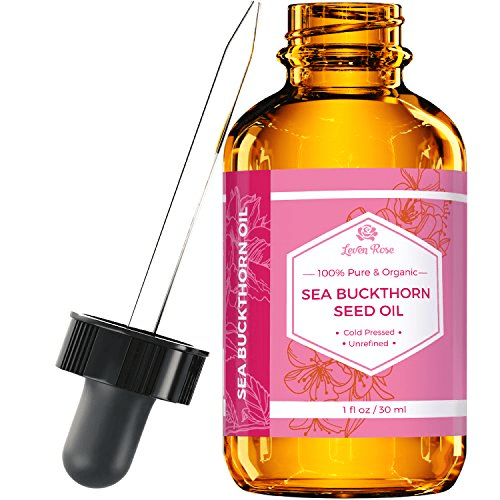
Want 100% sea buckthorn without the brightest color? Leven Rose’s seed oil is unrefined and cold-pressed, with no added fragrance, parabens or alcohol. Seed oil is paler than berry oil, so a couple of drops pressed in at night are easy to wear. It’s about $15, and since you only need a little each night, a bottle lasts a long time.
Berry oil for mixing into moisturizer
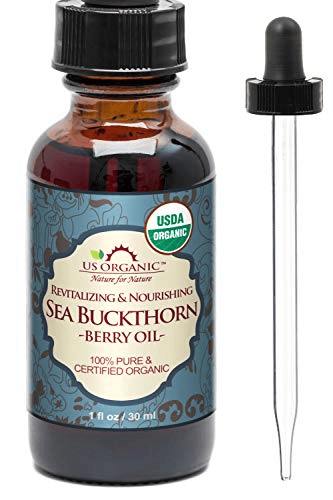
US Organic’s berry oil is the deep orange kind, 100% pure fruit oil with no fragrance, fillers or dilutions. It has the most carotenoids and omega-7, and it’s also the one most likely to tint. I wouldn’t wear it straight. Put one drop into the moisturizer in your palm, mix it well and then smooth it on. You get a soft, glowy finish without looking like you overdid the self-tanner. It’s about $21.
Whichever bottle you pick, start slow and use it at night, and give your skin a couple of weeks to get used to it. Thinking about sea buckthorn supplements instead? That’s a separate question, and the research there is even thinner. Talk to your doctor before you try them, especially if you’re pregnant or on other medicines.


