
Waking up in total darkness is kind of brutal, right? Your body is convinced it’s still the middle of the night. Meanwhile your phone is screaming at you.
Sunrise alarm clocks are the nicer way to do it. Shortly before your alarm it starts to glow. Then it slowly gets brighter until the room already looks like morning by the time any sound kicks in. If you’re up before the sun most days, I think the idea is great. They range from a simple bedside lamp to a smart clock that basically runs your whole bedtime.
Quick note before we start: these aren’t the super bright light therapy boxes people sit in front of. Those are a different tool for a different job (more on that in the questions at the end).
Here are five setups I’d happily make room for on the nightstand.
What a sunrise alarm can realistically do
Sunrise alarms do help a lot of people, but I’d keep expectations realistic because the research is still small. In one study, 16 adults who had trouble waking up felt less sleepy and more alert after a fake dawn, even though their task scores didn’t change. A home study that ran for two weeks also found that people complained less about morning grogginess.
They’re not the same thing as a light therapy lamp. The National Institute of Mental Health describes light therapy as 30 to 45 minutes a day in front of a 10,000 lux light box, which is about 20 times brighter than normal indoor light. A sunrise alarm is much softer and is really there to help wake you up, so if your mood’s been low, that’s a doctor conversation.
The setup makes a difference
I’d start with the light coming on about 30 minutes before your alarm, since that’s about how long the dawn studies ran the light. Most clocks let you tweak the timing, from around 5 minutes on some basic models to 90 minutes on others, so you can adjust once you know what feels right.
If you’re a heavy sleeper, don’t rely on the glow alone at first. Use the light and the sound alarm together until you know how your body reacts. Put the clock right by your head on the nightstand, point it toward your pillow and keep the path clear. Also, skip the eye mask on alarm nights, because the light can’t help much if it can’t reach you.
Why a slow sunrise beats a blaring alarm
@megleab / Instagram
Okay, a tiny bit of science. Light is the biggest cue your body clock gets. According to the National Institute of General Medical Sciences, light and dark have the biggest influence on circadian rhythms. Your brain’s master clock tweaks melatonin based on how much light reaches your eyes. In the evening it calls for more, which is partly why you get sleepy. So at 6 a.m., a pitch-black bedroom doesn’t give that clock much to go on.
As for whether dawn lights actually help, the studies are small but encouraging. In one, 16 healthy adults who had a hard time waking up spent one night with a fake dawn during their last 30 minutes of sleep. On another night the lights just came on at wake-up, and after the dawn night they felt less sleepy and more alert. Their reaction-time and addition scores barely moved, though. A separate home study found that people who used a dawn alarm clock for two weeks at a time complained less about morning grogginess.
Creator @megleab is a good example. Her light is from Lumie and she jokes that the clock change hasn’t touched “my commitment to being unbearable about waking up at 5am”. Honestly, goals: up early and not feeling dragged out of bed.
She doesn’t say which model it is so the card is a close match from the same brand, the Lumie Bodyclock Rise 100. It wakes you with a 30-minute sunrise and dims the room with a sunset at night. In between, it’s a warm white reading lamp you can dim. On a smaller budget, try the REACHER wood grain clock. Its light climbs from 1% to 100% over 5 to 60 minutes before your alarm, plus 26 sleep sounds and an eight-color nightlight.
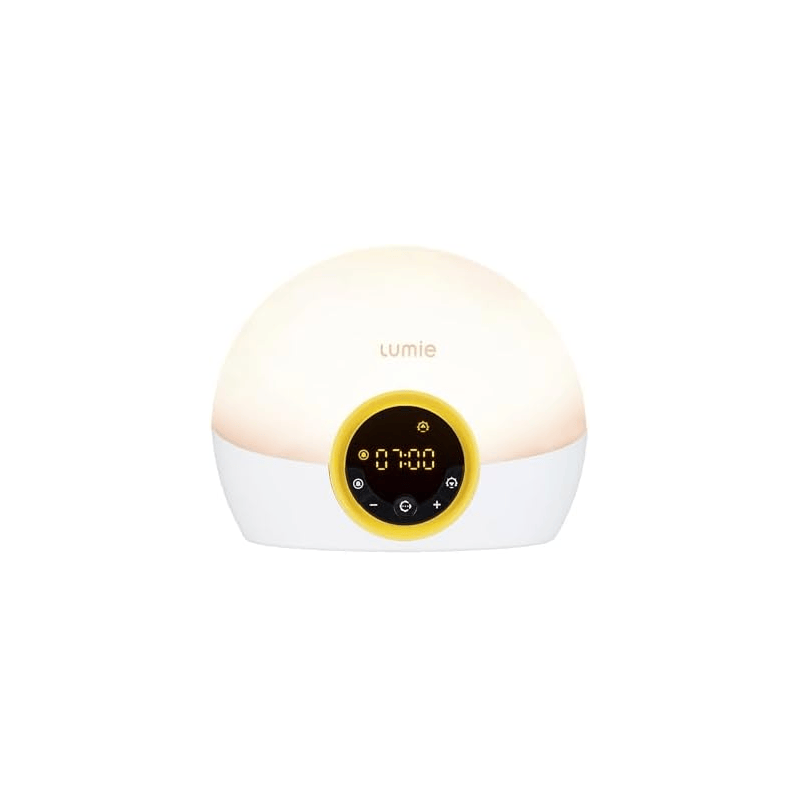

A glowing dome by the bed
@lumie.lights / Instagram
Look at that soft orange dome from @lumie.lights. That’s exactly the glow I’d want to wake up to. Their point is simple and kind of the whole reason these exist: small changes to your morning can make the darker days feel brighter.
Lumie has been at this since 1992. Back then the company was called Outside In, and its first wake-up light was the Natural Alarm Clock. My card is the Lumie Bodyclock Glow 150, the closest match to this round-display dome (the base is darker, though). Sunrise and sunset run 20, 30 or 45 minutes. There are 10 sleep and wake sounds to choose from and the LEDs are made with reduced blue light content. The display also dims on its own when the room goes dark.
More of a Philips person? Their SmartSleep Sleep and Wake-Up Light is the one with all the extras. Sunrise, sunset and sound are all customizable. It also doubles as a bedside lamp and has FM radio, a phone charging dock and a backup for power cuts. There’s even a light-guided breathing mode called RelaxBreathe for winding down.
Both are good if you just want a lamp that sits on the nightstand and does its job. Neither one needs your phone to run your mornings.
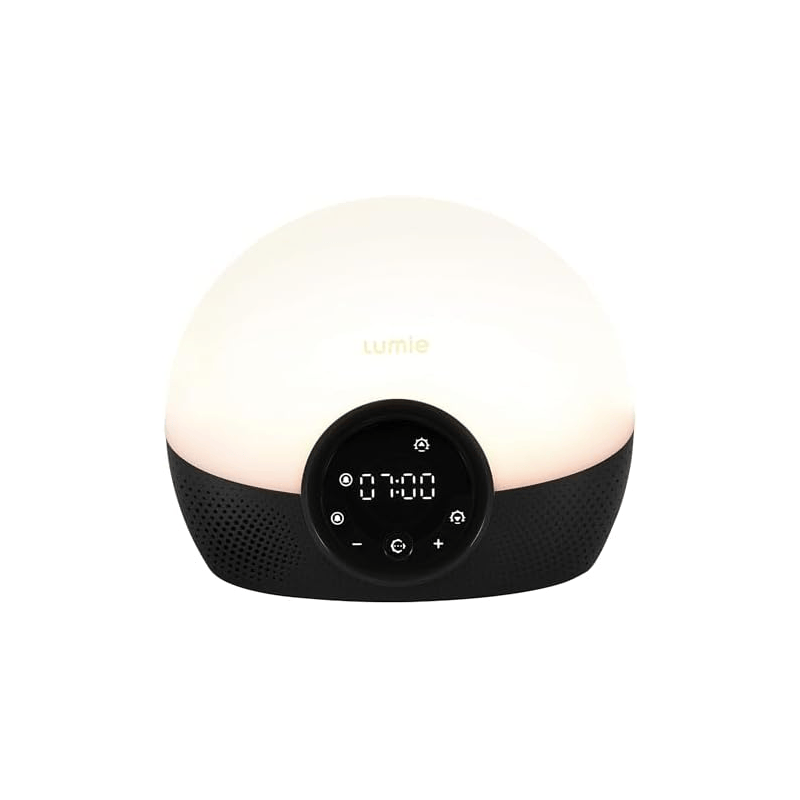
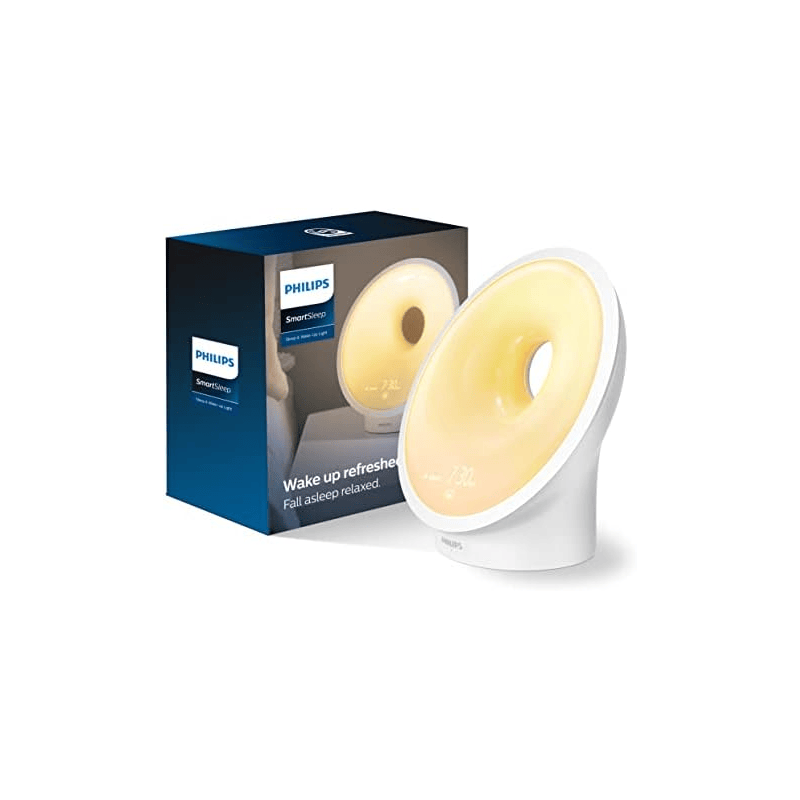
The smart clock that runs your whole bedtime

Screenshot: Hatch
Then there’s the Hatch Restore 3, which Hatch calls “the smart sleep clock that helps you build gentle, phone-free sleep routines”. It’s basically three things in one: sunrise alarm, sound machine and dimmable clock. It all lives in one rounded piece with a fabric front that looks more like decor than tech, especially in Putty, Greige or Cocoa.
I like that the light and sound actually work together here. There are over 80 sleep sounds, plus light-and-audio combos meant for winding down at night. Morning comes and the sunrise alarm takes over. And because the display dims, it won’t light up your whole room at 2 a.m.
Now the catch. Some of the content needs Hatch+, a paid membership. The first 30 days are free and then it’s monthly or yearly. Before the trial ends, ask yourself if you’re really going to use the extra meditations and sounds. Hatch also gives you a 30-night bedside trial if you buy from its own site.
This is the pick if you want to set it up once in the app and keep your phone out of bed for good.
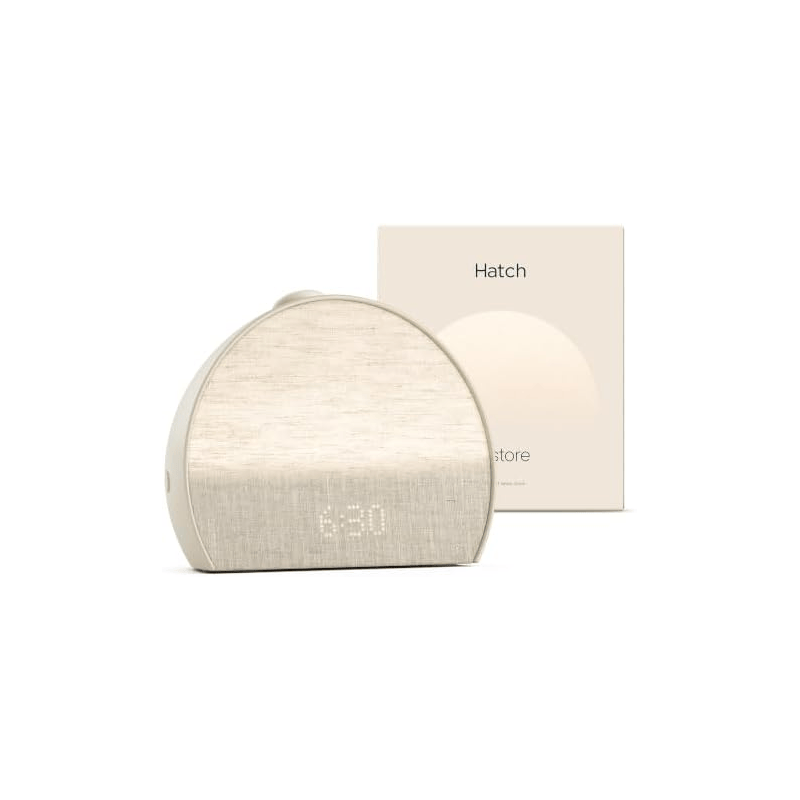
Hatch Restore 3
A sunrise alarm, sound machine and dimmable clock with 80-plus sleep sounds.
Around $169.99 · Shop
A lamp pretty enough to leave out
@byloftie / Instagram
Loftie put it pretty well: “That extra hour felt good, right? You can have one every night. Leave the phone outside the bedroom.” Fair enough. Sunrise lamps make that a lot easier, since the phone doesn’t have to sit next to you if the light is what wakes you.
That pink-glow lamp from @byloftie is the Loftie Smart Lamp, which makes this card the exact one. Its sunrise alarm brightens slowly in the morning and a sunset mode winds you down at night. There are preset day, night and reading modes too, plus custom colors. You’ll need the free Loftie app and Wi-Fi to set it up. After that, the app is where you set alarms and program the light.
It’s the splurge of the bunch. That shape looks more like a design piece than a sleep gadget, which is nice if your nightstand is out on display.
A tip that works for any sunrise light: keep it close to the bed and point it at your pillow. If a stack of books or a headboard is in the way, the light won’t do much. Blackout curtains are totally fine, though, because the light is coming from inside the room.

Loftie Smart Lamp
A bedside lamp with a sunrise alarm, sunset mode and custom color settings.
Around $299.99 · Shop
Let the evening dim, too
@frido.garcon / Instagram
Waking up well really starts the night before. Over at @frido.garcon, evenings move to the bedroom early: “linen, tea, a book, phones face-down”. Pale window light fades into the warm glow of the Loftie clock. I can’t think of a cozier way to end a short, dark day.
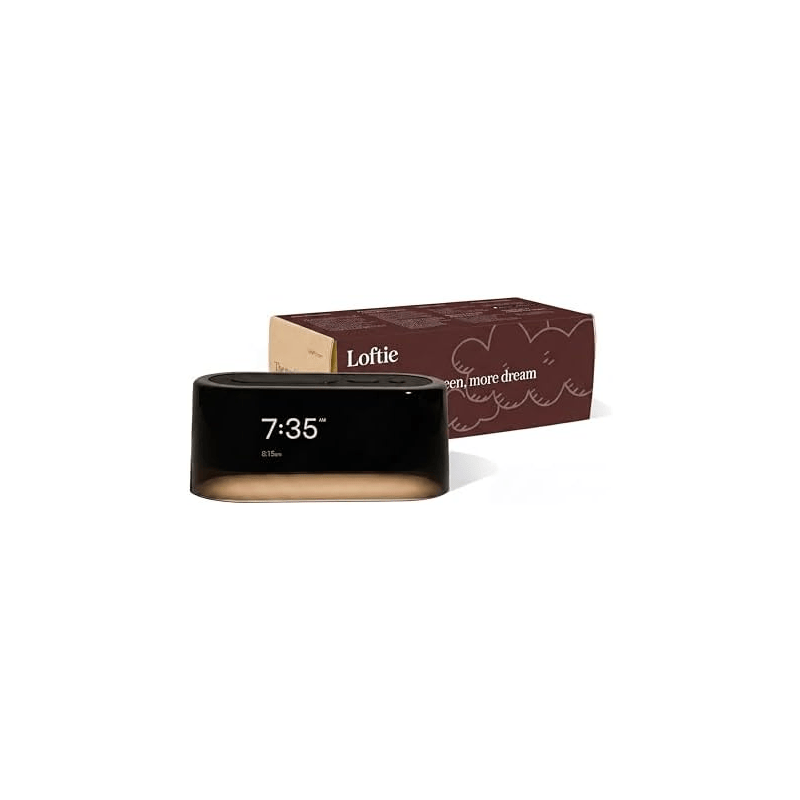
This card is the exact one, the Loftie Clock. Since it’s not a sunrise lamp, think of it as your phone replacement. Its two-phase alarm starts with a gentle chime and then follows up with a louder tone. You get more than 100 sleep sounds with no subscription, plus a built-in nightlight. Blackout Mode turns the screen and light off but keeps the alarm set. And after the first setup it can even run offline.
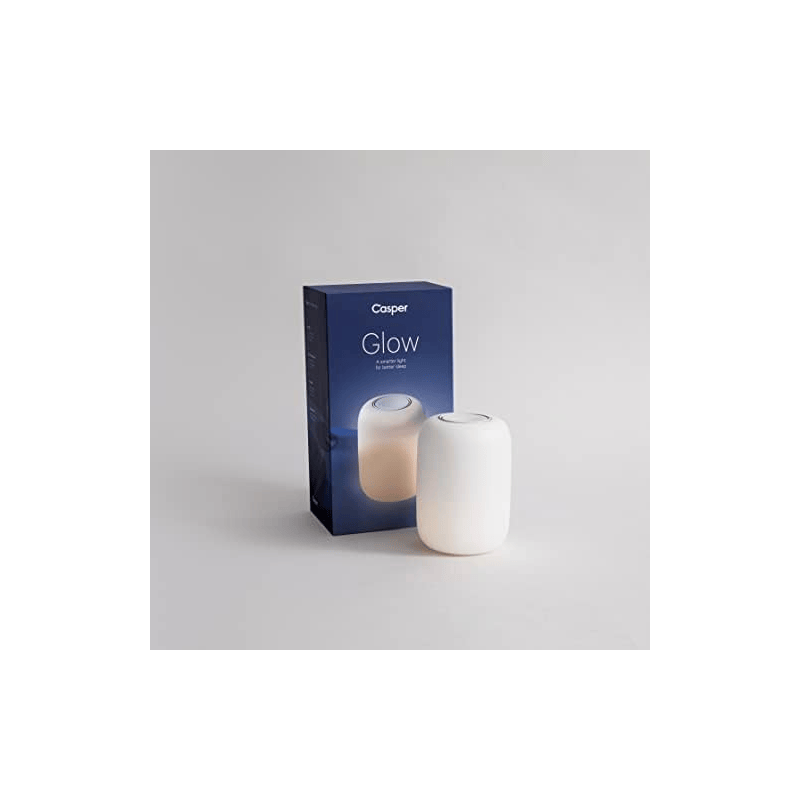
For a dimmer light to read by, look at the Casper Glow Light, which is made for that wind-down hour. You just twist it to change the brightness, and it charges wirelessly and has an iOS app for scheduling. Pair it with any of the sunrise lights above and your room fades at night and rises in the morning, no phone needed.
Set the light once, leave the phone in another room and let the room brighten on its own. Mornings will still be dark but a lot less rude.


