
If your serum shelf is starting to look like a sunset, blame astaxanthin. It’s the red-orange antioxidant behind those glowing capsule serums and peachy gels all over K-beauty right now. Search data from Rising Trends puts interest at about 301,000 searches a month, up roughly 300 percent from a year earlier.
I’m into it, mostly because it’s such a pretty, easy add to a routine you already have. Still, the buzz around it runs a little ahead of the science. So here’s what astaxanthin actually is, what the studies say, and how I’d use it without expecting miracles.
So what is astaxanthin?
Astaxanthin is a carotenoid, a type of natural pigment. A review in the journal Nutrients, indexed by the National Library of Medicine, describes it as a red-orange pigment found in salmon, shrimp and crayfish. It’s the reason wild salmon is that deep coral color.
Most of the astaxanthin in skincare and supplements comes from a microalga called Haematococcus pluvialis, which that review calls the most promising natural source. Researchers think it may help skin through antioxidant, anti-inflammatory and sun-protective effects. The same review is honest that how it works is still debated.
What the research says, and what it doesn't
The best summary I found is a systematic review and meta-analysis in Nutrients that looked at 11 human studies. Nine tested astaxanthin taken by mouth. Compared with a placebo, those supplements improved skin moisture and elasticity, but they didn’t significantly reduce wrinkle depth.
The skincare side is thinner. Only two small open-label studies looked at astaxanthin used on the skin or on skin plus a supplement, and the authors said they suggest a slight protective effect. They also noted supplements may have a stronger effect than creams, and they called for bigger, longer trials.
So I treat an astaxanthin serum as a nice antioxidant step, not a wrinkle eraser. If you’re curious about supplements, talk to your doctor first. My foods for sun protection post covers salmon and other food sources too.
The capsule serum with the orange beads

Screenshot: Ulta Beauty
SUNGBOON EDITOR Active Marine Astaxanthin Capsule Serum is the bottle I keep seeing everywhere. Think clear serum, tiny orange capsules. The brand says those double-layered capsules are there to carry the astaxanthin into skin.
The rest of the formula leans hard into even tone. It pairs astaxanthin with glutathione, niacinamide and tranexamic acid, plus hyaluronic acid and ceramide for hydration. That makes it a smart pick if dark spots or dullness are what bug you most.
Pump a little into your palm and press it in. I love it as the step right before moisturizer, when you want skin to look rested even though you clearly aren’t. Pretty and practical. If you already have a vitamin C serum you love for mornings, I’d keep it there and slide this one into your evening routine instead, which saves you from piling five serums on at once.

SUNGBOON EDITOR Active Marine Astaxanthin Capsule Serum
Astaxanthin capsules with niacinamide, tranexamic acid and glutathione for uneven tone.
Four textures, one red antioxidant

Astaxanthin doesn’t only come as a serum. VT Cosmetics Vitamin C Astaxanthin Serum teams it with vitamin C, niacinamide and kojic acid in a light, fast-absorbing texture. That’s the one I’d pick for dullness. Love stacking antioxidants? My ferulic acid guide explains why vitamin C likes a partner.
On chaotic mornings, DHC Astaxanthin Collagen All-in-One Gel is a daytime moisturizer with astaxanthin, royal jelly and collagen. Since the formula is fragrance and colorant free and tones and hydrates in one step, it’s a handy shortcut before sunscreen when you’re running late. Just skip it if you want a rich cream, because it’s a light gel.
Drier skin might like Earth Harbor Helios Anti-Pollution Antioxidant Facial Oil. It mixes red algae astaxanthin with jojoba, marula and other plant oils. Use it on its own, or tap a drop into your moisturizer at night when your skin feels tight after a long day in dry office air.

VT Cosmetics Vitamin C Astaxanthin Serum
Vitamin C and astaxanthin with niacinamide and kojic acid for a brighter look.
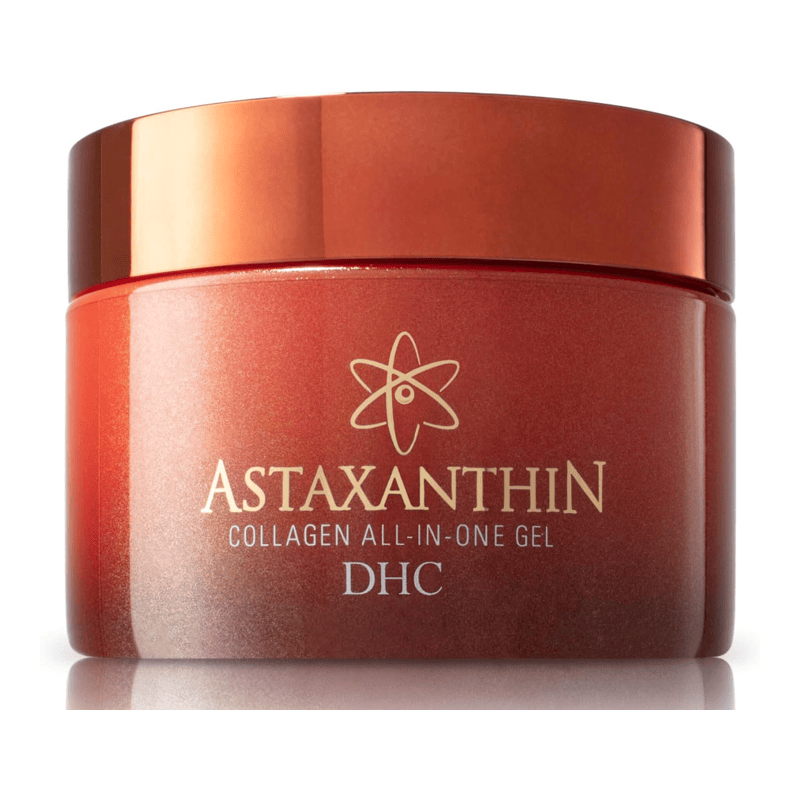
DHC Astaxanthin Collagen All-in-One Gel
A fragrance-free daytime gel moisturizer that tones and hydrates in one step.

Earth Harbor Helios Anti-Pollution Antioxidant Facial Oil
Red algae astaxanthin in a light blend of botanical oils.
Mornings: antioxidant first, sunscreen on top

Screenshot: American Academy of Dermatology
My one rule with any antioxidant serum is simple. Think of it as a backup to sunscreen, never a swap. Put your astaxanthin serum on clean skin, let it sink in, add moisturizer, then finish with sunscreen.
The American Academy of Dermatology recommends a broad-spectrum sunscreen with SPF 30 or higher. Put it on before you head outside, since it takes about 15 minutes to protect you. For your face, the AAD says to use at least a teaspoon.
EltaMD UV Clear SPF 46 is an easy match. It’s an oil-free zinc oxide formula with niacinamide, made for normal, acne-prone and sensitive skin. There’s no white cast, which matters when you’re layering it over an orange-tinted serum and heading straight into a video call. With a crisp white shirt and gold hoops, that glow is all you need.
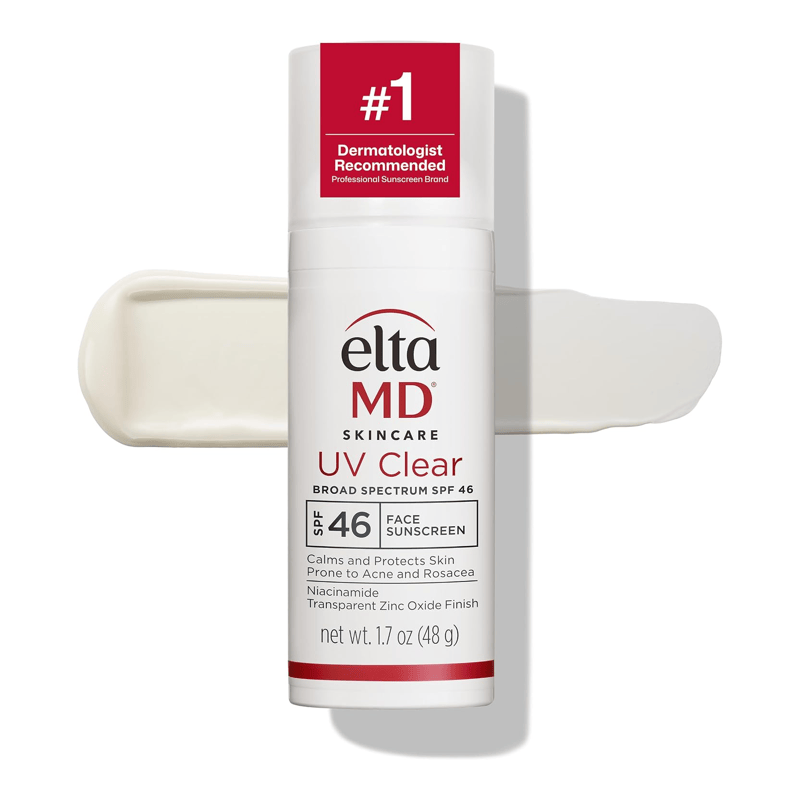
EltaMD UV Clear Face Sunscreen SPF 46
An oil-free zinc oxide SPF with niacinamide that layers well over serums.
Patch test before it goes on your face

Screenshot: American Academy of Dermatology
These formulas are packed with other actives and plant extracts. I’d test first. The AAD suggests putting a new product on a quarter-sized spot, like the inside of your arm or the bend of your elbow, twice a day for seven to 10 days.
If you don’t see redness, itching or swelling, go ahead and use it. If you do react, wash it off gently and stop. A cool compress or petroleum jelly can help, per the AAD. See a dermatologist if a reaction is severe.
Prefer a cream? SUNGBOON EDITOR Active Marine Astaxanthin Capsule Cream pairs astaxanthin with niacinamide and PHA, a mild exfoliant the brand says suits sensitive skin. Start slow with it anyway, since it does exfoliate.
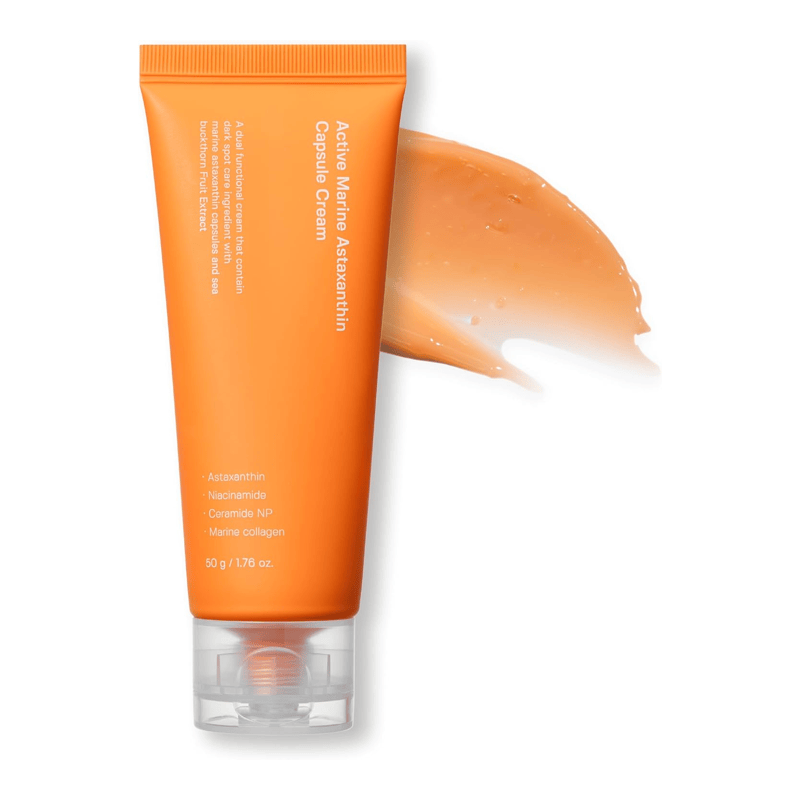
SUNGBOON EDITOR Active Marine Astaxanthin Capsule Cream
The cream version, with niacinamide and gentle PHA.
Astaxanthin won’t replace your sunscreen or your retinol, but it’s a pretty, gentle way to add an antioxidant to a routine you already like. Are you team capsule serum or team face oil? (This post is for general info only and isn’t medical advice. Talk to your doctor before starting a supplement. See a dermatologist if a product irritates your skin.)


