
Take off a dark manicure and there they are: pale, kind of sad yellow nails. Mine look like that almost every time I take off a deep red I’ve worn for two weeks. It isn’t permanent. Usually the yellow is only on the surface, and it fades with some patience, a simple routine, and one tiny habit I skipped for years because I was always in a hurry. I’ll go through what I do to brighten mine, and the signs that a yellow nail is a doctor thing and not a buffer thing.
What causes yellow, stained nails?
Honestly, for me it’s almost always the polish. Pigment from a dark or red shade soaks into the nail plate when there’s nothing underneath to block it, and bold colors like deep reds, plums and blues carry dyes that bind to the keratin in your nails within hours, which still kind of amazes me.
Gel and acrylic sets can stain too. Part of that is the pigment, and part of it is that the nail dries out and gets no air under weeks of product. Smoking does it as well, and the nicotine and tar leave a pretty obvious orange-yellow tint on nails and fingertips. A few medications, and even some self-tanners (ask me how I know), can change nail color too.
All of that is cosmetic, and it clears up with care.
Yellow that shows up with thickening, crumbling, lifting or a smell is another story. That can be a fungal infection or another health problem, and it deserves a professional opinion, not an evening on the couch with a buffer. I’ll come back to it near the end.
The usual causes side by side
I put the usual causes into a table, with the clue that gives each one away and the first thing I’d try for it.
| Cause | Tell-tale sign | Fix |
|---|---|---|
| Dark polish, no base coat | Even yellow tint across the whole nail after removal | Gentle buffing, hydration, and a base coat going forward |
| Gel or acrylic staining | Yellow appears after a few weeks of enhancements | Take a polish break; restore with cuticle oil and a strengthener |
| Smoking | Orange-yellow on nails and fingertip skin | Surface cleaning helps; lasting fix is cutting back |
| Medications or self-tanner | New discoloration that tracks a product or prescription | Usually grows out; check with your prescriber if persistent |
| Possible fungus or health issue | Thickening, crumbling, lifting, pain, or odor | See a doctor or dermatologist — don’t just buff it |
How can I whiten yellow nails at home?
My rule for an ordinary stain is to start with the gentlest fix and quit the second my nails look brighter, because overdoing any of these thins the nail plate, and that’s a much bigger hassle than a little yellow.
A gentle buffer for surface stains
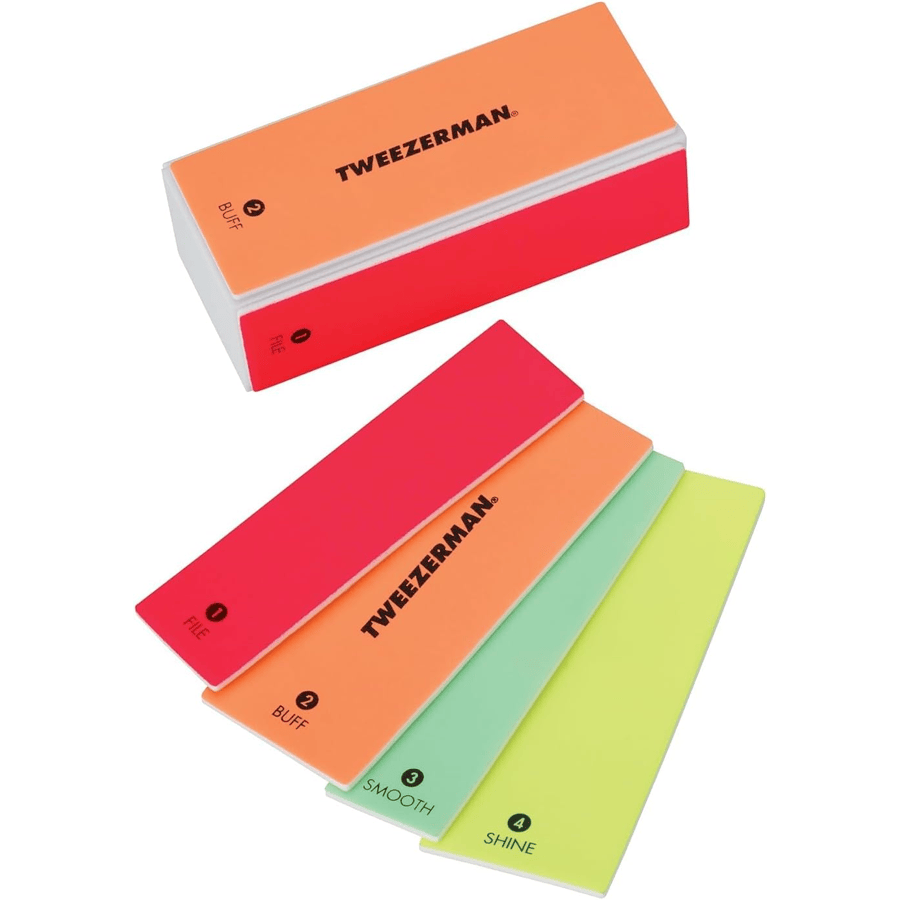
The first thing I grab is the Tweezerman 4-in-1 File, Buff, Smooth and Shine Block. It has four numbered sides that go from coarse to polishing, and I skip the file side and use only the two gentle middle ones. A few soft passes can take off the very top layer where the stain sits, and I keep it light and no more than once a week, since a nail plate you’ve ground down doesn’t grow back on top.
When that’s not enough, I stir baking soda and a little water into a paste in a saucer (some people add a splash of hydrogen peroxide), rub it on, and rinse after a couple of minutes. Whitening toothpaste works in a similar way, because the mild scrubbers and brighteners meant for teeth can lift a surface stain too. There’s an old toothbrush under my sink that does nothing but this job.
If my nails just look dull and dingy rather than stained, I’ll do a short soak in a watered-down lemon or peroxide mix, or use a ready-made whitening nail soak. Soaks stay at a few minutes, and lotion goes on right after, since acids and peroxide are drying.
Please go easy with all of it. Scrubbing hard, or every single day, only trades yellow nails for thin, weak ones, and the stained part is slowly growing out on its own anyway.
What’s the number one way to prevent stained nails?
A base coat, every single manicure, even the quick ones before a dinner I’m already late for.
A clear base coat, every time
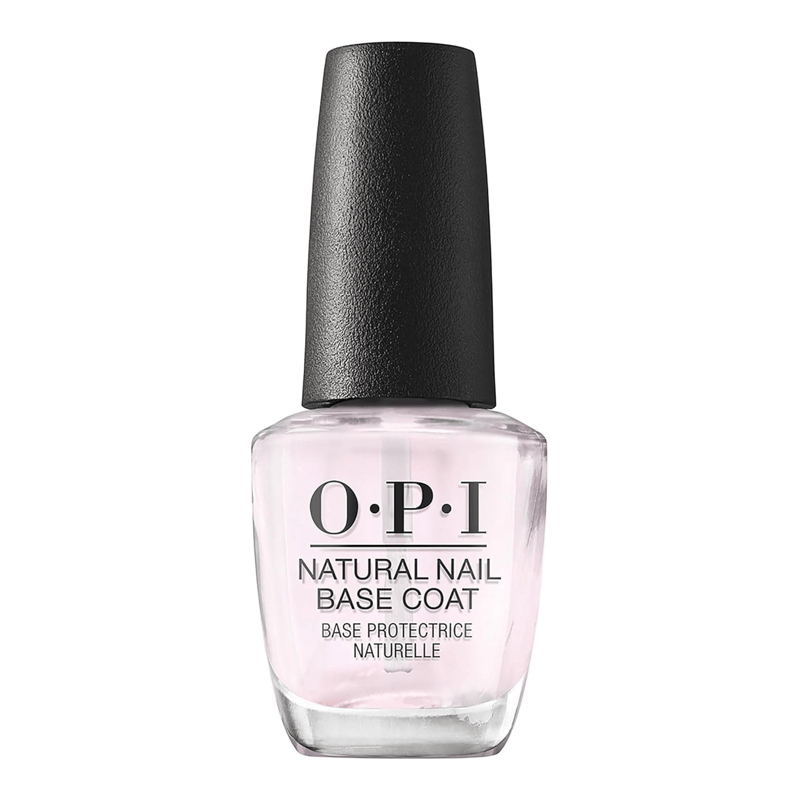
A clear base coat like OPI Natural Nail Base Coat sits between your bare nail and the color, so the dye lands on the base coat and never gets to your keratin. It takes maybe ten seconds, dries fast, and saves you most of the staining you’d otherwise spend weeks growing out. It also gives polish something to grip, so your manicure lasts longer as a bonus.
If you only change one thing after reading this, make it this one, since it was the exact step I always rushed past.
Same idea with gel and acrylic. A good base layer underneath and careful removal at the end are what keep the natural nail in decent shape. If you do your own sets at home, our guides to safe gel removal at home and to gel vs. acrylic vs. dip powder can help you pick and remove products without wrecking your nails.
Getting them healthy again after the stain
After the stain is gone, it’s mostly moisture and a break. I usually go a while with no polish at all so my nails can recover and the stained part can grow out. That drove me nuts at first. Now I kind of like it.
Cuticle oil most nights
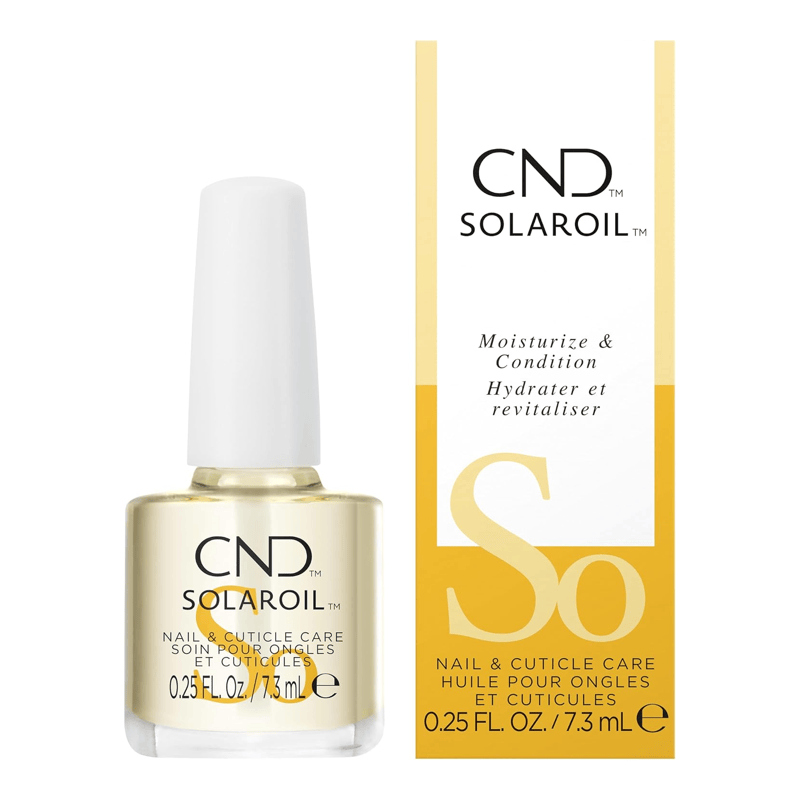
I put CND SolarOil on most nights, usually while I’m half watching TV. It’s a light jojoba and almond oil that soaks in fast, and it puts back the moisture that removers and gel sets pull out, so nails stay bendy and don’t look as dull or yellow.
A strengthener while they grow

If they’re brittle after a long run of gel, Nailtiques Formula 2 Nail Protein helps firm them up while they grow. It’s a protein treatment you brush on like a clear polish, alone or as a base under color, and it’s been a nail tech favorite for peeling, bendy nails for a long time. Even a week or two bare helps them get their moisture back. Hand cream and gloves for the dishes help more than you’d think.
This part is slow, I won’t lie. Nails grow about three millimeters a month, so a fully fresh nail with no stain left can take a few months to reach the tip. They look brighter way before that, though.
When should I see a professional or doctor?
This is where I’d put the buffer down. If the nail itself is changing, not just the color, that’s different. A nail getting thicker, crumbly or rough, one lifting off the bed, or pain, swelling around the nail or a bad smell can all point to nail fungus or, less often, another health condition. Same if the yellow won’t buff off or grow out, especially on toenails.
Go see a dermatologist or your doctor. They can test it and treat it properly. I can’t diagnose anything from a blog post, and yellowing that sticks around and changes the texture is a medical question.
Yellow nail questions
Why do my nails turn yellow under gel polish? Pigment from the gel and weeks without air dry the nail and tint it. Careful removal, a little time bare and daily cuticle oil usually sort it out.
Does baking soda whiten nails? A little. A quick paste can lift a surface stain, but rinse after a couple of minutes and don’t do it often, or you’ll thin your nails.
Can yellow nails mean fungus? They can. If the nail also thickens, crumbles, lifts, hurts or smells, see a doctor or dermatologist instead of buffing it.
How long does it take for yellow nails to go away? They look brighter in a week or two, but the stain fully grows out in a few months. Nails grow about three millimeters a month, and toenails are slower.
The bottom line
Yellow nails are almost always a surface stain. Light buffing, a baking soda paste or a whitening soak, some moisture and a short break from polish usually lift it. A base coat under every manicure keeps it from coming back. Don’t scrub hard, either. New growth carries the rest out on its own. If thickening or pain shows up with the yellow, that’s a job for a professional. For me it honestly came down to one skipped habit and a little patience.


