
I always notice it at the end of a long day. I kick off my shoes, pull my feet up on the couch, and my heel catches on the blanket. That rough, scratchy edge has been building for weeks, and by now it snags on everything from my sheets to a fresh pair of leggings. You’ve got three main ways to deal with it at home: a foot file, a pumice stone or a peel. All three work, but none of them lasts unless you also do one small, boring thing every night afterward (more on that below).
Start with the right texture
A metal foot file works best on dry or barely damp skin, so I’d save that for when you want a quick, targeted smooth-down. Pumice is the shower option, since it does its best work on damp skin.
With a foot file, keep it to once a week at the most. Filing more often than that can make your skin rebuild thicker, which is exactly the annoying cycle you’re trying to avoid.
Give peels time, and skip them on cracks
A foot peel isn’t instant. Peeling usually starts around day four to six and wraps up in about two weeks, so it’s more of a reset than a same-day fix.
If your heels are cracked, I’d skip the peel for now. Heal the cracks first with a urea cream, then once the skin has closed up, a peel is fine to try.
Why heels go rough in the first place
Callus is really just skin doing its job. When the same spot gets pressure and rubbing day after day, the top layer thickens to protect what’s under it. On my feet the rough patches show up in the same three places every time, on the outer edge of the heel, the ball of the foot under the big toe and the pad below the pinky toe, and they build up fast with flip-flops, backless shoes and long hours standing.
The soles of your feet also have no oil glands at all. They count on water inside the skin to stay soft, and they lose it quickly, so the thick skin goes dry and stiff, and stiff skin splits when it has to bend. That’s the whole path from a little roughness to cracked heels.
Every tool below goes after the thick skin, not the pressure that built it, so callus is always going to come back. That’s also why I think the nightly cream step matters more than whichever tool you end up buying.
Foot files, the fastest fix
A metal rasp, the kind with a surface like a cheese grater, takes off more dead skin in five minutes than a week of pumice would. Glass and ceramic files are gentler and slower, and if you’re not sure when to stop, I’d honestly go with one of those.
What I wish someone had told me years ago is that a file goes on dry or barely damp skin. Soaked skin turns spongy and comes off way too easily, and you can’t feel when you’ve gotten through the thick part. So I file in one direction with light pressure, and quit as soon as the surface changes from raised and yellow-gray to flat and matte. I keep it to once a week. Podiatrists usually warn against hard, repeated filing, since skin that gets stripped just builds itself right back up.
I’d stay away from a callus shaver with a razor blade in the head. They cut, which is why several states restrict them in salons, and a blade held at a bad angle leaves a wound in a spot that’s hard to keep clean.
A big rasp for thick heels

The Microplane Colossal Foot File has a wide stainless steel surface that gets through a thick ridge of heel callus in just a few passes, so it’s the one I’d grab for heels that haven’t had any attention in months. Because it works so fast, I’d count my strokes and check the spot with a thumb every so often.
A glass file for nervous first-timers
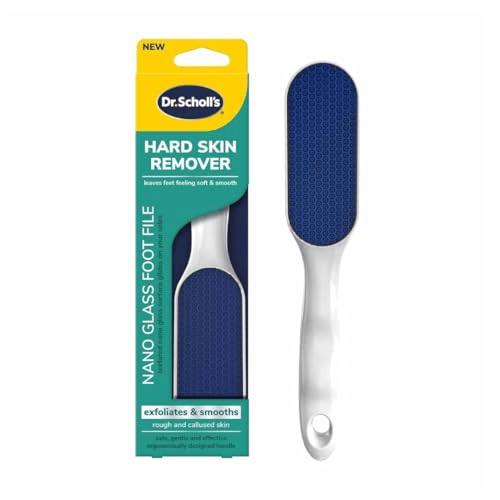
If a cheese-grater rasp makes you nervous, the Dr. Scholl's Nano Glass Foot File is the gentler route. The etched glass surface buffs rough skin down a little at a time, so it’s much harder to take off too much, and it rinses clean after each use. It’s an easy first file for anyone who wants smooth heels without any drama.
A spinning file that saves your wrists
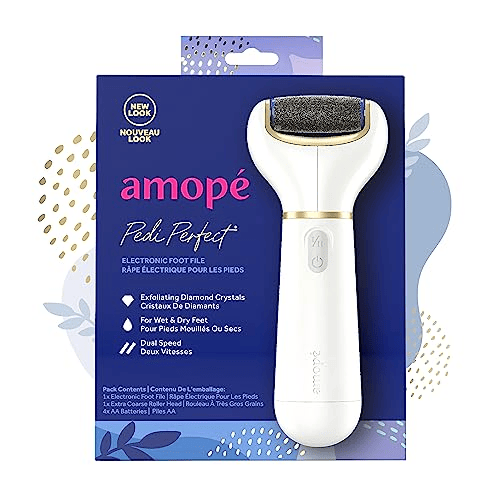
Bending over to reach your feet isn’t comfortable for everybody (my lower back has opinions about it), and the Amope Pedi Perfect Electric Foot File helps because a spinning roller does the work while you just hold it on the rough spot and glide. The rollers do wear down over time, so plan on refills.
Pumice, the slow and steady option
Pumice is the least exciting tool on this list, but it’s the easiest for a beginner, because it only takes off a thin layer at a time and you really can’t strip your feet in one go even if you try. I wait until I’m a couple of minutes into a shower, when the skin is damp, then make light circles for about a minute per foot. I don’t press hard, since that just drags the stone and can leave a sore spot.
A classic stone for the shower
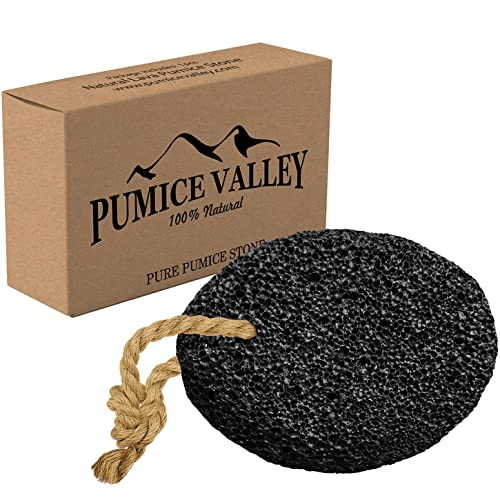
If you’re trying to keep callus from coming back, pumice three or four times a week is the best tool for the job. A natural lava stone like this Black Earth Lava Pumice Stone for Feet costs a few dollars and is very hard to hurt yourself with. It’s full of tiny holes and sits wet in the shower, so I rinse mine, let it dry away from the tub, and swap in a new one once it wears smooth.
I’d put foot scrubs in the same group. Sugar or salt in a rich base won’t do anything to thick callus, but it does clear the flaky top layer and soften your feet at the same time, so for feet that are dry but not very thick, a scrub plus a good cream may be enough.
Foot peels, a two-week reset
With a foot peel, you wear plastic booties filled with an acid solution for about an hour, rinse, and then you wait. The acids are usually glycolic and lactic, often with some salicylic acid too, and they loosen the top layer of skin so it all comes off at once a few days later.
For the first three days nothing happens, which is exactly when most people decide it didn’t work. Around days four to six the peeling starts, usually at the ball of the foot or the edge of the heel, and from about day six to ten it comes off in sheets, in your bed, in your shoes and all over the bathroom floor. By about day twelve it’s over, and the new skin is softer than anything a file can give you. Leaving it alone is honestly the hard part. Pulling the loose skin off tears skin that isn’t ready and leaves raw patches, so I’d soak in warm water once a day, wear socks, and let it fall away by itself.
The original bootie peel

Baby Foot Original Exfoliant Foot Peel is the one that started the whole trend, and it’s still the best-known name. Results are pretty unpredictable, though. Some feet shed everything and others barely peel, and very thick heel callus often peels the least because the acid can’t get through it. When it works, the smooth result lasts a month or two. Skip it right before a big event, and never use it on cracked or irritated skin.
Plan around two quiet weeks with no sandals, no pools and no pedicure appointments. To see it next to cheaper and pricier ones, check our breakdown of foot peel formulas at three price points.
File, pumice and peel side by side
| Foot file | Pumice or scrub | Foot peel | |
|---|---|---|---|
| Speed | Minutes, visible right away | Gradual, a few weeks | Nothing for 4 days, done by day 12 |
| Result lasts | 1 to 3 weeks | As long as you keep going | 4 to 8 weeks |
| Mess | Some dust | None | Heavy shedding for about a week |
| Use it on | Dry or barely damp skin | Damp skin | Clean, dry, unbroken skin |
| Common mistake | Filing too hard or too often | Giving up too soon | Pulling off the peeling skin |
The nightly step that makes it last
Whatever tool I use, the ending is the same. I dry my feet well, rub in a foot cream that softens hard skin, and pull on cotton socks before I get into bed.
Urea at 10 to 25 percent pulls water into the skin, and at the higher end it slowly softens callus in a way scrubbing never will. Lactic acid at around 12 percent does something similar and feels less sticky, while salicylic acid is more for flaking and buildup. Dermatologists often recommend urea creams for thick, dry skin on the feet, and with steady use you can usually see a difference after a couple of weeks. Plain petroleum jelly seals water in but doesn’t soften anything, so I’d layer it on top of one of these creams instead of using it in place of one.
Stick with it every night for two weeks and the file turns into a once-a-month touch-up. For the full routine, including timing around a salon visit, our guide to keeping feet smooth between pedicures walks through it.
A lactic acid cream that sinks in
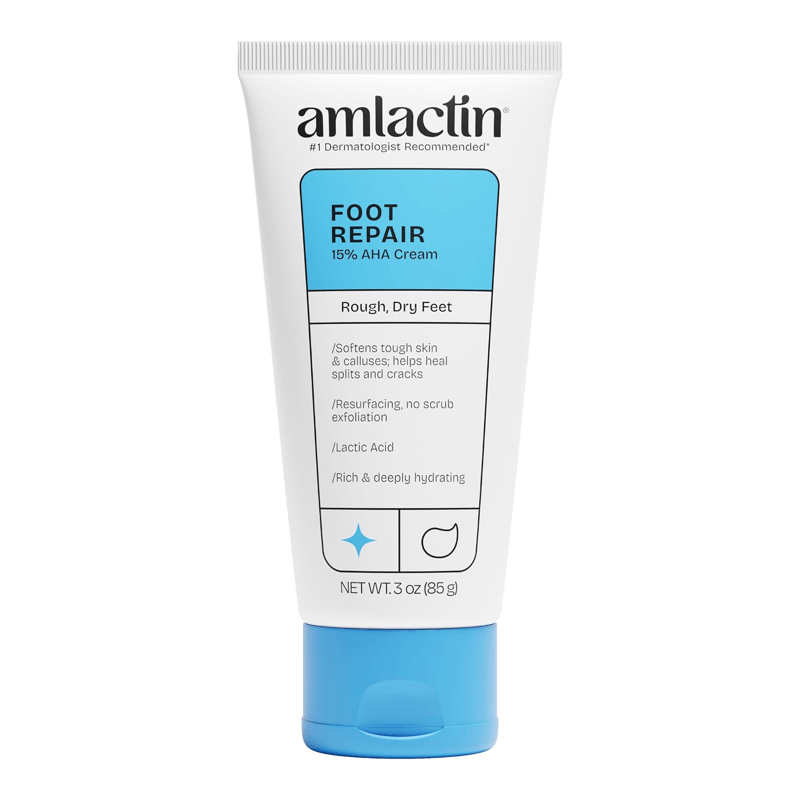
AmLactin Foot Repair Foot Cream puts 15 percent lactic acid in a texture that soaks in instead of sitting on top of your skin. I can’t stand heavy balms, so this is the nightly pick I’d point you to if you’re the same. If you have little cracks, you might feel a slight tingle.
A heavy urea balm for cracked heels

With 25 percent urea, Flexitol Heel Balm is a strong choice when heels are thick and just starting to split. It’s on the tacky side, so I’d put it on right before the socks go on and the lights go out.
A thick cream for hard-working feet
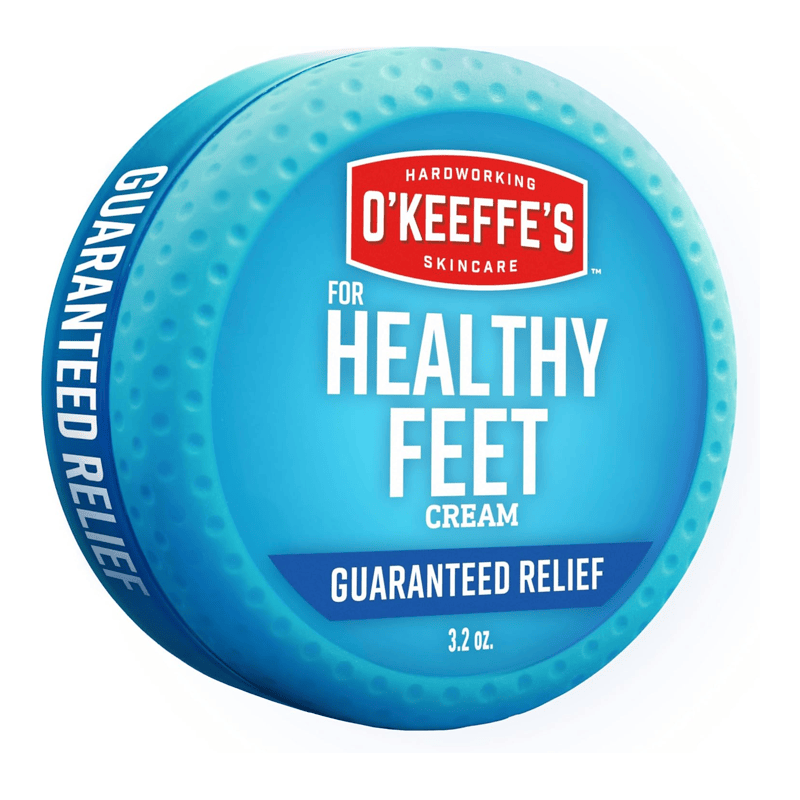
O'Keeffe's for Healthy Feet is a rich cream for very dry feet that spend all day in work shoes. Where it really shines is locking moisture in, so I’d use it on alternate nights with one of the acid creams.
Nobody gets excited about plain cotton crew socks, but they keep the cream on your feet overnight instead of on your sheets, which is what makes the rest of this work. I keep a few pairs in the drawer that are only for bedtime.
Matching the method to your week
Got an event coming up? I’d reach for a file and save the peel for later. A few light passes on dry feet, with cream and socks on the nights in between, will get you there, while a peel started a few days before could still be shedding on the big day.
If your heels crack every time the air turns dry, set the file aside for now. The cracks come from dry, stiff skin, and scrubbing at split skin only makes it worse, so a high-urea balm every night is where I’d start.
For anyone on their feet all day, my plan would be pumice three times a week, cream every night and the file once a month. Cushioned insoles and closed-back shoes will honestly help more than any tool.
And if it seems like your callus grows back thicker after you file, you’re probably filing too hard and skipping the cream. I’d cut back to every week or two, take off less each time, and give the nightly cream a full month.
When to see a podiatrist
Some feet shouldn’t be treated at home. If you have diabetes, nerve damage, poor circulation or any loss of feeling in your feet, please see a podiatrist or your doctor instead of reaching for a file, stone or peel, because a small nick you can’t feel can turn serious on a foot that heals slowly. Same goes for skin that’s already hurt, like an open or bleeding crack, swelling, spreading redness, oozing, or a patch that might be a wart, a fungal infection or an ulcer. Pregnant or nursing? Talk to your doctor before you use an acid peel. A hard spot that hurts, changes or won’t get better deserves a professional look.
If you’d like your polish to look as nice as your smooth heels, our take on whether a gel pedicure is worth it covers the salon side, and you’ll find more in our nails archive.


