
The first chilly week of the year always gives it away. The heat clicks on, you start wearing a scarf to the grocery store, and suddenly the face cream that worked fine all summer sinks in and leaves you tight ten minutes later. Flakes show up along the sides of your nose, and foundation starts clinging to every dry patch. Your skin is asking for something richer.
Farmacy Honey Halo is one of the creams people love most for that switch. Swapping a light summer lotion for a proper cream fixes more winter skin than any serum will, and it anchors our cold-weather skincare switch series. Below, we cover why cold weather dries you out, what makes a winter cream work, and three great options from drugstore to luxury.
Why winter makes skin so thirsty
Cold air holds less moisture, and indoor heating dries the air even more. Your skin constantly loses a little water into the air around it, and when that air is dry, it loses water faster. Hot showers and long baths, which feel amazing in January, strip away some of the natural oils that help hold water in. The result is skin that feels tight, looks dull and flakes in spots, especially around the nose, cheeks and mouth.
Oily skin isn’t off the hook, either. It can still get dehydrated in cold weather, which is why you might feel shiny and tight at the same time.
What a good winter cream does
Moisturizers use three kinds of ingredients. Humectants like glycerin and hyaluronic acid pull water into the skin. Emollients like shea butter and plant oils smooth out rough spots so skin feels soft. Occlusives like petrolatum and dimethicone form a thin layer on top that slows water from escaping. Ceramides help too, since they’re part of the natural fats that keep your skin barrier strong. The best winter creams use a mix of all of these. Our explainer on humectants, emollients and occlusives goes deeper on how they work together.
Getting more from any cream
Put your moisturizer on damp skin. Within a minute of washing your face, or right after a hydrating toner or hyaluronic acid serum, is perfect. Humectants need water to grab onto, and a rich cream on bone-dry skin in a dry room can leave you feeling tighter than before. The American Academy of Dermatology also suggests keeping showers short and warm instead of hot during dry months.
A half-pea is plenty for your face. Press it in rather than rubbing, and take what’s left on your fingers down your neck. At night you can go a bit heavier. If you use a retinoid, put it on dry skin first, wait until it sinks in, then layer your cream on top to cushion any dryness. In a brutal cold snap, a thin layer of plain ointment on your driest patches, over your cream, holds water in better than doubling the cream.
If your skin is already stinging, peeling or red, the problem may be a damaged barrier more than winter dryness. Our piece on the signs you’ve over-exfoliated is a good place to start before adding anything new.
The honey-scented favorite
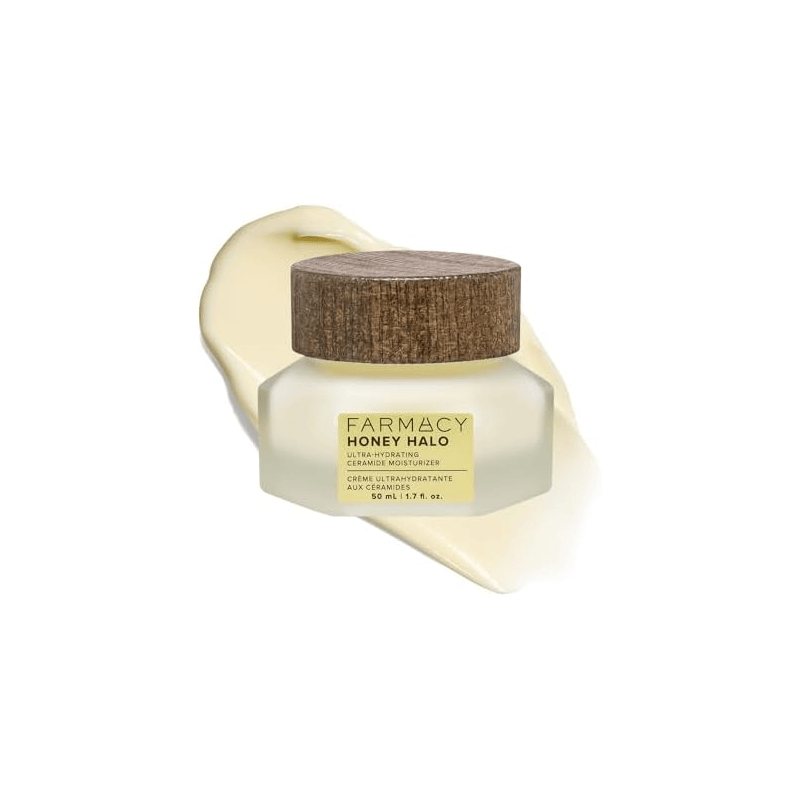
Farmacy Honey Halo Ultra-Hydrating Ceramide Moisturizer is balm-like in the jar and turns into a soft cream on your face. It melts down thin and doesn’t leave a slick, so it’s a hit with anyone who wants real richness that still behaves under foundation. Shea butter sits high on the ingredient list, along with glycerin, ceramide NP and panthenol. Lower down, you’ll find buckwheat honey, propolis and royal jelly, plus fig extract, sea buckthorn oil and bisabolol.
There’s no petrolatum or silicone in it. All of its richness comes from butters, plant oils and fatty alcohols, and that’s a big part of why it feels so pretty and never tacky. It’s a great fit for normal to dry skin, for skin that’s been worked hard by actives, and for anyone who loves the comfort of a heavy balm but hates the greasy look. It has a faint honey scent. The 25 milliliter jar costs about $25, and it also comes in larger sizes. Use clean fingers or a small spatula, since it’s a jar you’ll be dipping into every night.
Be careful if bee products have ever bothered you. Honey, propolis and royal jelly are all in the formula, and propolis can cause skin reactions in some people. If you’ve reacted to bee products before, a fragrance-free ceramide cream is the safer choice. Very oily skin may also find it a bit rich outside the coldest weeks.
The fragrance-free drugstore tub
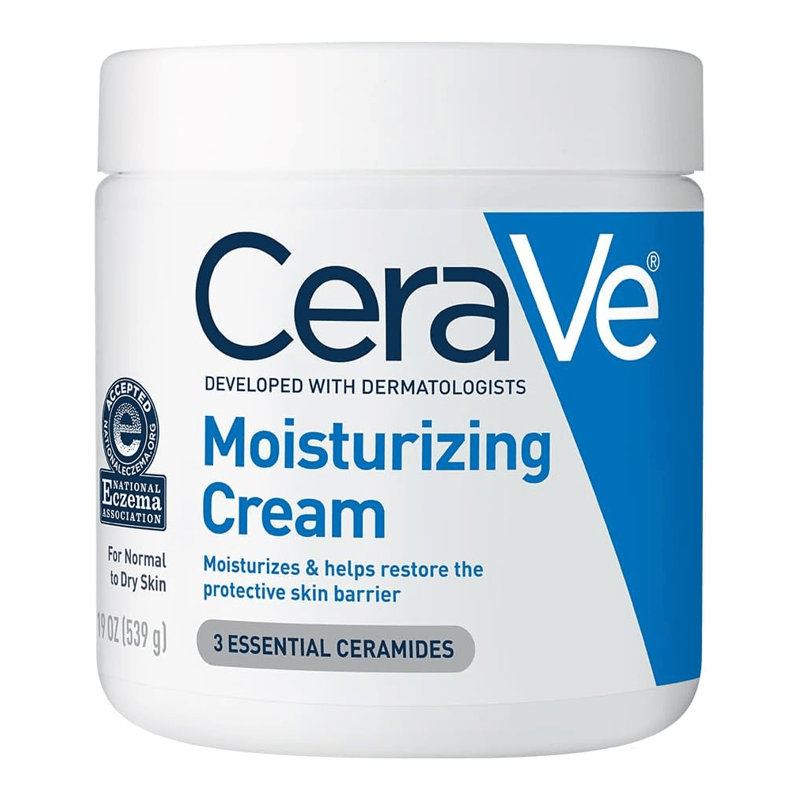
CeraVe Moisturizing Cream works the same way, and it’s one of the best values in skin care. It has three ceramides, cholesterol, glycerin and hyaluronic acid to help repair the barrier, with petrolatum and dimethicone sealing it all in. Petrolatum is one of the most reliable ways to slow water loss overnight, so in a heated bedroom, this tub is hard to beat.
It’s fragrance-free, which makes it an easy pick for sensitive or reactive skin, and the 16-ounce tub covers your face, hands, elbows and shins for the whole season for around $16. The texture is thicker and takes longer to sink in, and it can leave a slight sheen for the first twenty minutes, so give it time before makeup or use it mostly at night. The cream you’ll actually put on every night is the one that works, so pick the texture you like.
A luxury cream for firmness

Augustinus Bader The Rich Cream is for when dryness is only part of the story. It’s built around the brand’s TFC8 complex of amino acids, vitamins and other ingredients aimed at firmness and fine lines, with evening primrose and avocado oils in a rich, comforting base. It layers smoothly, doesn’t sit on the surface, and people who buy it tend to buy it again.
It’s best for anyone who wants a rich cream that also targets the look of crepey or less bouncy skin, and who’s comfortable with a price of around $190 or more for 30 milliliters. If all you need is a face that stops feeling tight in February, the other two do that job beautifully for less. Our comparison archive has more creams at every price.
When dry skin needs more than a cream
Normal winter dryness gets better within a week or two of using a richer cream. If your skin cracks or bleeds, itches enough to wake you up, or breaks out in red, scaly patches that don’t improve, see a dermatologist. Eczema often flares in cold weather, and prescription treatments can calm it faster than store-bought creams. The same goes for any rash, swelling or lasting stinging after a new product, which can be a sign of an allergy to one of its ingredients.
For everyday winter tightness, though, the right cream on damp skin makes a bigger difference than almost anything else you can do. The rest of our skincare coverage sits in Skin.


