
Thin lotion is usually the reason your shins still flake by lunchtime, and the fix is cheaper than you’d think. When legs itch through your jeans and moisturizer seems to disappear the minute it touches skin, a fragrance-free cream smoothed on within a few minutes of your shower tends to do far more than a watery lotion ever will. Our easy everyday pick is Eucerin Advanced Repair Lotion at about $13, and the other five below handle rough patches, very dry skin, itching, and one pretty splurge for your dresser. If your skin stays dry no matter what you put on it, see a dermatologist, since a health problem can sometimes be behind it.
Lotion, cream or ointment?
The difference comes down to how much oil is in the jar. Lotions are mostly water, which is why they feel nice going on and then seem to vanish. Creams blend water and oil, so they hold moisture in for longer, and ointments like petroleum jelly seal it in best of all, though they leave you a little greasy.
The American Academy of Dermatology suggests a cream or ointment over a lotion when skin is dry, and lotions that contain alcohol can also sting. That’s the reason nearly everything on this list is a cream, even the ones with “lotion” in the name.
What to look for on the back of the bottle
Some ingredients pull water into your skin. Glycerin and hyaluronic acid are the gentle ones. Urea and lactic acid do the same job and also loosen dead, flaky skin, so rough spots like knees and heels start to feel smoother. MedlinePlus lists creams and lotions with urea and lactic acid as a good choice for dry skin. Just keep in mind that both can sting on cracked or scratched skin, and lactic acid can make you burn more easily in the sun. If a lotion stings every time, stop using it and switch to a plain, fragrance-free cream.
Some seal water in. Petrolatum, mineral oil and dimethicone sit on top of your skin like a light coat, so the water underneath dries out more slowly.
Some simply soften. Shea butter, lanolin and plant oils fill in the tiny cracks on the surface.
Ceramides are fats that your skin’s outer layer is partly built from, and plenty of repair creams add them back. Colloidal oatmeal is oats ground so fine they mix into a cream, and they help calm itching and mild irritation.
The one thing worth steering clear of is fragrance. Look for the words “fragrance-free” rather than “unscented,” because unscented products can still contain chemicals added to mask other smells, and those can bother dry skin just as much.
1. Eucerin Advanced Repair Lotion
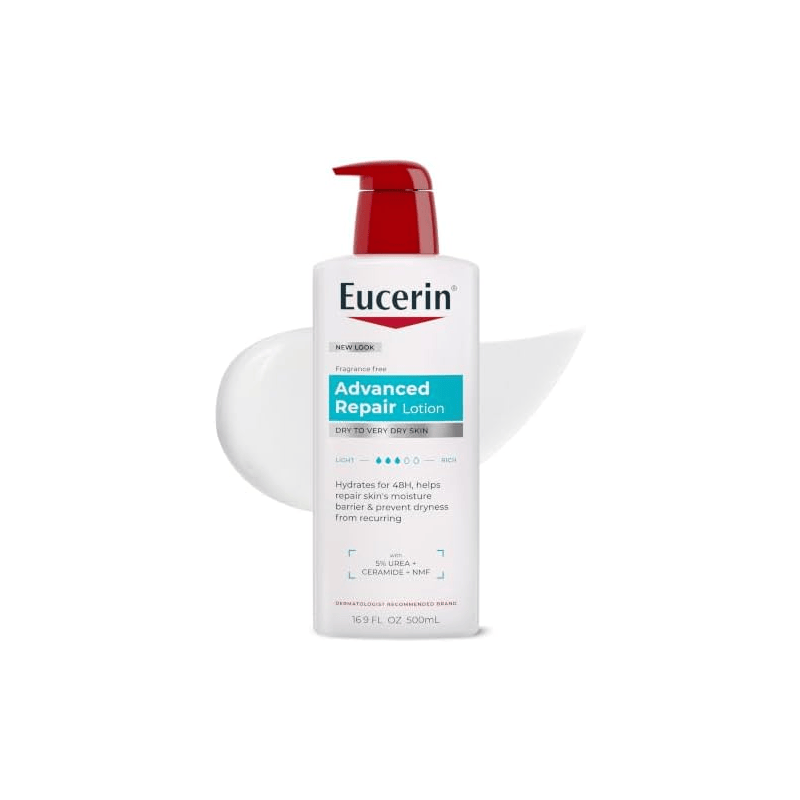
Eucerin Advanced Repair Lotion runs about $13 for 16.9 ounces, although the price moves around a lot. It has 5% urea, a ceramide and the same kinds of moisture-holding ingredients your skin makes on its own, with no fragrance, dye or parabens, and it sinks in fast.
If you only want one bottle parked by the shower, make it this one. The urea gently softens flaky shins over time, and the pump makes it easy to use every single day.
2. AmLactin Intensive Healing Lotion

AmLactin Intensive Healing Lotion costs about $16 for 7.9 ounces. It pairs 15% lactic acid with ceramide 3, vitamin E, glycerin, mineral oil and petrolatum, has no fragrance or dye, and is made for very dry, flaky or ashy skin.
Reach for it when skin looks dull and feels rough, the way heels get in the middle of winter. Because it contains an acid, wear sunscreen on any skin you use it on, and keep that up for a week after you stop. Skip it on cracked or scratched spots, where it will sting. If your real issue is those little bumps on the backs of your arms, our keratosis pilaris guide walks through the routine.
3. Cetaphil Moisturizing Cream
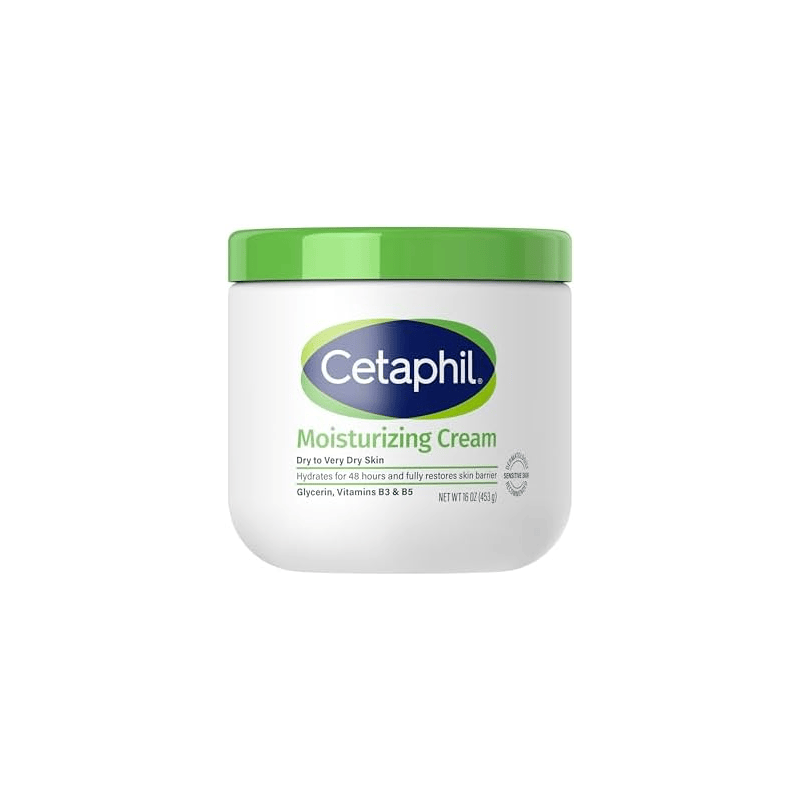
Cetaphil Moisturizing Cream is about $13.50 for a 16-ounce tub. It’s a rich, fragrance-free cream with glycerin, petrolatum, niacinamide and panthenol, made for sensitive skin on both face and body, with very dry spots like hands, feet, elbows and knees in mind.
No acids, nothing fancy, just lots of cream for the money. It’s the one to grab when your skin feels tight and itchy and a light lotion has worn off ten minutes after you put it on. One heads-up, though: it contains sweet almond oil, so pass on it if you have a nut allergy.
4. Nécessaire The Body Cream

Nécessaire The Body Cream is about $48 for 6.8 ounces. Inside you’ll find 5% niacinamide, five ceramides, hyaluronic acid and a soothing plant extract called centella, all in a base of shea butter and colloidal oatmeal. It’s fragrance-free, it won’t clog pores, and it carries the National Eczema Association (NEA) Seal of Acceptance.
It has the most skin-friendly extras on this list and feels like a real treat to put on. It also costs three or four times as much as the drugstore jars so if the price would make you use it sparingly, buy the Cetaphil and slather it on instead, because using enough, often, matters most.
5. Curél Hydra Therapy Itch Defense Wet Skin Moisturizer
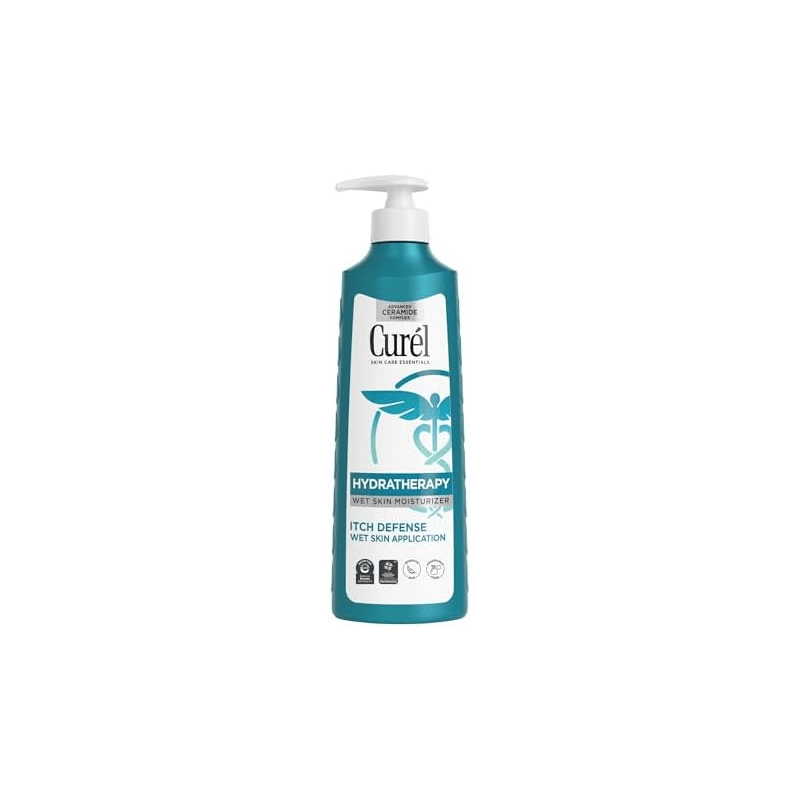
Curél Hydra Therapy Itch Defense Wet Skin Moisturizer is about $24 for 12 ounces, and it works a little differently from the rest. You smooth it on in the shower, after you rinse and before you reach for the towel. It’s made with ceramides, it’s fragrance-free, it won’t clog pores, and it has the NEA seal too.
Moisturizer works best on damp skin anyway, and this one makes that step automatic. It’s a smart buy if “I’ll moisturize later” never quite happens in your house. Just pat dry gently afterward so you don’t wipe it all off.
6. First Aid Beauty Ultra Repair Cream

First Aid Beauty Ultra Repair Cream is about $24.50 for 4 ounces. Its skin-protecting ingredient is 0.5% colloidal oatmeal, joined by a ceramide, shea butter, squalane, glycerin and dimethicone, and it’s meant for face and body with sensitive, eczema-prone skin in mind.
It’s just as good on dry elbows and shins as it is on your cheeks. The one thing to know is that it contains eucalyptus leaf oil, so if plant oils have bothered your skin before, one of the fully fragrance-free picks above is the safer bet. Patch-test it first either way.
Small shower habits that help any cream work harder
- Keep showers short. Five to ten minutes in warm water rather than hot, with the bathroom door shut so the steam stays in.
- Wash only where you need it. A gentle, fragrance-free wash belongs on armpits, groin and feet, and your shins can usually skip the soap.
- Pat dry instead of rubbing, and leave your skin a little damp.
- Moisturize within three minutes. That’s the window the NEA recommends to lock in the water your skin just soaked up. Smooth it on in downward strokes instead of scrubbing in circles.
- Reapply whenever skin feels dry, and after you wash your hands.
- Run a humidifier at night in winter, and clean it often.
- Wear loose cotton against dry skin, since tight leggings, wool and polyester can make the itch worse.
Not sure if you’re dry or just dehydrated? Our post on dehydrated vs dry skin helps you tell them apart.
Matching the jar to your skin
If you’re only dry in winter, buy the Eucerin, leave it in the bathroom, and use it every time you shower. That habit does more than any formula could.
If you’re flaky, dull or rough, try AmLactin at night and a plain cream in the morning, and remember sunscreen on anything the lactic acid touches.
If you’re itchy and wondering about eczema, start with the Curél in the shower or the Cetaphil cream, skip anything with acids, and read our guide to eczema vs dry skin. If it’s red, cracked or keeping you up at night, see a dermatologist.
If your skin is cracked or bleeding, leave urea and lactic acid alone until it heals. Use the thickest fragrance-free cream you own, with petroleum jelly over the worst spots.
If you’d like one nice thing on your dresser, that’s the Nécessaire. Just use plenty of it.
When dry skin needs a dermatologist
If you’ve stuck with a good routine for a few weeks and your skin is still dry, itchy or cracked, it’s time to book an appointment. Dryness that won’t go away can come from a health problem like eczema, psoriasis, diabetes, thyroid trouble or kidney disease, and some medications cause it too. Mention it if any moisturizer burns or stings. Our eczema-prone skin guide covers what treatment can look like.
Petroleum jelly over heels and elbows helps all year, even once you switch to a lighter lotion for summer. You’ll find more ideas in our skin archive.


