
Should your cream do more, or have less in it? That’s the main choice between these two, and you can’t go wrong either way. Both are fragrance-free, petrolatum-based creams for dry, sensitive skin, and both carry the National Eczema Association Seal of Acceptance. CeraVe packs in barrier helpers like ceramides, while Vanicream keeps its list to about ten ingredients for skin that reacts to everything. Just know that neither one treats eczema, so if your skin is cracked, weeping or keeping you up at night, see a dermatologist.
Ceramides or a ten-ingredient list
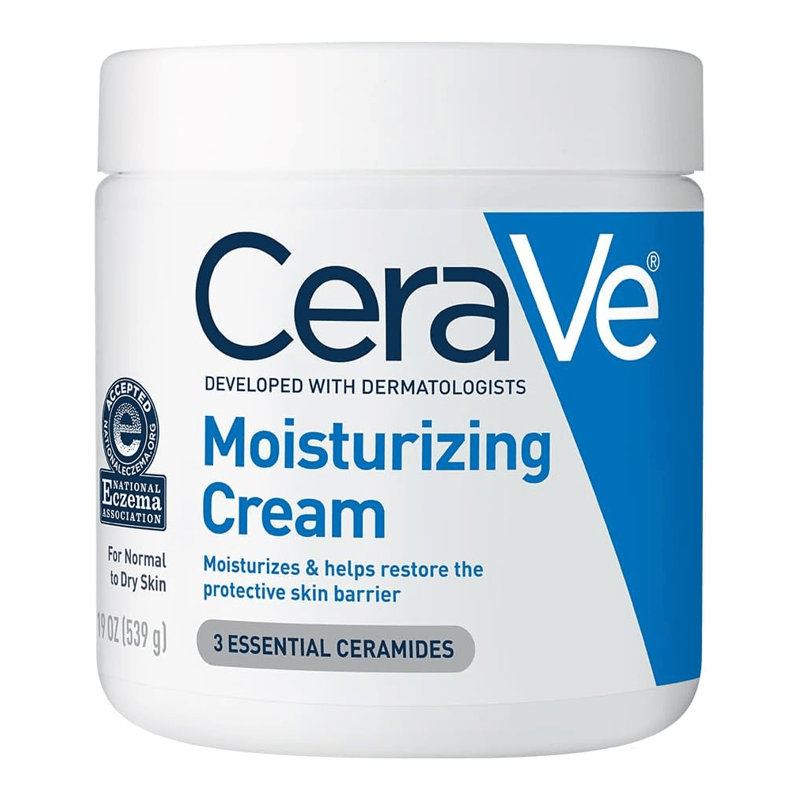
CeraVe Moisturizing Cream is all about your skin barrier, the outer layer that keeps water in and irritants out. It’s the white tub with the blue lid you’ve seen everywhere, and inside are three ceramides (fats your skin makes on its own), plus cholesterol, hyaluronic acid, dimethicone and petrolatum, in a formula made to release those ingredients slowly. Underneath all that it’s a classic cream of water, glycerin and light oils, 24 ingredients in all. The National Eczema Association describes barrier creams as moisturizers with added fats and ceramides like the ones in healthy skin, made to help lock moisture in and keep irritants out, and CeraVe is exactly that kind of cream. If ceramides are new to you, our ceramides and skin barrier guide explains why so many barrier creams lean on them.
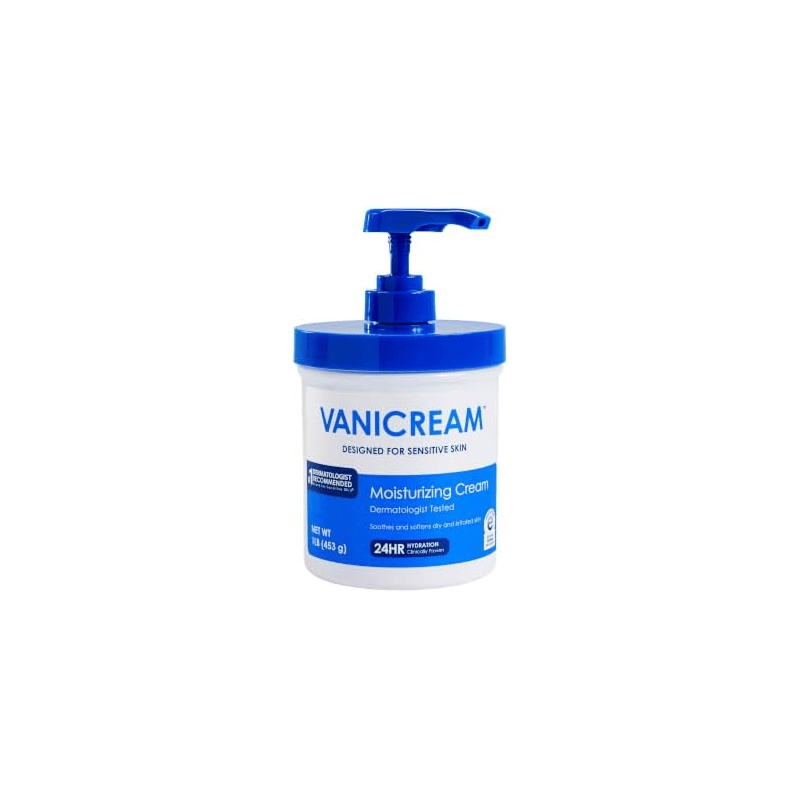
Vanicream Moisturizing Cream goes the other way, and we love it for that. The full ingredient list is water, petrolatum, sorbitol, cetearyl alcohol, propylene glycol, ceteareth-20, simethicone, glyceryl stearate, PEG-30 stearate and sorbic acid, and yep, that’s all of it. There’s no fragrance, not even the masking kind used to cover up smells, and no plant extracts or essential oils, and it’s gluten-free too. It doesn’t have ceramides and doesn’t pretend to, because its whole appeal is that every ingredient is one more chance for a reaction, and this cream gives you fewer than half as many chances as CeraVe. If you’ve reacted to a cream before and never figured out why, a ten-item list is a lot easier to check than a 24-item one.
Which one feels richer
CeraVe feels rich but sinks in quickly, without that greasy film. Petrolatum sits seventh on its list, behind glycerin and a few softening oils, so it leans more toward cushiony moisture than heavy seal. That makes it easy to slather on your legs after a shower and get dressed a few minutes later, and it’s a comfortable everyday pick if heavy creams usually leave you feeling sticky. In winter, when your skin feels tight all day, you can simply use more of it, more often.
Vanicream is the more sealing of the two. Petrolatum is its second ingredient, right after water, which means there’s more of it than anything that comes after. It still spreads easily and absorbs well, but if you want the most seal you can get from a cream that pumps, this is the one that leans that way. That makes it great for hands, elbows, shins and feet. For really dry patches with either cream, the eczema association points out that ointments seal even better than creams, so you can smooth a thin layer of ointment on top. Our eczema-prone skin guide walks through that cream-then-ointment routine.
On your face
CeraVe works on your face and body, day or night, and it’s non-comedogenic, meaning it’s made not to clog pores. On a dry or sensitive face it makes a cozy night cream. If your face runs oily by noon, though, a whole tub of body cream can feel like a lot, and CeraVe’s lighter Daily Moisturizing Lotion is the easier fit. It has the same three ceramides and hyaluronic acid in an oil-free lotion with no added fragrance, about $18 for 19 oz, and it’s great for summer or a quick all-over layer.

Vanicream is made for your face, hands, feet and body, and it’s non-comedogenic too. It’s a nice pick for a face that stings with almost everything, especially at night. For daytime or oilier skin, Vanicream’s own Daily Facial Moisturizer is lighter and adds ceramides. It’s the fun twist here if you love Vanicream’s short lists but want ceramides on your face: about $14 for 3 oz, with five ceramides to the CeraVe cream’s three, plus hyaluronic acid and squalane, and no fragrance, botanical extracts or essential oils.
Ingredients to check if you’ve reacted before
CeraVe uses phenoxyethanol and ethylhexylglycerin as preservatives. Both are common and most skin is fine with them, but they’re worth a glance if an allergist has ever flagged them for you.
Vanicream has propylene glycol, which a small number of people react to. If a patch test has ever turned that one up, CeraVe may suit you better despite its longer list, and that’s a perfectly good reason to choose it. Either way, check both labels against your own history before you pick. And since formulas do change from time to time, the ingredient list on the box in your hand is always the one that counts.
Pump or tub, and what you’ll pay
CeraVe comes in a 19 oz tub for about $18, or roughly $0.97 an ounce. A tub makes it easy to scoop a big handful for your legs, and it lasts a long time.
Vanicream comes in a 16 oz pump bottle for about $14, or roughly $0.85 an ounce. The pump keeps your fingers out of the cream, which is nice if you share it with the whole family. Prices move around a lot, so treat these as ballpark numbers, and pick whichever you’ll actually keep by the sink. The cream you use after every hand wash beats the one you forgot in a drawer.
So which cream is yours?
If your skin is dry but not especially touchy, go with CeraVe. You get ceramides, cholesterol and hyaluronic acid along with the petrolatum, and that big tub lasts ages.
If you react to most moisturizers and can’t pin down why, go with Vanicream, since ten ingredients are easier to live with, and easier to rule out, than 24.
If you want the shortest list on your body and ceramides on your face, use the Vanicream cream from the neck down and the Vanicream Daily Facial Moisturizer on your face.
If your hands crack every winter, either cream works. Keep one at every sink, use it after each wash, and add a thin layer of plain petroleum jelly at night.
If you’re choosing for a child, both are made for the whole family, CeraVe from age 3 and Vanicream for all ages. Ask your pediatrician about anyone younger.
If you have active eczema, or a rash that keeps coming back, use either one every day and see a dermatologist about the flares, because a moisturizer supports your skin but doesn’t replace treatment. Curious how CeraVe compares with other favorites? We put it next to Cetaphil’s cream in CeraVe or Cetaphil and next to Lipikar in La Roche-Posay or CeraVe, and there’s plenty more in our skin archive.
Patch testing and when to put it on
Before a new cream goes all over your face, try it small. The eczema association suggests putting a pea-size amount on your inner wrist or the inside of your elbow and watching for redness, rash, itching, pain or flaking.
Once it passes, put it on right after a shower or bath, after washing your hands, and any time your skin feels dry or itchy. Eczema advice calls for moisturizing at least once a day and using plenty, so don’t ration it. If you’re wearing makeup on top, give the cream a few minutes to settle first.


