
Cracked heels need a balm made for thick skin, usually one with urea or salicylic acid, because plain body lotion is too light to soften them. Cracked heels are one of those things almost everyone deals with at some point, especially once fall weather dries everything out, and regular body lotion just doesn’t cut it.
Heels need two things that a light lotion can’t give them. First, something that softens and loosens the thick, dry skin. Then something heavy on top to keep water from escaping. Below, we’ll go through why heels crack in the first place, the five products we’d reach for in the order you’d use them, and the habits that keep your feet smooth once they’re healed.
Why heels crack
The skin on your heels is naturally thicker than almost anywhere else on your body, because it takes your weight all day. When that thick skin gets dry, it loses its stretch. Every step pushes the heel pad outward, and stiff, dry skin can’t flex with it, so it splits along the edges.
A few things make it more likely. Open-back shoes and sandals let the heel spread with nothing to hold it in. Standing for long stretches adds pressure. Hot showers, dry indoor heat and cold weather all pull moisture from the skin. Some health conditions play a part too, including diabetes, thyroid problems, eczema and psoriasis, and athlete’s foot can look a lot like plain dry heels.
What dermatologists suggest
The American Academy of Dermatology suggests a cream with 10 to 25 percent urea, an alpha hydroxy acid like lactic acid, or salicylic acid, applied right after a bath or shower while your feet are still a little damp. These ingredients soften the thick top layer so it can shed and so moisture can get in. At bedtime, the AAD suggests a layer of plain petroleum jelly to seal everything in. Our guide to urea explains what the different strengths do if you’re curious.
That gives you a simple routine. Soften after your shower, seal before bed, and add a treat now and then. The products below follow that same order, and none costs more than about $15.
Step one, soften the thick skin
A fragrance-free cream for rough, callused feet
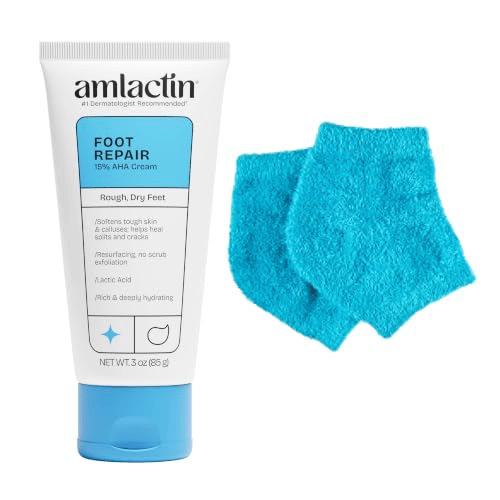
Amlactin Foot Repair Cream uses 15 percent lactic acid to loosen built-up skin without any scrubbing. It’s fragrance-free, which makes it a great choice if scented foot creams tend to sting or itch. Apply it twice a day, and go easy on any open cracks, since acids can sting there. Lactic acid also makes skin more likely to burn, so put sunscreen on bare feet while you’re using it and for a week after. This set comes with a pair of socks, and it runs about $15.
The strongest everyday balm for deep splits

For heels that are thick, rough and split, start with Flexitol Heel Balm. It has 25 percent urea, right at the top of the range dermatologists suggest, in a rich base with shea butter and a little glycolic acid. Use it twice a day on the rough spots. It also has lanolin and tea tree oil, so skip it if either has bothered your skin before. About $14 for a 4-ounce tube.
A one-step option for busy nights
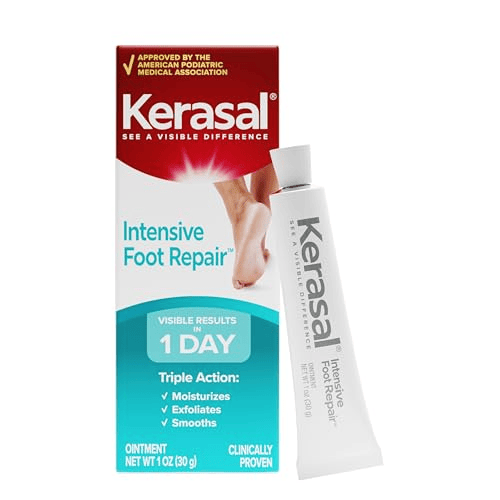
If you know you’ll never stick with two steps, Kerasal Intensive Foot Repair Ointment softens and seals at the same time. It puts salicylic acid and urea in a petrolatum base, so it feels greasy, and that’s exactly why it works. Rub it in at night, pull on cotton socks, and let it do its thing while you sleep. It’s about $9.
Step two, seal it in at bedtime

Vaseline Original Healing Jelly is plain petroleum jelly, the exact bedtime step dermatologists recommend. It sits on top of your skin and keeps water from leaving, which gives the cream underneath a full night to work. Smooth a thin layer over Amlactin or Flexitol, then slip on cotton socks so it stays on your feet and off your sheets. A big 13-ounce jar is about $6 and lasts a very long time.
A weekend treat before sandal season
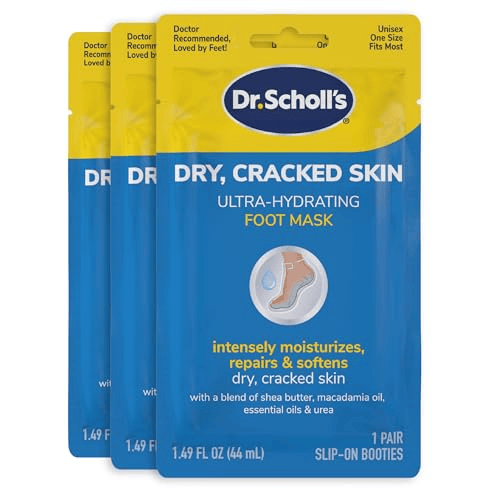
Dr. Scholl’s Ultra Hydrating Foot Mask comes as single-use booties filled with a cream made with urea, shea butter and oils. Slip them on while you watch a show, take them off after 30 minutes, and massage in whatever’s left. It’s a fun reset before a pedicure or a beach trip rather than a daily fix. The formula has essential oils, so if your skin is sensitive, stick with the Amlactin. About $9.50 for three pairs.
Habits that keep heels smooth
Timing matters more than you’d think. Put your softening cream on within a few minutes of getting out of the shower, while your feet are still slightly damp, because that’s when the skin takes in moisture best. Keep showers warm instead of hot, and pat your feet dry instead of rubbing.
Go gently with pumice stones and foot files. A light pass on dry skin a couple of times a week is plenty. Scraping hard can leave raw spots, and our cracked heels guide explains why aggressive filing can make the skin grow back even thicker. Never cut or shave off hard skin yourself.
During the day, shoes that cover the back of your heel give the skin support while it heals, so save flip-flops and open-back mules for later. If a crack is open and sore, the AAD suggests a liquid bandage to hold it closed and keep dirt out while it mends. Heels often look noticeably better within a week or two of steady care.
Signs your heel cracks need a pro
See a dermatologist or podiatrist if your cracks are deep, bleeding or very painful, if they don’t improve after a couple of weeks of home care, or if you notice redness, warmth, swelling or pus, which can mean an infection. If you have diabetes or poor circulation, don’t wait. Check your feet every day and let your doctor know about any cracks right away, since small sores on the feet can turn serious quickly. Peeling or itching between the toes alongside dry heels is also worth a look, because it may be athlete’s foot, which needs an antifungal instead of a moisturizer.


