
When you hear “licorice,” you probably picture the red or black ropes from the movie theater candy counter, not your skincare shelf. But flip over a few brightening serums and gel creams, and there it is in the ingredient list, tucked between the vitamin C and the niacinamide. It’s there for a reason, and it’s one of the friendlier ingredients to try if stronger dark-spot products have left your face red and stinging.
Licorice root extract can help even out skin tone and calm redness, gently. It’s milder than the big dark-spot fighters like retinoids or azelaic acid, and the research behind it is still early, so it works better as a helper than as a fast fix. It mixes well with niacinamide and vitamin C, and sunscreen still does most of the work for dark spots. Below is what it does, who should be careful, and four products with licorice, in the order they go on your skin.
What it does for your skin
On ingredient lists it shows up as “Glycyrrhiza glabra (licorice) root extract.” In skin care, it has two jobs.
The first is brightening. A compound in licorice called glabridin slows down the enzyme your skin uses to make pigment, at least in lab research. Less pigment over time can mean dark spots look softer. Cleveland Clinic lists licorice extract among the ingredients still being studied for melasma, which is a fair way to put it. It’s promising, not proven.
It also isn’t one of the main dark-spot ingredients dermatologists point to. The American Academy of Dermatology’s list for over-the-counter products is azelaic acid, glycolic acid, kojic acid, a retinoid, or vitamin C. Licorice works best as a supporting player. You’ll usually find it mixed in with one of those, or with niacinamide or tranexamic acid. If dark spots are your main worry, our dark spots and hyperpigmentation guide covers the full plan.
The second job is calming. The same lab research shows glabridin can turn down inflammation, and brands use licorice to soothe the look of redness. Early studies on licorice gels for eczema look hopeful, but the National Center for Complementary and Integrative Health says more research is needed.
Whatever you use, sunscreen comes first. The AAD calls sunscreen essential for dark spots. Worn every day, it helps stop new ones and helps the old ones clear.
Who should skip it, and side effects
For skin, licorice is on the gentle end. The NIH’s complementary health center says licorice on the skin may be safe for short-term use, but it can irritate some people. That’s the main risk.
- If you’ve had a reaction to licorice before, skip products with it.
- If a product burns, stings or itches, stop using it. The AAD gives the same advice for any dark-spot product.
- If you have sensitive skin, patch test first. Try it on a small spot, like the side of your neck, for several days before it goes on your whole face.
- If you’re pregnant or breastfeeding, check with your doctor or midwife before adding it, the same as any new skin product. The scary licorice warnings you may have read are about eating a lot of licorice, not about skin care. Still, ask.
Also check the rest of the formula. A licorice product packed with acids is a stronger product and needs the same care as any acid.
Adding it to your routine
Licorice usually comes built into a serum, treatment or moisturizer, so it goes wherever that product goes. After a gentle cleanser, layer from thinnest to thickest, and finish with sunscreen in the morning. Add one new product at a time and give it a couple of weeks before the next, so if your skin gets irritated you know which one to blame. There’s no known clash with retinol, and the same one-at-a-time rule applies there.
A vitamin C serum for mornings

VERSED Weekend Glow Brightening Serum pairs a gentle form of vitamin C with licorice root and niacinamide, and it’s made for dull, uneven skin. Vitamin C and sunscreen make a great morning team, so pat a few drops onto dry skin after cleansing, let it sink in, then follow with moisturizer and SPF. It’s about $18, with no fragrance in the formula.
A budget serum for stubborn spots
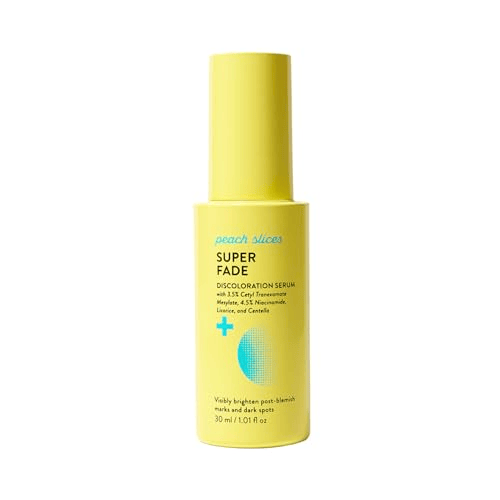
Peach Slices Super Fade Discoloration Serum is the cheapest way in, at about $12. It pairs licorice with a form of tranexamic acid and 4.5% niacinamide, two well-liked ingredients for uneven tone, and adds centella, allantoin and panthenol to keep things calm. It works morning or night. If you’re already using the vitamin C serum in the morning, this one slots in nicely at night. Niacinamide is a natural partner for licorice, and our niacinamide skincare guide explains why.
An acid treatment for nights
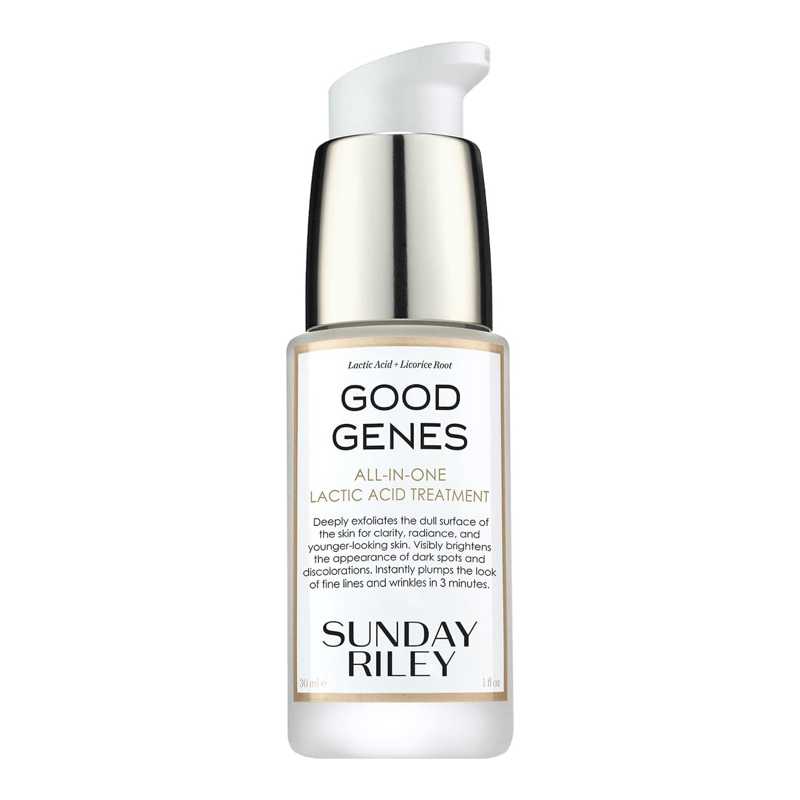
Sunday Riley Good Genes Lactic Acid Treatment is a different kind of product. It’s mainly a lactic acid exfoliant, with licorice root added for brightening, and it’s fragrance-free. It leaves skin looking smoother and brighter, which is why it has such a loyal following. Use it at night on clean, dry skin before moisturizer, and only if your skin already handles acids, since it isn’t the gentle option. Lactic acid is an alpha hydroxy acid, and the FDA says AHAs can make skin more likely to burn, so wear sunscreen while you use it and for a week after you stop. It’s the splurge at about $85, and our comparison on Good Genes has a cheaper lactic acid if the price stings.
Licorice in your moisturizer
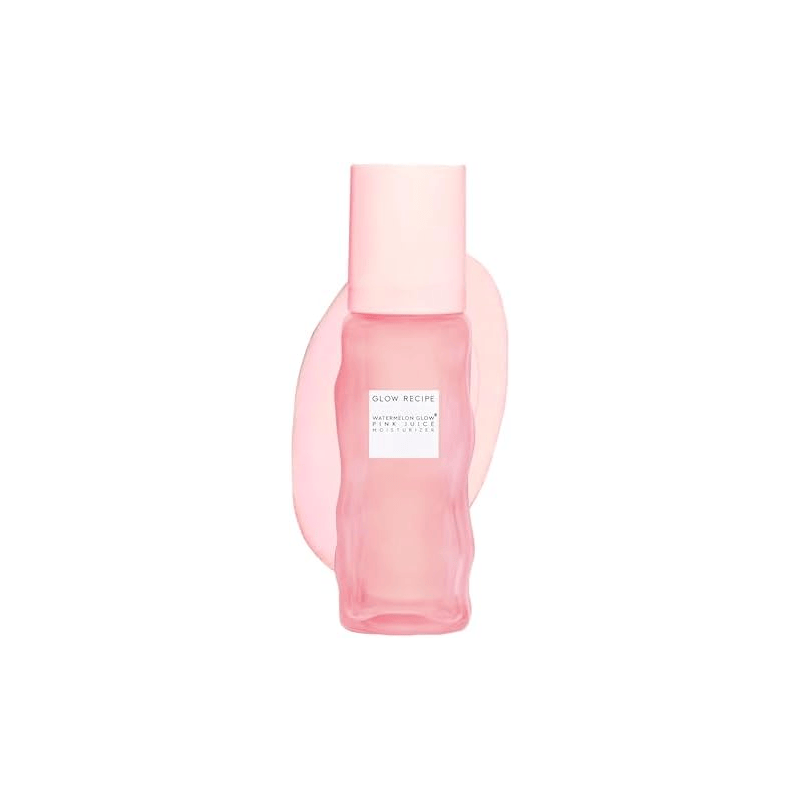
If you’d rather not add another step, Glow Recipe Watermelon Glow Pink Juice Moisturizer puts licorice in your moisturizer instead. It’s an oil-free, non-comedogenic gel that feels bouncy and light, so it’s a great match for oily and combination skin, and it smells like fresh watermelon. Use it morning and night as your last step before sunscreen. It’s about $40.
Giving it time, and when to see a dermatologist
Dark spots fade slowly with any ingredient, so plan on using licorice every day for a couple of months before you judge it. It won’t match hydroquinone or a prescription, and it won’t treat rosacea. If your spots haven’t budged after a few months of daily sunscreen and an over-the-counter product, or your redness is constant or comes with bumps or burning, a dermatologist can talk you through stronger options.
You may have read that licorice can affect blood pressure. Those warnings are about eating licorice, especially a lot of it or for a long time, not about rubbing it on your skin. If you have heart or kidney problems or take steroids, it’s still smart to mention any licorice products to your doctor.


