
This guide is for anyone with a scar that kept growing after the wound healed, whether it started with an ear piercing, a pimple on the chest or a C-section. A firm, shiny bump that ends up bigger than the injury ever was is the hallmark of a keloid. Its milder cousin, the hypertrophic scar, is thick and raised too, but it stays inside the lines of the original wound and often softens over time. Telling them apart matters, because they behave differently and keloids are much more stubborn.
This guide walks through how to tell which one you have, why some skin forms keloids, how to lower your odds, what silicone can do at home, and how dermatologists treat them.
Keloid or hypertrophic scar
A hypertrophic scar sits within the edges of the original wound. It usually shows up within one to two months, looks pink to red and slightly raised, and often flattens and fades over the following year. It also tends to respond well to treatment.
A keloid spreads past the wound, sometimes far past it. It often appears 3 to 12 months after the injury, and about 1 in 5 show up more than a year later. It’s firm, smooth and raised, and it can be red, pink or darker than your skin, sometimes darkening further with time. Keloids grow slowly for weeks, months or years and then usually stop, but they rarely fade on their own, they’re harder to treat, and they often come back.
Both can itch or feel tender, and even doctors can’t always tell them apart at first glance. Get a dermatologist’s opinion before trying anything aggressive.
Why some skin forms keloids
A keloid forms when your body makes more scar tissue than it needs, so the scar keeps building past the wound. Nobody fully knows why, but some people clearly have keloid-prone skin, and genes play a big part. Between a third and half of people with a keloid have a blood relative who gets them too.
Your risk is higher if you have deeper skin. Black people have the highest risk in the US, and people of Asian, Latin American or Mediterranean descent are also more likely to form keloids than people with lighter skin. A parent, sibling or child with keloids raises your odds, and so does being between 10 and 30, the peak years. Many people notice their first one in their 20s. Pregnancy hormones raise the risk too.
Almost anything that scars can set one off, from ear piercings, acne and bug bites to tattoos and surgery. Once in a while one appears where nobody noticed an injury at all.
Where they show up and how they feel
Earlobes, the jawline, chest, upper back and shoulders are the usual spots. On an earlobe, a keloid tends to be a round, firm lump. On the chest or shoulder it spreads out flatter, like a spill that hardened. While it’s growing, a keloid can itch, burn or hurt, which usually eases once it stops. A large one over a joint can limit movement. And simply not liking how it looks is a perfectly good reason to want treatment.
Keloids don’t turn into cancer. Sun can darken one, sometimes for good, so keep it covered or use sunscreen on it.
Lowering your odds if you’re keloid-prone
You can’t always prevent a keloid, but you can tip the odds in your favor. The American Academy of Dermatology’s advice comes down to two things: avoid skin injuries you don’t need, and act fast at the first sign of thickening.
If you or a blood relative form keloids, the safest choice is skipping new ear piercings. If you go ahead, watch the earlobe closely. At the first sign of thickening, take the earring out and switch to a pressure earring, worn at least 12 and ideally 20 hours a day for 4 to 6 months. You can’t wear a regular earring underneath, so the hole may close.
Before a tattoo or cosmetic treatment, ask for a small test spot first and tell whoever’s doing it that you form keloids. Before surgery, dental surgery included, tell the surgeon, then watch the scar and call a dermatologist if it starts to thicken.
For everyday cuts and scrapes, wash right away with soap and water and skip hydrogen peroxide, rubbing alcohol and iodine, which dry the wound out. Cover it with a gel dressing or petroleum jelly gauze and keep it moist, changing the dressing daily until it heals. Keep it out of the sun with clothing or a broad-spectrum, water-resistant SPF 30 or higher. On brown or black skin, a tinted sunscreen skips the white cast. For a serious injury like a bad burn, get medical care rather than handling it at home.
Silicone once the wound has closed
Once a wound has fully healed past the scab stage, silicone is the main keloid tool you can buy without a prescription. Dermatologists use it on healed wounds and after treatment to help keep a keloid from forming or coming back. Never put silicone on a scab or open wound. To prevent a keloid, dermatologists suggest using it every day for about six months, and if the scar hasn’t grown by then, you can usually stop. Silicone won’t remove a keloid you already have, but it’s an easy daily habit with a good track record. Our post on silicone gel sheets for acne scars covers how it helps other scars too.
Sheets suit flat spots you can cover, and gel suits the face, joints and anywhere a sheet won’t stay put. Whatever you choose, put it on clean, dry skin with no lotion or oil underneath.
Clear sheets that stay on for days

ScarAway Advanced Clear Silicone Scar Sheets are clear, 1.5 by 3 inches, and you can trim them to fit. They hold up in the shower, and one sheet can stay on for up to 10 days, which makes the daily habit almost effortless. They’re made for old and new scars, keloids included. A pack of six is about $15, and prices change often.
Small strips for small scars
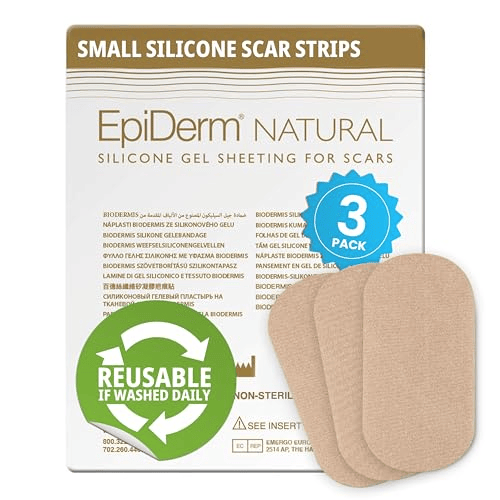
For a scar along a bra line, a small incision or the back of an earlobe, Epi-Derm Small Strips Silicone Scar Sheets are sized just right. They’re fabric-backed silicone strips from Biodermis, made for small scars, and they come in a skin tone or a camouflage pattern. They’re about $29 for three.
A gel for the face and jawline
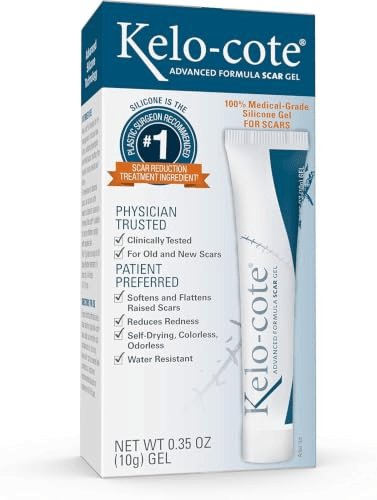
Sheets are hard to wear on your face or a bending joint, and that’s where Kelo-cote Advanced Formula Scar Gel shines. It’s a clear silicone gel for scars of any age, hypertrophic and keloid scars included. Smooth a very thin coat on clean, dry skin twice a day and let it dry, and then makeup or sunscreen can go right on top. A 10-gram tube is about $21 and covers a 3- to 4-inch scar for about 90 days.
The brands suggest 60 to 90 days of use, while dermatologists suggest about six months to prevent a keloid. If you’re keloid-prone, go with the longer timeline.
How dermatologists treat keloids
No single treatment works for every keloid, and none reliably stops one from coming back, so dermatologists usually combine two or more. Before your visit, think about what matters most to you, whether that’s less itching or being able to wear earrings again.
A series of steroid shots right into the keloid is the usual starting point. Between 50% and 80% of keloids shrink after them, though many grow back within five years. On darker skin, the shots can leave light spots, and a dermatologist can inject other medicines instead.
Surgery sounds like the final answer, but nearly every keloid comes back after surgery alone, so it’s paired with shots, pressure, freezing or a light form of radiation that lowers the chance of a comeback. Pressure dressings, earrings or garments help too, but they have to be worn 12 to 20 hours a day for months. Freezing works best on small keloids and can help the shots work better, though it can leave a permanent light spot on brown or black skin. Laser treatment can flatten a keloid and fade its color, usually alongside shots or pressure. For a keloid with a narrow base, a surgical thread tied around it can slowly cut it off. Newer treatments are being studied too.
Keloid treatment usually counts as cosmetic, so insurance rarely pays. Ask about cost before you start.
Why they come back, and how to stay ahead
Keloid-prone skin overbuilds when it’s hurt, and surgery hurts it. Cutting a keloid out removes the scar but makes a fresh wound that can form a new one. That’s why combining treatments and finishing the whole plan matters, even once things look better. Please don’t cut, freeze or tie off a keloid at home, since any new injury can start a new one.
One keloid also means you can get another, so the prevention habits are for life. If a new piercing starts to feel thick or firm, take the earring out now rather than next month, get a pressure earring and book a dermatologist. If you have surgery coming up, tell the surgeon and start silicone once the cut has fully closed. If your scar is raised but stays inside the cut and is only a couple of months old, it’s more likely hypertrophic, and silicone, sun protection and patience are a good start.
Scars that need a dermatologist’s eye
See a board-certified dermatologist if a scar keeps growing past the wound, or if it hurts, itches or limits movement. Go too if it opens, bleeds or won’t heal, or if you’re not sure it’s a scar at all. A few other things, including some skin growths and an allergy to gold earrings, can look like a keloid, and a quick biopsy settles it. If you have brown or black skin and freezing comes up, ask about the risk of a light spot and whether another option fits better. Our post on whether a dermatologist visit is worth it walks through what to expect.
Acne can leave keloids too, usually on the chest, back or jaw in people with keloid-prone skin. For flat or pitted acne scars, see our acne scar texture guide, and find more skin guides in our skin archive.


