
The breakouts finally calmed down, and now you’re left with the marks. Maybe you catch them in the bathroom mirror while you brush your teeth, or in a photo where the light hits your jaw just wrong. Somewhere along the way you heard silicone gel sheets fix scars, and you’re wondering if they’re worth a try.
Silicone has decades of use behind it, and burn units and plastic surgeons hand it out all the time. It can also be a waste of money. Which one it is for you depends on the kind of scar you have. If your scars are raised, firm and sit above the skin around them, often along the jaw, chest or back after cystic acne, silicone is one of the best things you can buy without a prescription. If your scars are dents or pits, which is what most of us picture when we say “acne scars,” silicone won’t do much.
How silicone helps a scar
Experts aren’t totally sure, but the leading idea is that a silicone layer seals the scar and holds water in the top layer of skin. That steady moisture seems to tell the cells underneath to slow down on making collagen while the scar is still changing. Less extra collagen means a flatter, softer, less red scar over time.
Silicone doesn’t press the scar down, and it doesn’t dissolve scar tissue. Nothing in a tube can do that. It’s also very gentle. The most common issues are itching, a mild rash or skin that gets soggy under a sheet worn too long, which are annoying but not dangerous.
Raised scars versus dented scars
Raised scars, called hypertrophic scars, happen when the skin makes too much collagen while healing. After acne, they usually follow deep, painful cysts and show up more often on the chest, shoulders, upper back and jaw than on the rest of the face. The AAD lists silicone gel and sheets as a first step for these, since it’s low risk and worth trying before anything more involved.
Dented scars work the other way. Boxcar, rolling and ice pick scars happen when inflammation destroys collagen and the skin heals with less support than before. In rolling scars, little bands of tissue also pull the surface down. Silicone helps calm down extra collagen, so it doesn’t help when the problem is too little. You could wear it on a boxcar scar every day for a year, and the dent would still be there.
For dented scars, dermatologists use treatments that build new collagen or release those bands, like microneedling, laser resurfacing, subcision and fillers. At home, a retinoid is the ingredient with the best track record for texture, and our guide to getting started with retinol is a good place to begin.
Sheets or gel
Sheets have the longest research history, but they need a flat spot that doesn’t move much to stay sealed. Your face is the opposite. You talk, eat, wash and sleep on it, so a sheet on your cheek or jaw tends to peel at the edges and end up stuck to your pillowcase by morning. Gels are the better pick for your face. They dry into a thin, flexible, see-through film and sit fine under sunscreen and makeup. For the chest, shoulders and back, sheets work great, since clothes cover them all day.
A routine for scars on your face
Silicone only goes on fully healed, closed skin. Never use it on an open spot, a scab, a popped pimple or anything weeping, because sealing a wound that hasn’t closed can lead to infection. Skip active breakouts, too. If you’re not sure something has healed, give it more time. Once you’re ready, this is the order to use things in.
Start with a plain cleanser
Silicone needs clean skin with no oily residue underneath to stick well. The Vanicream Gentle Facial Cleanser is about as plain as cleansers get, with no fragrance and no sulfates, so it cleans without stripping your skin. Pat your face completely dry before the next step.
Smooth on a silicone gel
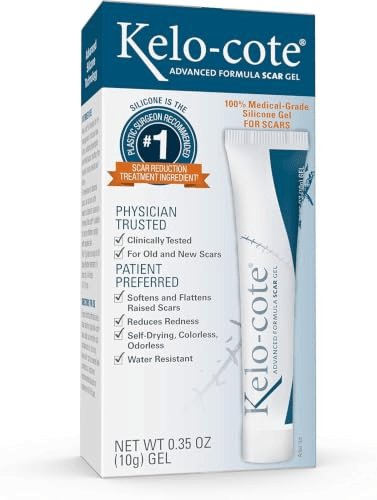
Kelo-cote Advanced Formula Scar Gel is the go-to silicone gel for faces. It’s clear, has no scent and dries into a film so thin it disappears under sunscreen. It’s often recommended after surgery, which says a lot. Spread a very thin layer over the scar twice a day and let it dry for a few minutes before anything else goes on top. Rushing that step is why gels pill.

If one gel pills or feels tacky on you, Strataderm Scar Therapy Gel is a great one to try instead, since silicone gels vary in texture more than you’d expect. It dries quickly into a smooth, flexible film, and it’s easy to use once a day on areas your clothes cover.
Protect it from the sun
Sun on a healing scar can leave it darker for a long time, so daily sunscreen matters no matter which product you use. The Kelo-cote UV SPF 30 Scar Gel combines silicone and SPF in one step, which is handy for daytime. It can be hard to find, so if it’s out of stock, use a plain silicone gel and let it dry fully before your sunscreen.
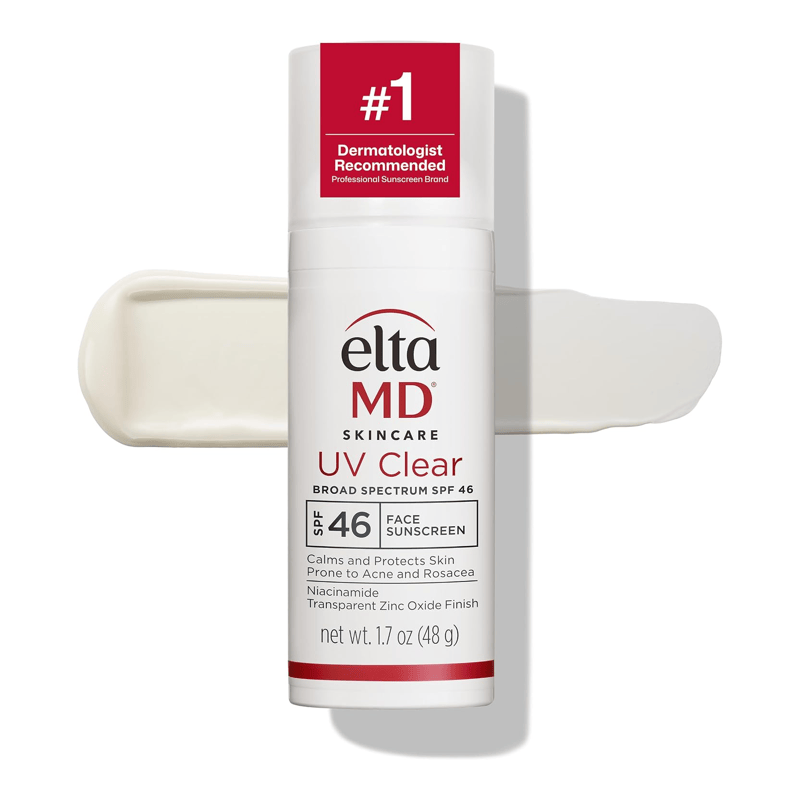
EltaMD UV Clear SPF 46 is a favorite for acne-prone skin. It’s broad-spectrum, lightweight and made not to clog pores, so it won’t undo your hard work. Put it on last in the morning, over your dried silicone gel, and reapply if you’re outside for a while.
Sheets for the chest, back and shoulders
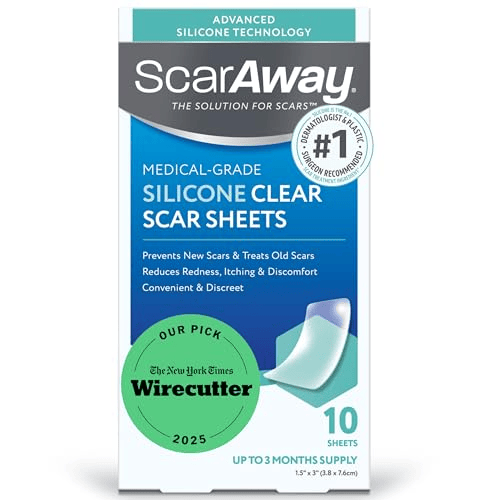
For raised scars on your body, ScarAway Silicone Scar Sheets stay put under clothes all day. You can cut them to fit, and you can wash and reuse each sheet several times. Put them on clean, dry skin and build up wear time slowly.
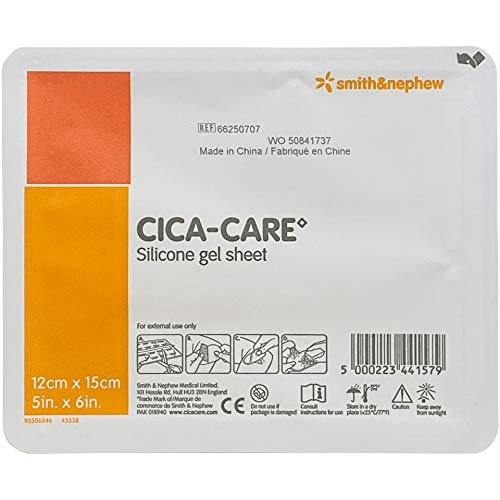
For a bigger area, like a patch of scarring across your back, the Cica-Care Silicone Gel Sheet is a thicker, sturdier medical-grade option that holds on longer than thin strips. Wash it daily as directed, and give your skin a break if it looks pale, soggy or itchy.
How long until you see a difference
This is where most of us give up, and it’s understandable. Sheets are usually worn many hours a day, often working up to nearly all day, for months. Gels usually go on twice a day. Give it at least two months before you look for change, and a few months of steady use before you decide if it’s working. Scars keep changing on their own for a year or more after they form, so silicone tends to help most on newer scars.
Skipping days is the biggest reason people decide silicone didn’t work. If twice a day for a few months doesn’t fit your life, that’s okay, and your money may go further on a single treatment at a dermatologist’s office.
Scars that need more than a gel sheet
See a board-certified dermatologist if your scars are dented, if they’re spreading beyond the original spot, if they’re itchy or painful, or if you still have active cystic acne. Keloids, which grow past the edges of the original wound, often need in-office treatment like steroid injections, and silicone may be one part of that plan. Getting acne under control first is also the best way to prevent new scars.
Silicone scar questions people search
Do silicone sheets work on acne scars? Yes for raised scars, often making them flatter and softer over a few months. They do very little for dented scars like boxcar or ice pick scars.
How long should you wear silicone scar sheets each day? Usually many hours a day, building up toward most of the day. Follow the package directions and take breaks if your skin gets irritated.
Can you put silicone scar gel on your face? Yes. Gel is the better pick for the face because it moves with your skin and wears well under sunscreen and makeup.
How long does it take for silicone to work on scars? Usually at least two to three months of daily use before you notice a change. More in our skin archive.


