
It’s Thursday night, you have plans Saturday, and a sore red bump is setting up camp on your chin. Digging through the bathroom cabinet, you find a little brown bottle of tea tree oil left over from some DIY phase years ago. It’s natural, your friend swears by it, so why not dab it on? Hold that thought. Tea tree oil can help mild acne a little, but straight from the bottle it’s strong enough to leave you with an itchy rash that looks worse than the pimple. And that old bottle is the riskiest kind of all.
Below is what the research supports, why old oil causes trouble, how to use it safely, and a few products that already have it mixed in at a skin-friendly level, in the order they’d go into your routine.
What tea tree oil can do for acne
Tea tree oil comes from the leaves of an Australian plant, and it has some natural germ-fighting properties. For skin, the best evidence is for mild acne, and the effect is modest and slow. The National Center for Complementary and Integrative Health puts it simply: a small amount of research suggests it might help.
The studies people quote used a gel with 5% tea tree oil, not a drop of pure oil. In one, a 5% tea tree gel cut down breakouts about as well as a 5% benzoyl peroxide lotion. It worked more slowly, though people had fewer side effects. A later small trial found a 5% gel did better than a plain gel over about six weeks.
Patience is part of the deal. Cleveland Clinic says it can take up to 12 weeks to see a change. If your acne is painful, deep, or leaving scars, tea tree oil isn’t strong enough. A dermatologist can get that kind of acne under control much faster and help prevent scarring.
Why the rash happens
Some people become allergic to tea tree oil and break out in an itchy, red, sometimes blistered rash where they put it. Doctors call this allergic contact dermatitis. It’s not common, but many people who react had used the oil before without trouble, so a past good experience doesn’t rule it out.
Old oil is the bigger problem. When tea tree oil sits around and meets light, air and warmth, it breaks down into new compounds that are harsher on skin. In lab work, oxidized tea tree oil was about three times more likely to trigger an allergy than fresh oil, and that change started within days on a sunny windowsill. Skin doctors have also seen that fresh oil caused weak reactions or none in people who were allergic to the aged kind. The NIH says a reaction is more likely if the product is old or has been exposed to heat, light or air.
A few more safety basics. Pure oil on skin can cause dryness, blisters and rashes, per Cleveland Clinic. Keep it away from your eyes and lips. It may make skin more sensitive to the sun, so sunscreen matters. Never swallow it, since it’s poisonous by mouth, and keep the bottle away from kids and pets. If you’re pregnant or nursing, check with your doctor before using it. And if you get itching, redness or swelling where you put it, stop right away.
Using the oil itself without irritation
If you’d like to use the straight oil, always dilute it. Cleveland Clinic suggests about 12 drops of a carrier oil, like jojoba, for every one or two drops of tea tree oil. Patch test the mix on your inner forearm for a couple of days before it goes on your face. If your skin stays calm, wash your face, pat it dry and dab the mix on the spot with a cotton swab or a clean fingertip. Let it sink in, then follow with moisturizer, and in the morning, sunscreen goes last.
Once or twice a day is plenty. Don’t stack it on the same spot with benzoyl peroxide, salicylic acid or retinol, since that combination can sting and leave you red and flaky. If you want both, use them at different times of day or on different days. Buy small bottles, keep the cap tight, store them somewhere cool and dark, and toss oil that’s been open a long time or smells off.
It’s usually easier to skip the bottle and use a product with tea tree already blended in. Here are four, in the order they’d show up in a routine.
Start at the sink
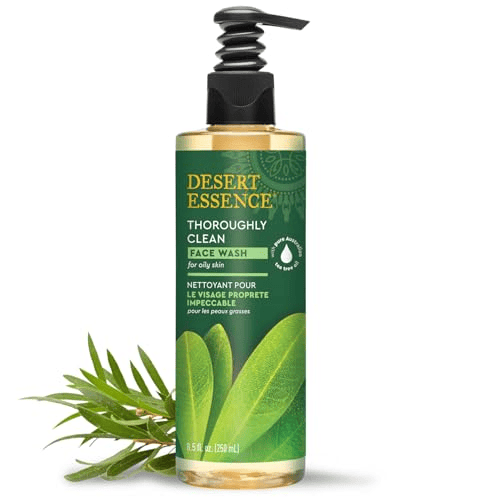
A face wash is the gentlest way to try tea tree, because it rinses off and spends very little time on your skin. Desert Essence Thoroughly Clean Face Wash is a castile-soap cleanser made with Australian tea tree oil, and at about $13 it’s the cheapest way to see how your skin likes the ingredient. It suits oily and combination skin best, and a pump or two is enough for your whole face.
A wash with a proven acne ingredient too
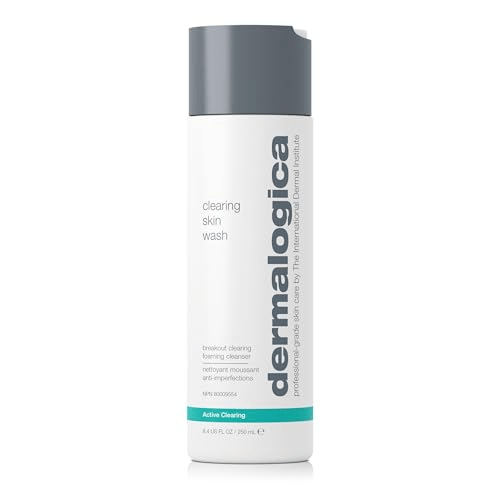
If you want tea tree alongside a standard acne fighter, Dermalogica Clearing Skin Wash is the splurge. It’s a foaming cleanser with salicylic acid, which works inside pores to loosen the gunk that turns into breakouts, plus tea tree and balm mint for a fresh feel. It runs about $49, and you only need a small amount each wash. Because it already has salicylic acid, skip a separate tea tree spot treatment right after it while your skin gets used to it.
A swipe for shine
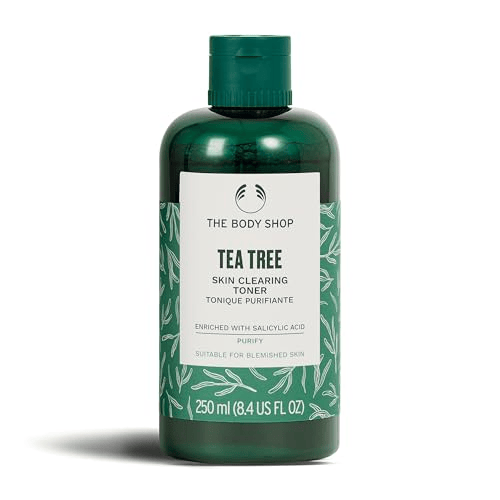
After cleansing, a toner is handy if you get shiny by midday. The Body Shop Tea Tree Skin Clearing Toner is a mattifying toner made for oily, blemish-prone skin. Sweep it over your face with a cotton pad, focusing on your T-zone, and let it dry before your next step. About $22. If your skin feels tight or dry afterward, use it once a day instead of twice.
Spot treatment without mixing your own

For the pimple on your chin, a ready-made spot oil saves you from measuring drops. The Body Shop Tea Tree Oil is a water-based blemish oil already blended at a level meant for skin, with a small applicator so you can dab it right on the spot. It’s about $30 and lasts a long time since you only use a touch. Apply it after toner and before moisturizer, and keep it off the skin around your eyes.
Other ingredients worth a look
Tea tree is a gentle option, not the strongest one. If your breakouts aren’t budging after a few months, the ingredients dermatologists reach for first are benzoyl peroxide, salicylic acid and adapalene. Our benzoyl peroxide vs salicylic acid guide walks through the two most common ones. For more targeted options, see spot treatments that work, and for a full daily lineup, our acne-prone skincare routine.
See a dermatologist if your acne is deep or painful, leaves dark marks or scars, or hasn’t improved after about three months of steady care. And if any tea tree product leaves you itchy, red or swollen, stop using it. A doctor can patch test you to find out whether tea tree is the cause.


