
Rosemary oil isn’t a tiny bottle of guaranteed hair growth, even if the internet can make it sound that way. The famous green-label Mielle bottle took off because it’s easy, tingly and simple to add to a routine, but it’s still an oil with a job and a few limits. So what can it actually do for your scalp and hair?
I get the appeal. You don’t have to mix essential oils in your bathroom sink, your scalp gets that cool minty feel, and your ends look shinier fast.
The smart move is using it like scalp care, not a miracle. That means knowing who it’s best for, how much to use, when to wash it out and when thinning hair needs a dermatologist instead of another product.
What Is Rosemary Oil for Hair and Who Should Use It?
The Mielle oil is a blended scalp oil, not straight rosemary essential oil. It’s mixed with heavier oils like soybean and castor, plus minty ingredients that give the scalp that cool, fresh feel.
It’s best for dry scalps, dry ends, braids, extensions and hair that likes richer oils. If your roots get greasy fast or your hair has low porosity, I’d go lighter and use less. One small dab can be plenty.
It’s also not the same thing as minoxidil. Rosemary oil can help condition the scalp and smooth dry hair, but minoxidil is the over-the-counter hair regrowth ingredient used for hereditary thinning.
Does Rosemary Oil Actually Help Hair Grow?
The hype traces back to one small randomized trial in the journal Skinmed. Researchers gave 50 people with pattern hair loss rosemary oil and 50 people 2% minoxidil, then checked in for six months.
At three months, neither group had a real change in hair count. At six months, both groups had more hair, and the difference between them wasn’t significant. Scalp itching went up in both groups, though it showed up more with minoxidil.
So it’s interesting, but it’s not a slam dunk. It was one small study, it used pure rosemary oil rather than the Mielle blend, and it was up against the weaker 2% minoxidil. No clinical trial on the Mielle formula itself has been published. For the longer version, here’s our full look at whether rosemary oil really helps hair grow.
Why this bottle is in everyone's cabinet

Screenshot: Mielle
Mielle Rosemary Mint Scalp & Hair Strengthening Oil, 2 oz is the viral original: rosemary, mint, biotin and castor oil for the scalp and ends. Mielle was founded by Monique Rodriguez and is now part of P&G Beauty, and the brand says this oil has been loved by millions since it launched.
The formula isn’t just rosemary. It’s built on soybean and castor oil, with rosemary leaf oil, jojoba, peppermint, eucalyptus, menthol, tea tree, biotin and lots of plant oils and extracts. That peppermint and menthol mix is why your scalp feels cool and tingly.
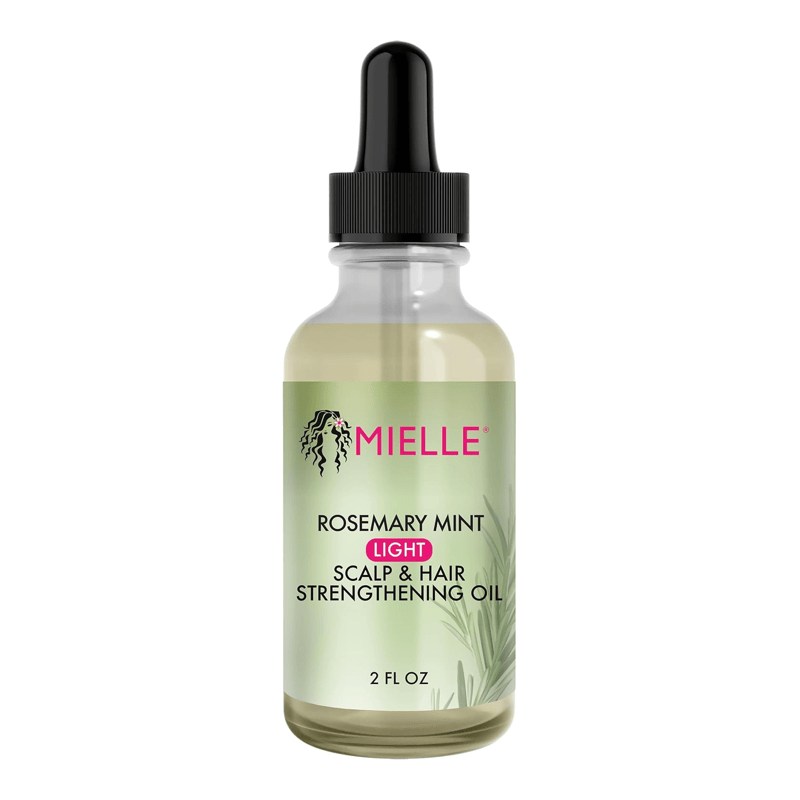
Mielle says it conditions dry hair, smooths split ends, adds shine and helps with dry scalp, and it’s made without parabens, sulfates, paraffins, mineral oil or DEA. The updated Rosemary Mint collection has more biotin, rosemary extract and peppermint oil certified by the Royal Botanic Gardens, Kew, plus up to 98% oils and 0% water. The catch is the original can feel rich, so Mielle Rosemary Mint Light Scalp & Hair Strengthening Oil, 2 oz is the one I’d look at for fine, low-porosity or silk-pressed hair. Mielle’s own FAQ also points fine or thin hair to the Light oil.

Put it on your scalp, not just your ends
View this post on Instagram
@vegamour / Instagram
Rosemary oil works best as scalp care first. Vegamour (@vegamour) talks about scalp care like a reset: clear away buildup, boost circulation and hydrate so your roots get a fresh start.
Mielle’s directions are simple enough. Section your hair into 4 parts so you can see your scalp, put a small amount directly on the scalp, massage it in with your fingertips, then comb it through to the ends. You can leave it in and style, but I’d keep the amount tiny if your hair gets flat fast.
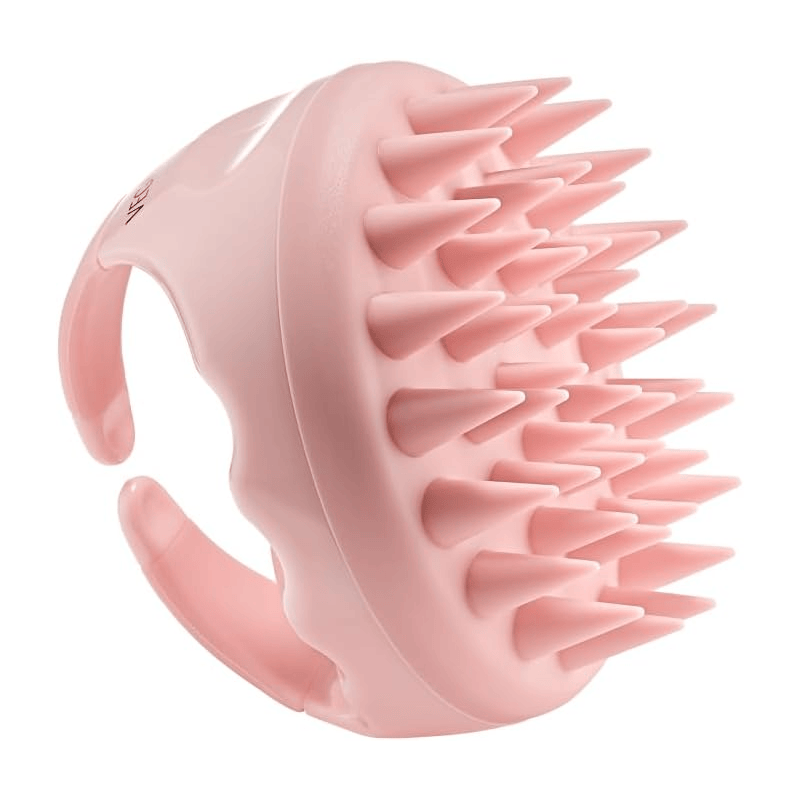
A tool can help spread the oil without scratching at your scalp. Vegamour GRO Revitalizing Scalp Massager works with shampoo in the shower or with oil on dry hair, while HEETA Silicone Scalp Massager Shampoo Brush has soft, flexible silicone bristles that help move product around and lift buildup. Curious what the massage part does on its own? Our scalp massage guide breaks it down.

Patch test it, then wash it out properly
Screenshot: American Academy of Dermatology
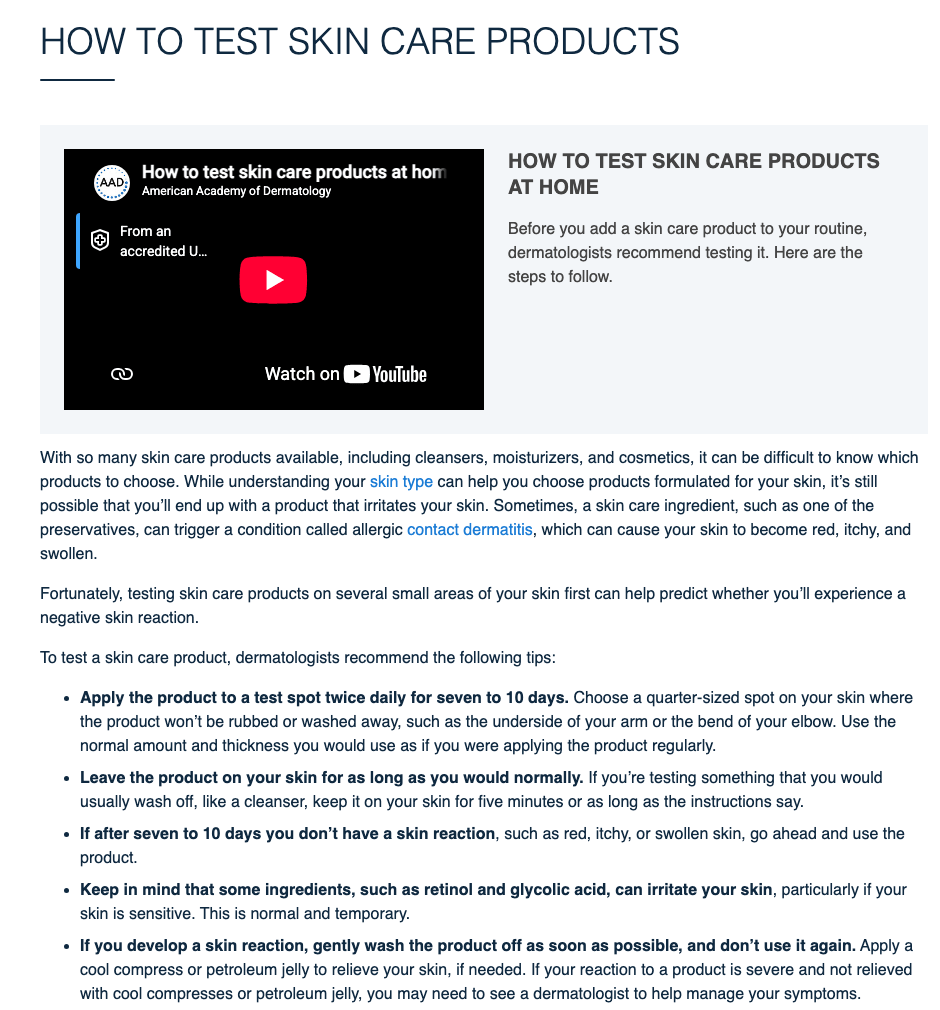
This oil has essential oils plus menthol, so a patch test is smart if your scalp gets fussy. The American Academy of Dermatology suggests picking a quarter-sized spot that won’t get rubbed or washed off, like the inner forearm or crook of the elbow, then putting on the normal amount twice a day for 7 to 10 days. If skin gets red, itchy or swollen, wash it off and don’t use it again.
A cool tingle can be normal with a mint oil. Burning, irritation or discomfort isn’t the goal, and Mielle says to stop right away if that happens. If symptoms are severe or don’t go away, get medical advice.
Oil that sits on the scalp can build up, so shampoo matters. Mielle Rosemary Mint Strengthening Shampoo, 12 oz is the matching sulfate-free, gently clarifying lather with biotin. Vanicream Shampoo, 12 oz is fragrance-free, dye-free and sulfate-free for removing oil and buildup, and Philip Kingsley No Scent No Color Shampoo is the more luxe sensitive-scalp option that’s also sulfate-free and fragrance-free.
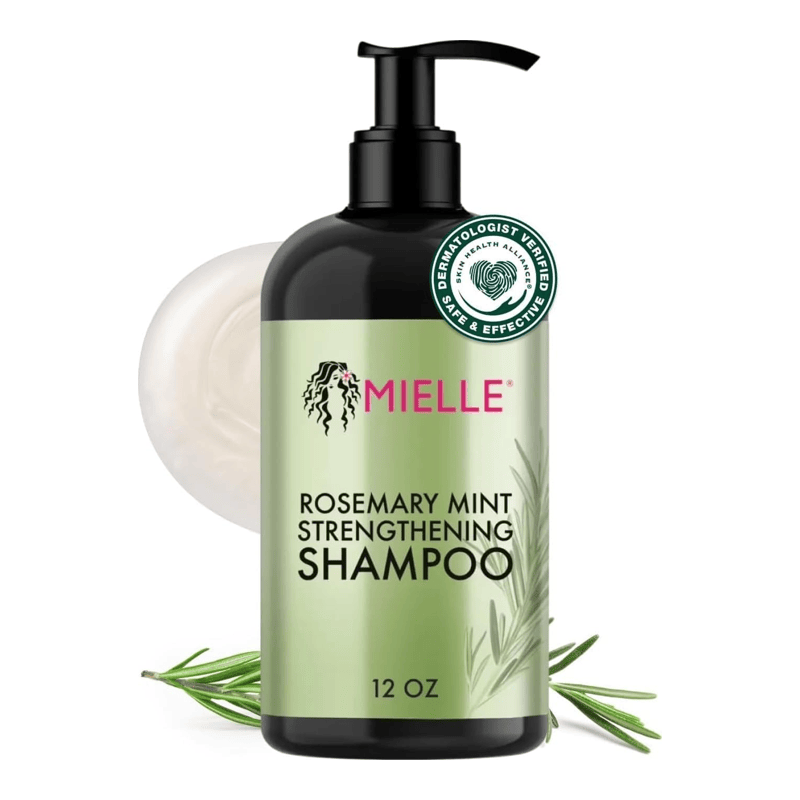
Mielle Rosemary Mint Strengthening Shampoo, 12 oz
A sulfate-free rosemary mint shampoo with biotin from the same line.

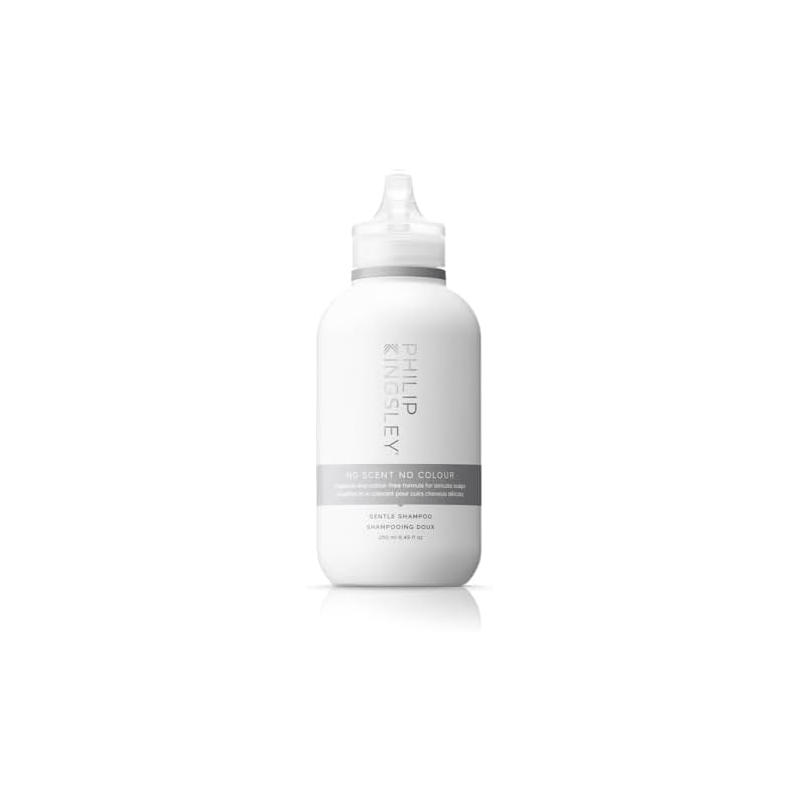
Philip Kingsley No Scent No Color Shampoo
A sulfate-free, fragrance-free shampoo for sensitive scalps.
Where minoxidil fits in
View this post on Instagram
@philip_kingsley / Instagram
Anabel Kingsley for Philip Kingsley (@philip_kingsley) answers the big minoxidil questions people tend to have, from GLP-1s to when results may show up. That’s the honest companion to any rosemary routine: minoxidil is the over-the-counter hair regrowth ingredient for hereditary hair loss, and it’s what rosemary was being compared against.
Women’s Rogaine 5% Minoxidil Foam, 2-Month Supply is a once-a-day 5% minoxidil foam for hereditary thinning in women. The rosemary study people talk about used the weaker 2% minoxidil strength, so if your part’s widening or your ponytail’s getting thinner, talk to your doctor or a dermatologist before you rely only on oil.
Rosemary oil can still feel nice in a scalp routine. Philip Kingsley Density Preserving Scalp Drops are daily drops with a peptide blend and caffeine for thinning hair, so they sit more in the scalp-support lane. Real hair loss needs the right plan, not just a prettier bathroom shelf.


When to skip the oil and see a dermatologist
View this post on Instagram
@dosemyhair / Instagram
Dr. Sharon Wong, a consultant dermatologist and hair loss specialist, with Dose (@dosemyhair) puts the focus in the right place: figure out what type of hair loss you have first, because that decides the treatment. I love a beauty shortcut, but hair shedding isn’t the place to guess for months.
The American Academy of Dermatology says shedding 50 to 100 hairs a day is normal. If you’re worried about how much hair’s falling out, a dermatologist can tell whether it’s hair loss, excessive shedding or both, and earlier treatment can help the outlook.
Sudden round bald patches are different. That can be alopecia areata, an autoimmune condition where the immune system attacks hair follicles, and rosemary oil isn’t a treatment for it. Our alopecia areata guide covers how dermatologists treat it. Talk to your doctor if you notice sudden or patchy hair loss, scalp pain, redness, scaling or hair loss with symptoms like fatigue. It’s general info, not medical advice.
The little rosemary bottle can be genuinely useful if you treat it like scalp care: use a small amount, wash it out well and don’t ask it to do a prescription-level job. Shiny ends and a calmer-feeling scalp are fair goals. A shrinking part or sudden shedding deserves a real check-in.


