
You’re standing in the shower, shaving your legs before a beach weekend, and you notice it again. Little rough bumps on the backs of your arms, a dry patch on one knee, and elbows that feel like sandpaper no matter how much lotion you used last night. Most of us grab the grittiest scrub in the cabinet and go to town. That feels great for about an hour, and then the skin turns pink and tight.
Smooth body skin usually comes from something gentler and more boring than that. The skin below your neck is thicker than the skin on your face, and it tends to respond best to a mix of light buffing in the shower and a lotion with a mild acid afterward. Below we walk through why body skin gets rough, how the two kinds of exfoliation work, the tools and lotions we like in the order you’d use them, and the habits that keep the results going.
A gentle rhythm works best
For most skin, exfoliating your body about two to three times a week is plenty. If your skin is sensitive, I’d scale it back to once a week or stick with a gentle acid lotion on its own.
If you’re shaving, exfoliate first. That quick step lifts dead skin so your razor can glide more smoothly, and it can help prevent ingrown hairs.
Body products make more sense for bigger areas
You can use a face exfoliant on your body, but body products are usually stronger and cheaper per ounce, which makes more sense when you’re covering legs, arms, or anywhere else that needs more product.
For keratosis pilaris, it usually takes a few weeks of daily acid lotion use to see the bumps get better. The bumps tend to come back if you stop, so I’d treat it like an ongoing habit, not a one-and-done fix.
Why body skin gets rough and bumpy
Your skin sheds dead cells all the time, but that process slows down as you get older and in spots that get rubbed or ignored, like elbows, knees, heels and the backs of your arms. When dead cells pile up, skin looks ashy and feels rough. Hair can get trapped under that layer too, which is how you end up with ingrown hairs after shaving.
Those tiny bumps on the upper arms and thighs have a name, keratosis pilaris. They happen when a protein called keratin plugs the hair follicles. The American Academy of Dermatology describes it as harmless and very common, and notes that it often gets worse in dry winter air. It can’t be cured, but regular exfoliating and moisturizing can make the bumps much less noticeable.
Scrubbing versus acids
There are two ways to clear off dead skin. Physical exfoliation uses friction, like a scrub, a glove or a brush, to buff cells away. Chemical exfoliation uses acids to loosen the bonds that hold dead cells together so they rinse off on their own. Lactic and glycolic acid are alpha hydroxy acids, or AHAs, and they’re great for rough, dry patches and bumpy arms. Salicylic acid is a beta hydroxy acid, or BHA. It dissolves in oil, so it can get into pores, which makes it the go-to for breakouts on the chest and back.
Both kinds work. For the body, a lotion with an acid tends to give steadier results with less irritation, while a scrub or glove is a nice extra once a week to lift flakes and help your razor glide. If your skin is sensitive, you can skip the scrubbing and let a gentle acid lotion do all the work.
Before you turn on the water
A soft brush for a quick dry sweep
A natural bristle dry brush is for anyone who loves a little morning ritual. You sweep it over dry skin in short, light strokes before you shower, starting at your feet and working up. It lifts loose flakes and leaves skin feeling soft. You’ll see claims about lymph drainage and cellulite online, but there isn’t solid evidence for those, so enjoy it for the smooth skin and the wake-up feeling. Keep the pressure light and skip any spot that’s broken, sunburned or irritated.
In the shower
Warm water softens dead skin, so a few minutes into your shower is the best time to buff. Do it before you shave, not after.
Gloves you can control
Exfoliating shower gloves cost very little per pair and give you more control than a loofah, because you can feel exactly how hard you’re pressing. Add your usual body wash, use small circles, and they make it easy to reach your back and shoulders. Rinse them well and hang them up to dry after each use so they stay fresh.
A classic towel for heels and legs
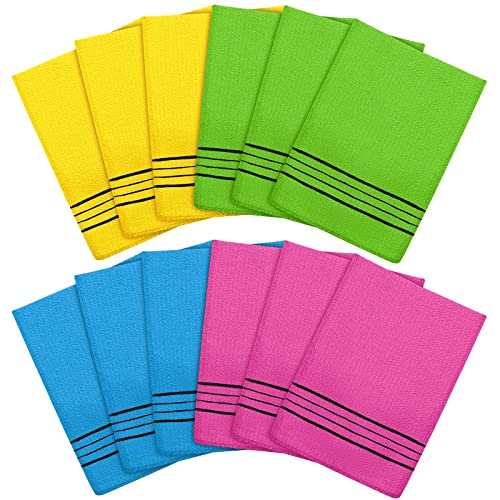
A Korean exfoliating towel, often called an Italy towel, is a staple of Korean bathhouses. The texture is rough, and that’s why people love it. Nothing lifts dead skin off legs and feet quite like it. Use it on skin that’s been soaking in warm water for a while, keep your strokes light, and save it for once a week or so.
A buttery sugar scrub

Tree Hut Shea Sugar Scrub is the fun, feel-good scrub of the bunch. The sugar grains are softer than salt or crushed shells, and the shea butter leaves skin feeling soft after you rinse. It comes in a lot of scents, so it’s easy to find one you love. Massage it in gently before you shave, rinse well, and use it about once a week.
A scrub and an acid in one step
If you only want one in-shower product, Nécessaire The Body Exfoliator is a smart splurge. It pairs fine grains with AHA and BHA, so you get a light buff and a chemical exfoliant at the same time. It feels luxurious, rinses clean, and suits people who want smooth skin without a long routine. Use it two or three times a week at most.
After you towel off
Pat your skin dry and put lotion on within a few minutes, while it’s still a bit damp. This is where most of the smoothing happens.
The drugstore favorite for bumpy arms

AmLactin Daily Moisturizing Lotion has 12% lactic acid, and it’s a longtime favorite for keratosis pilaris and rough, dry skin. Lactic acid exfoliates gently while it helps skin hold on to water, so arms and legs feel smoother with steady use. Expect a slight tingle the first few times, especially on freshly shaved skin. Smooth it over the bumpy spots once a day.
An easy place to start
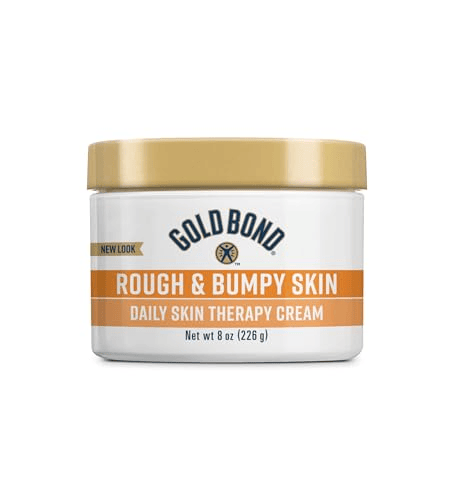
Gold Bond Rough & Bumpy Cream was made with keratosis pilaris in mind. It has AHAs plus vitamins A and E, and it’s easy to find and gentle on the wallet. If you’ve never used an acid lotion before, this is a low-pressure way to see how your skin likes it.
For rough skin that also breaks out
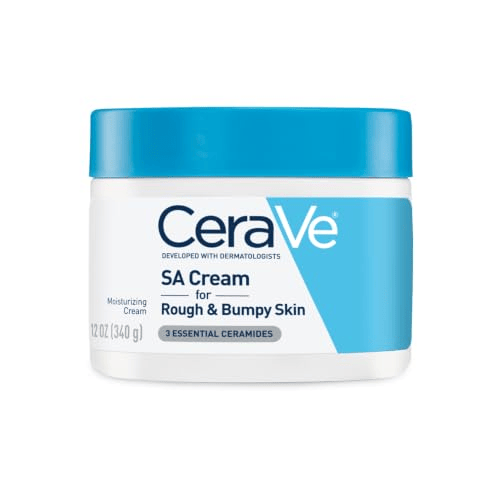
CeraVe SA Smoothing Cream combines salicylic acid and lactic acid with ceramides, the fats that help keep your skin barrier strong. That mix smooths and moisturizes at once, which makes it a great fit for rough, dry skin that also gets clogged, like the chest, back or upper arms. It’s unscented and has a light, creamy feel.
How often to exfoliate your body
Less than you’d think. Two or three times a week is plenty for scrubs and gloves, and even less if you’re also using an acid lotion. A rhythm that works well for a lot of skin types is an acid lotion on bumpy or breakout-prone areas most days, plus one scrub or glove session a week before you shave.
Watch for signs you’ve overdone it, like stinging, tightness, new redness or skin that feels drier the more you treat it. If that happens, take a week off from everything except a plain, gentle moisturizer and let your skin settle.
Mistakes that leave skin red instead of smooth
Pressing too hard is the big one. If your skin is pink after you scrub, ease up next time. Using a scrub and an acid on the same day is another common slip, so alternate them instead. Salt scrubs sting on freshly shaved or broken skin, which is why the scrub goes first and the razor second.
Acids can make skin more sensitive to the sun, so put sunscreen on any exfoliated skin that sees daylight, like your arms, chest and shoulders. And give your tools some care. A damp glove or towel left in the shower can grow bacteria, so rinse, wring and hang it after each use, and replace it every few months.
For more on building a routine and caring for your skin barrier, browse our skin archive, and our wellness section looks at skin health from the inside out.
When to see a dermatologist
Rough patches and a few bumps are normal. See a dermatologist if your skin is itchy, cracked or bleeding, if bumps turn red and painful, or if breakouts on your back or chest don’t improve after a couple of months of home care. Eczema and psoriasis can look like plain dry skin at first, and they need a different plan. If you’re pregnant or nursing, check with your doctor before starting a new acid product.


