
Kybella is slow, a bit swollen and picky about who it helps, but for the right chin it does something no cream can. It’s a prescription injection that breaks down fat cells under the chin, and in its main trials it helped about two out of three people. You’ll want at least two sessions spaced a month or more apart, and your chin can look puffier before it looks slimmer. It works best on a soft pocket of fat sitting under fairly firm skin, so if loose skin or neck bands are what bother you, a different route will serve you better.
How one injection clears out fat cells
The drug in Kybella is deoxycholic acid, a lab-made version of a bile acid your body already uses to break down fat from food. It comes at 10 mg per mL. Once it’s injected into the fat under your chin, it breaks those fat cells open, and over the next few weeks your body quietly clears them away.
Because it destroys cells instead of just shrinking them, where it goes matters a lot. Kybella is approved only for fat under the chin in adults. Using it anywhere else isn’t approved or recommended, and serious reactions have been reported after injections in other areas. So if someone offers it for your jowls, your cheeks or the little roll near your bra line, that’s exactly the kind of use to turn down.
Fat, loose skin or something else?
Fullness under the chin isn’t always fat. It can be loose skin, the vertical muscle bands that show up in the neck, a chin that sits a little further back, or, once in a while, something medical. A good provider will rule out other causes first, like an enlarged thyroid or swollen lymph nodes. They should also think twice if you have a lot of loose skin or obvious neck bands, because taking fat out from under them can leave a result you like less than what you started with.
The American Society of Plastic Surgeons (ASPS) puts it simply, saying people with loose skin or poor skin tone may not be good candidates. A handy test at home is to pinch gently under your jaw. The fat that responds is that soft layer you can hold between your fingers.
Your Kybella timeline, from grid to results
At the appointment, your provider will feel for the fat, ask you to tense your neck so they can find the muscle underneath, and draw a small 1 cm grid on your skin. Ice, numbing cream or a numbing shot usually makes it more comfortable. Each tiny injection goes into the fat below the jawbone, staying clear of the nerve that moves the corner of your mouth, and one treatment can be up to 50 little pokes.
The first few days are the part to plan your life around. Swelling was the most common reaction in the trials, showing up in 87% of people treated, and while it’s swollen your chin can look fuller than it did before. Numbness, soreness, bruising and a firm feeling under the chin are all common too. If you can, book it before a long weekend or a week where your camera can stay off on video calls.
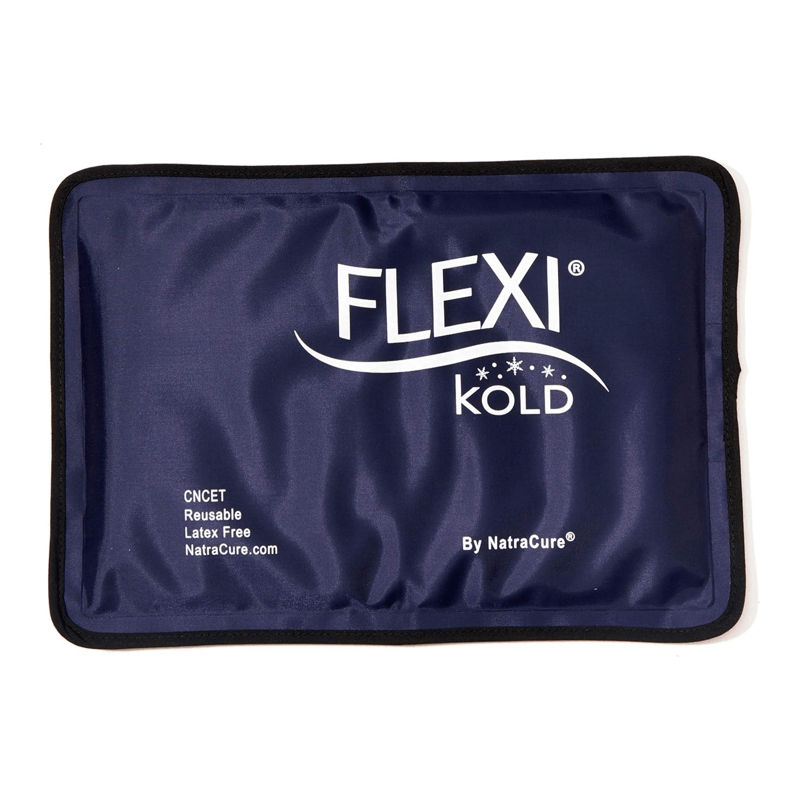
For those swollen days, the FlexiKold Gel Ice Pack stays soft and bendy straight from the freezer, so it actually curves under your jawline, and cold packs are a standard comfort step around treatment. Wrap it in a thin cloth, keep each session short and ask your provider how they’d like you to use cold afterward. For washing, the KraveBeauty Matcha Hemp Hydrating Cleanser is made for dry and sensitive skin and cleans without that stripped feeling, which is what a sore, numb chin wants; use your fingertips and pat dry. Then there’s the Badger Face Mineral Sunscreen SPF 30, with 18.75% zinc oxide, a sheer matte finish and 40 minutes of water resistance. Sun on a fresh bruise can make the mark hang around longer, and the neck is an easy spot to forget anyway.
Over the next four to six weeks, the swelling slowly settles, which is also why sessions are spaced about that far apart.
Around six to eight weeks after a treatment, you’ll usually start to see the change, and that’s when you and your provider decide whether another round makes sense.
The full course can be up to six treatments, at least a month apart, and in the trials 59% of people ended up having all six. It helps to think of Kybella as a project measured in months and to budget for more than one visit from the start.
How well it worked in the trials
Kybella was approved after two matching studies with about a thousand adults, roughly half getting the actual drug and half getting placebo shots, with up to six treatments each. Most were women between 19 and 65, with an average age of 49, and all had moderate or severe fullness without much loose skin.
Twelve weeks after the last treatment, about two in three people on Kybella improved by at least one step on a five-step fullness scale, by both their doctor’s rating and their own, compared with roughly one in five on placebo. A bigger two-step change happened less often, for somewhere between 13% and 19% of people. In a group who had MRI scans, 43% on Kybella lost at least a tenth of the fat under their chin, compared with 5% on placebo.
In everyday terms, it gave the typical patient a modest improvement and a smaller group a big one. The trials followed people for six months, and the results should hold as long as your weight stays steady.
Kybella vs CoolSculpting vs liposuction
| Kybella | CoolSculpting (cryolipolysis) | Neck liposuction | |
| How it works | An injected drug destroys fat cells | Controlled cold damages fat cells, which the body clears | A surgeon removes fat through a thin tube |
| Sessions | Up to six, at least a month apart | About an hour per session; areas can be retreated | Usually one surgery |
| When you see it | Six to eight weeks after a treatment | Gradually, over four to six months | After surgical swelling settles |
| Downtime | Swelling and numbness for days to weeks | No activity restrictions; some soreness | Surgical recovery |
| Main risks | Nerve injury causing an uneven smile, trouble swallowing, skin injury | Surface irregularities, asymmetry, rarely an increase in fat (under 1%) | Surgical and anesthesia risks |
| Loose skin? | Not a good fit | Not a good fit | Firm, elastic skin does best |
CoolSculpting uses controlled cold to damage fat cells while leaving the skin alone. A small applicator called the CoolMini fits under the chin, each session takes about an hour with no anesthesia, and you can go straight back to your day. On average it trims about 20% of the fat over four to six months. Its odd risk is that the treated spot can grow more fat instead of less, which happens in under 1% of patients and is about three times more likely in men than in women. If you have a cold-related condition like cold hives, it’s not for you.
Liposuction of the chin and neck is surgery, and it removes the fat directly, sometimes alongside something like a facelift. Firm, stretchy skin gets the best results. Kybella and CoolSculpting come with less downtime and fewer possible risks than surgery, but lipo takes the fat out in one go, and surgery is also where loose skin can be dealt with at the same time.
If your skin is fairly firm and the fat is a small pocket, the options without surgery make good sense, and Kybella tends to suit people who’d rather have a few shots than sit under a cold applicator. If loose skin is the main thing you’re seeing in the mirror, none of these three will fix it alone. Our guide to skin tightening covers that side of things.
What a course of Kybella costs
The latest ASPS figures put the average fee for fat reduction without surgery, a group that includes Kybella and CoolSculpting, at about $1,157. That’s per treatment, not for a whole course, and it doesn’t include any extras, so multiply it by the number of sessions you expect. For comparison, the average surgeon’s fee for liposuction in the same figures is about $4,711, and anesthesia and the facility are billed on top of that. Prices swing quite a bit from city to city, so ask for a quote on the full plan.
Side effects to know before you book
Swelling, bruising, soreness and numbness happen to nearly everyone. In the trials, 87% had swelling, 72% had bruising, 70% had pain and 66% had numbness, and firmness, redness, tingling, itching and small lumps were common too.
A lopsided smile can happen if the drug reaches the nerve that runs along your jaw, which can weaken one corner of your mouth. That affected 4% of trial patients, and every case got better on its own, anywhere from 1 to 298 days later. The typical case took about six weeks to recover, so give that some real thought before you book.
Trouble swallowing showed up in about 2% of people, usually along with swelling and soreness, and it typically cleared in about three days. If you already have any trouble swallowing, Kybella isn’t for you.
Skin damage and hair loss are rarer. If it’s injected too close to the surface, it can cause sores or patches of damaged skin, and some people have lost hair in the treated area, which matters most for men with beards. Bruising is more likely if you take blood thinners.
Call your provider right away if your smile turns uneven or your face feels weak, if swallowing is hard or getting harder, or if you notice open sores, draining, a growing lump or signs of infection.
It isn’t for you if you have an infection in the area, you’re under 18 or you’ve ever had trouble swallowing. No one knows yet whether it’s safe in pregnancy or while breastfeeding, and ASPS says anyone pregnant or breastfeeding should skip fat-reduction treatments without surgery altogether. If you’ve had surgery or other cosmetic work on your chin or neck, mention it, since scar tissue changes where it’s safe to inject.
Is Kybella right for your chin?
If you can pinch a soft pocket under your chin and your skin feels fairly firm, you’re a lot like the people Kybella was studied in. Ask how many sessions your provider expects and get a price for the whole course rather than the first visit alone.
If loose skin or neck bands are what bother you, Kybella is the wrong tool and could even make things look worse. A plastic surgeon can talk you through surgery or tightening treatments instead.
If you have a wedding, a big presentation or a trip coming up, leave at least two weeks between a treatment and the event. Swelling can make the area look bigger for days, and an uneven smile, if it happens, can last for weeks.
If you’ve lost a lot of weight or are still losing it, wait until your weight settles. Results hold unless you gain, and loose skin after weight loss can change which treatment makes the most sense.
If needles make you queasy but surgery scares you more, CoolSculpting with the small applicator is the other option without surgery. Ask about the rare extra fat growth, and skip it if you have a cold-related condition.
Kybella in a nutshell
How many Kybella treatments do you need? Most people need two to four sessions, spaced at least a month apart. Some need up to six.
Is Kybella permanent? Yes. The fat cells it destroys don’t come back, so results last as long as your weight stays fairly steady.
How long does swelling last after Kybella? Usually a week or two, and it’s worst in the first few days. Plan your first session around a quiet week.
Does Kybella hurt? Most people feel burning or stinging, and ice or numbing cream helps. Our post on facelift alternatives has more on the lower face, and there’s plenty more in our skin archive.


