
Maybe you keep waking up with a sore, tired jaw, or you’ve started to notice that the bottom of your face looks wider and squarer than it used to. Then a friend mentions jaw Botox, and it sounds like it could fix both at once. It can help a little with each. A toxin injected into the big chewing muscles at the corners of your jaw relaxes them, and over time the muscle shrinks, which can slim the jaw and soften how hard you bite down. The fine print matters, though. In the US it’s off-label for both uses, the proof for grinding is thin, it wears off in a few months, and the side effects, while usually temporary, can touch your smile and your chewing.
Where your jaw ache comes from
Put your fingertips just in front of your earlobes and clench your teeth. The muscle that bunches up under your fingers is the masseter, one of the main muscles you chew with. If you clench at your desk while you answer emails or grind your teeth in your sleep, that muscle is working overtime, and you may wake up with a jaw that feels tight and achy before you’ve even had coffee.
Some people simply have large masseters, from their genes, their habits or a bit of both. Dermatologists describe it as a harmless enlargement of the muscle that gives the lower face a square shape. Treating it with a toxin is off-label but very popular, especially in Asian countries.
Those are really two different goals, so it helps to know which one you’re after before you see anyone. Slimming is cosmetic. Clenching and jaw pain, on the other hand, can be part of a jaw-joint disorder called TMD, and that belongs with a dentist or doctor who can look at the joint, your bite and your sleep as well as the muscle.
Why the jaw is an off-label spot
Botox Cosmetic is approved for four areas: the frown lines between the brows, crow’s feet, forehead lines and the vertical bands on the neck. The jaw isn’t on that list. Allergan, the company that makes Botox, has asked the FDA to add it, pointing to two large studies it says went well. Until that happens, a jaw treatment is off-label in the US no matter which brand your injector uses.
Off-label isn’t the same as illegal or reckless, and injectors have treated the jaw this way for many years. What it does mean is that the dose, the injection spots and the follow-up come from your injector’s training and published research rather than an approved label. The label’s warning about unapproved uses still applies, too. Serious problems, including too much weakness and trouble swallowing, have been reported after Botox was used in unapproved ways, and its safety in those uses hasn’t been proven.
For jaw pain specifically, the National Institute of Dental and Craniofacial Research (NIDCR) points out that toxin is approved for some medical problems, like migraines, but not for TMD. Results for jaw pain have been mixed so far, and it’s still unclear whether it helps.
Does it help with grinding?
Maybe, but the evidence is weaker than the confidence you might hear in a clinic. When researchers pulled together the published work on toxin for grinding, most of it pointed to less pain, less grinding and a weaker bite after the shots. The trouble is that the research itself was low quality, so nobody can say for sure yet.
The logic is simple enough. A relaxed muscle can’t bite down as hard, so any grinding that does happen is gentler on your teeth. But the shots don’t touch the reason you clench in the first place, whether that’s stress, poor sleep or something else, and they won’t protect your teeth the way a night guard does.
The NIDCR’s first advice for jaw pain is plainer and a lot cheaper. Eat softer foods for a while, use heat or cold on your face along with gentle jaw stretches, cut back on clenching and gum chewing, and consider an over-the-counter pain reliever. It also mentions night guards that fit over your teeth and may help break the clenching habit, though they don’t change your teeth or your bite. That’s the place to start, ideally with a dentist in the loop.
How long the results stick around
The muscle effect wears off, but the slimmer shape may hang on a bit longer. In one small study of 20 people who wanted a slimmer jaw, each got 25 units of a toxin called Xeomin on each side. Their bite was much weaker at three months and close to normal again by six, and the slimmer look seemed to outlast the weaker bite. Across studies, bite strength tends to drop by about 20 to 40% and stay down for roughly three to four months.
The slimming itself doesn’t show up overnight. The muscle has to weaken first and then slowly shrink, so judge your result over weeks rather than days. If you like what you see, plan on repeat visits. One study found that chewing harder on purpose while the muscle was at its weakest, then easing off once it recovered, slowed it from bulking back up. That’s a single trial, though, so don’t try it without your injector’s okay.
Inside the appointment
Your injector will feel the muscle while you clench, compare both sides, and then place a few shots into each one, staying clear of the muscles you smile with. The visit itself is quick, even if the payoff takes a while.
Ask which product they’re using and how many units. Units of Botox can’t be compared with or converted into units of other brands, so “50 units” means something different depending on what’s in the vial. For a sense of scale, the slimming study above used 50 units of Xeomin in total, while the labeled dose of Botox Cosmetic for frown lines is 20 units.
What jaw Botox costs
The American Society of Plastic Surgeons’ latest numbers put the average fee for toxin injections at about $435. That’s an average per visit across every area of the face, and the jaw usually takes more product than frown lines (think 50 units versus the labeled 20), so expect to pay more than that. It covers the injector’s fee only, and prices swing a lot by city and by who’s holding the needle. Asking for a quote in units of the specific product makes it much easier to compare offices.
The temporary downsides of jaw Botox
Most side effects from jaw Botox are temporary. They usually show up two to four weeks after your appointment and fade within about three months, but they can still be frustrating while they last, so keep an eye out for these.
Tired chewing. Relaxing the muscle is the whole point, so for a few weeks a steak or a chewy bagel can feel like a bit of a workout. Chewing strength usually dips around the one-month mark and slowly comes back over the next couple of months.
A changed smile. If the toxin drifts into the small muscles near the corner of your mouth, your smile can look uneven or flat on one side. Careful placement, sometimes guided by ultrasound, is how good injectors try to avoid it.
Bulging. Sometimes part of the muscle pops out when you clench, which injectors call paradoxical bulging.
Bruising and tenderness where the needle went in, and once in a while, a change in how much saliva you make.
Longer-term questions. Researchers are still learning what years of repeat treatments do to the muscle, and much of that early work has been done in animals, so there isn’t a clear answer for people yet. It’s a good idea to ask your injector how they plan your dose and timing over the long run.
The boxed warning. Every toxin product warns that its effects can spread past the injection spot. That can cause general weakness, double vision, drooping eyelids, trouble speaking or swallowing, or breathing problems, anywhere from hours to weeks later. Swallowing and breathing problems can be life-threatening, so get help right away if any of those happen.
Who should skip it. Anyone allergic to a toxin product or with an infection where the shots would go. People with nerve and muscle disorders like myasthenia gravis, or who already have trouble swallowing or breathing, face higher risks. There isn’t enough safety data in pregnancy, so wait if you’re pregnant or trying. And tell your injector about every medicine you take, including muscle relaxants and some antibiotics, since they can make the effect stronger.
Jaw-care basics to keep at home
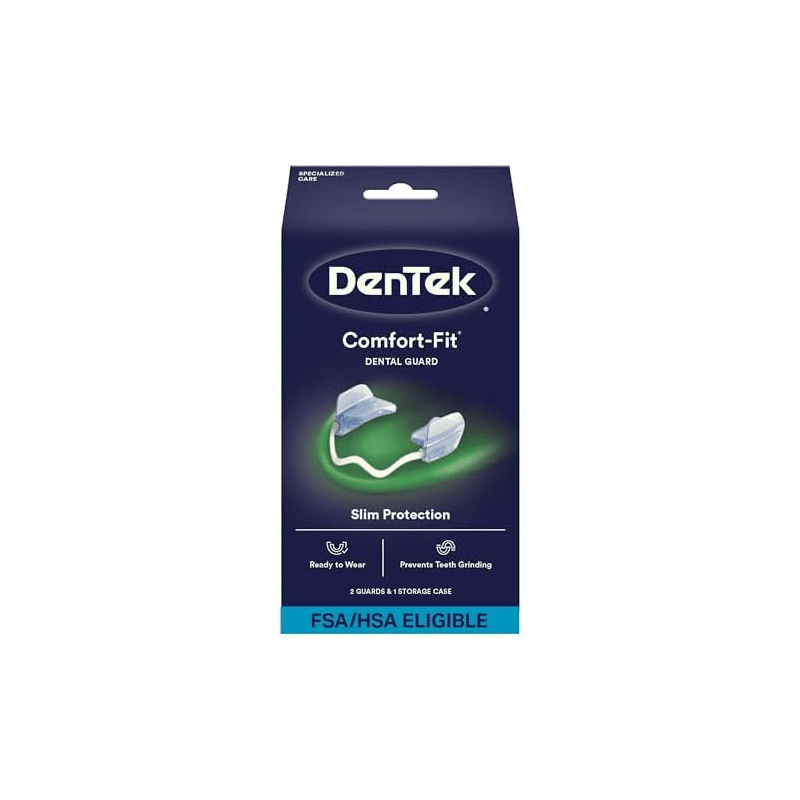
DenTek Comfort-Fit Dental Guard is the easiest place to start if you grind at night, since there’s no boiling involved. You get two guards and a case for about $32, though the price moves around. It sits over your lower back teeth, you adjust the fit by hand, and its bite pads cushion your teeth while you sleep. Check it once a month for wear. It can last up to six months, but DenTek says not to use it for more than three months without seeing your dentist.
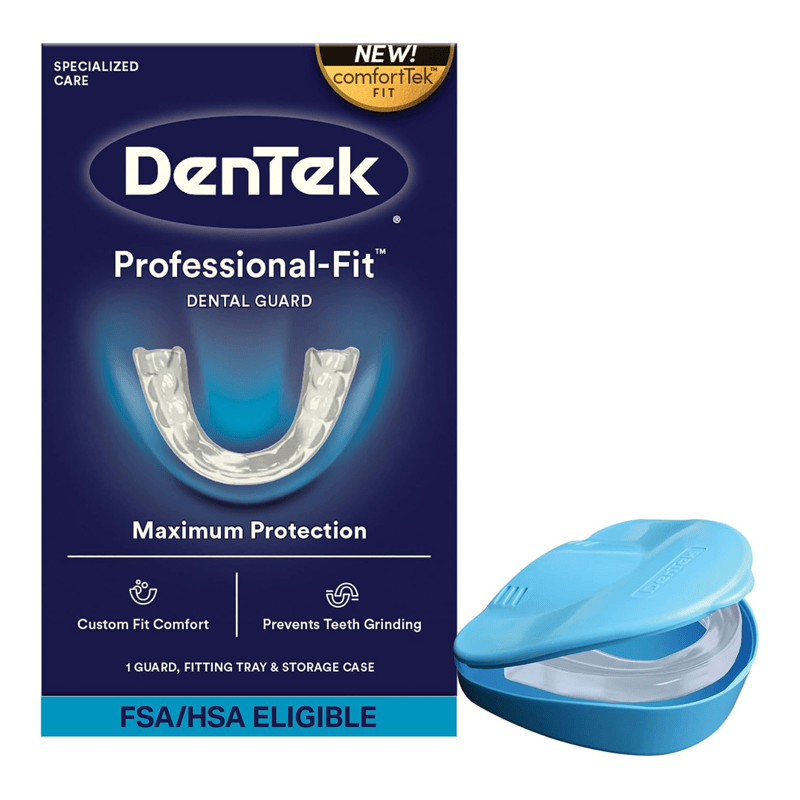
DenTek Professional-Fit Dental Guard costs about $16 and has two layers. The soft top layer molds to your teeth when you warm it and bite in, and the firmer bottom one is built to resist bite-through, which is handy if you grind hard. Both DenTek guards say to ask a dentist first if you have jaw pain or clicking, or any tooth or jaw pain from grinding. Think of a drugstore guard as a stopgap while a dentist tells you whether you need a custom one.

Curad Hot or Cold Reusable Compress runs about $9 for the large size. It’s a bendy gel pack in a soft fabric cover that you can warm or chill, which fits right in with the heat-or-cold-plus-stretching routine the NIDCR suggests for a sore jaw. Keep a cloth between it and your skin and stick to short sessions.
Before you book
Waking up with a sore jaw, or your dentist mentions worn teeth? See the dentist before an injector. A guard, softer foods and a closer look at stress and sleep come first, and Botox is an off-label add-on at most.
Want a slimmer lower face but don’t clench? Ask an injector to feel the muscle while you bite. If it isn’t big, the width may come from bone or fat, and Botox won’t change either one.
Already getting Botox for frown lines? Don’t let a jaw treatment get tacked on casually. Ask about the product, the units, where the shots go and how it changes your total dose.
Smile looks off a few weeks later? Call your injector. Most problems fade within weeks, but it changes how they’ll treat you next time.
Trouble swallowing, a nerve and muscle condition, or pregnant? This one isn’t for you right now.
Ready to go ahead? Choose a board-certified dermatologist or plastic surgeon, or someone working under one, who treats jaws often. Our post on whether a dermatologist visit is worth it walks through what to expect from that first appointment. If clenching is your main problem, the dentist and the guard are still the best first move, and if it’s shape you’re after, have someone feel the muscle before you spend a dollar.
Quick questions about jaw Botox
How long does masseter Botox take to work? Clenching relief can start within a week or two. A slimmer jawline takes longer, usually four to six weeks or more.
Can you chew normally after jaw Botox? Yes. Tough or chewy foods may tire your jaw faster for a few weeks while the muscle is relaxed.
Is masseter Botox the same as preventative Botox? No. Preventative Botox targets lines on the upper face, and our post on preventative Botox in your twenties covers that side of things.
Can you get jaw Botox and filler together? Ask your injector. One relaxes a muscle and the other adds volume, and our Botox vs filler explainer lays out the difference. For more on treatments, browse our skin archive.


