
Many people think of IPL as a gentle laser that suits everyone, but it isn’t a laser, and it isn’t right for every skin tone. It uses broad flashes of light, and for the right skin it can cut back on the color corrector and concealer you use to hide redness and sun spots.
IPL stands for intense pulsed light. It goes after two things at once, brown pigment and the tiny red blood vessels close to the surface, so it’s a strong fit for sun spots, freckles, broken capillaries and rosacea redness. You can expect a few sessions at a few hundred dollars each, and the downtime is small. Skin tone matters a lot, though. On darker skin or a fresh tan, it can leave dark or light marks, so it isn’t right for everyone. Below, we walk through it from start to finish.
What happens during a session
You lie back, the provider puts on a cool gel, and you wear dark goggles or eye shields the whole time. The light can harm the eye, so the shields stay on until it’s over. A handpiece is pressed to your skin and fires bright flashes, one patch at a time. Some clinics put on a numbing cream first.
Each flash feels like a rubber band snapping against your skin. That’s how UT Southwestern describes it, and it’s a fair guide. Most areas are done in 15 to 30 minutes.
The light passes into the skin and gets soaked up by pigment and by the blood in small vessels. That turns into heat. The heat breaks up the brown spot or closes off the little vessel, and your body clears it away over the next couple of weeks.
How IPL differs from a laser
A laser sends out one exact wavelength of light. IPL sends out a broad band of wavelengths in quick pulses, and filters trim that band for the job at hand. That’s why one machine can go after both brown and red. Compared with lasers, IPL tends to have a shorter recovery.
The trade-off is that a broad band of light is harder to aim, and that matters for darker skin (more on that below).
IPL is also used for hair removal. That’s a different treatment with its own rules, and we cover it in laser vs IPL vs electrolysis.
What it treats well, and what it doesn’t
Broken capillaries and rosacea redness. This is where IPL shines. The American Academy of Dermatology says that when light or laser treatment is used on visible blood vessels, the usual result is a 50% to 75% drop after one to three treatments. Some people clear completely. Treated vessels don’t come back, but new ones can form, so results tend to last three to five years. All-over flushing improves less than visible vessels do. If redness is your main issue, our guide to calming rosacea redness covers what to do day to day.
Sun spots, age spots and freckles. Also a strong fit. Brown spots darken first, then flake off over several days. Faces, necks, chests and the backs of hands are all common areas.
Fine lines and texture. Some clinics list them, and the skin can look a little smoother and more even. Don’t book IPL for wrinkles alone, though.
Melasma. Be careful here. Melasma is the patchy, blotchy kind of brown. UT Southwestern says people with melasma may not be good candidates, because IPL can make the discoloration worse. Melasma needs its own plan, and our guide to dark spots and hyperpigmentation explains the difference.
One more thing before anyone treats a brown spot. Have a board-certified dermatologist look at it first. Something that looks like an age spot could be skin cancer, and zapping it away doesn’t treat cancer. It just hides it.
Why darker skin and tans need extra caution
IPL can’t tell the brown in a sun spot from the brown in the rest of your skin very well. The more pigment there is in your skin overall, the more of that light gets soaked up where nobody wanted it. That raises the risk of burns, blisters, dark patches and light patches.
UT Southwestern names the best candidates as people with light to medium skin. It lists darker skin types as possibly not good candidates, because IPL can cause dark spots or make discoloration worse. Even a clinic that offers it to deeper skin may treat only up to a certain skin type.
If you have medium-brown to deep skin, that doesn’t mean you can’t treat red or brown spots. It means the provider should be talking about lasers built for darker skin, much lower settings, or creams and peels instead. A good one will raise this before you do.
Tans count too, and so does a recent sunburn. A tan adds pigment the light can catch. Skip tanning in the weeks before your sessions, and ask your provider how long to wait after a sunburn.
How many sessions you’ll need
Plan on a series, not one visit. Dermatologists often quote two to three sessions. UT Southwestern quotes five to six sessions, two to four weeks apart. The number depends on what you’re treating and how much of it there is.
After the series, a touch-up once or twice a year keeps things in check. New sun spots and new vessels keep forming, especially if you’re in the sun a lot, so IPL is upkeep rather than a one-time fix.
IPL pricing and number of sessions
Two university-run clinics give a sense of the range. Washington University’s plastic surgery spa lists a photofacial at about $350 a session. The University of Alabama at Birmingham’s cosmetic dermatology clinic lists about $450 a session, or about $1,000 for a package of three, with a face-and-chest option at about $500. Big-city clinics often charge more, and med spas vary widely.
Insurance almost never pays. Even for rosacea, where some devices have FDA approval, coverage is rare. Multiply the per-session price by the number of sessions you’re quoted, then add a yearly touch-up.
The first two weeks after a session
You can go back to work the same day. Redness and mild swelling usually settle within a few hours, a bit like a mild sunburn.
Over the next few days, brown spots turn darker and then flake off. That’s the treatment working, so leave them alone and let them shed on their own. When IPL is aimed at blood vessels, the skin can stay pink for up to two weeks, and some people get small purple or red marks that clear in one to two weeks. A few days of bruising is possible too. Skip scrubs, retinoids and acids until your provider says they’re fine again. A simple, gentle routine helps your skin settle and protects the money you just spent.
A face wash with nothing extra

For the first few days your face can feel tight and tender, and Vanicream Gentle Facial Cleanser is about as plain as a cleanser gets. It’s soap-free and has no fragrance, dyes, essential oils or plant extracts, and it’s made for dry, sensitive skin. At about $10, it’s an easy one to keep on hand. Wash with your fingertips, not a cloth or brush, and pat dry.
A light gel for warm, tight skin
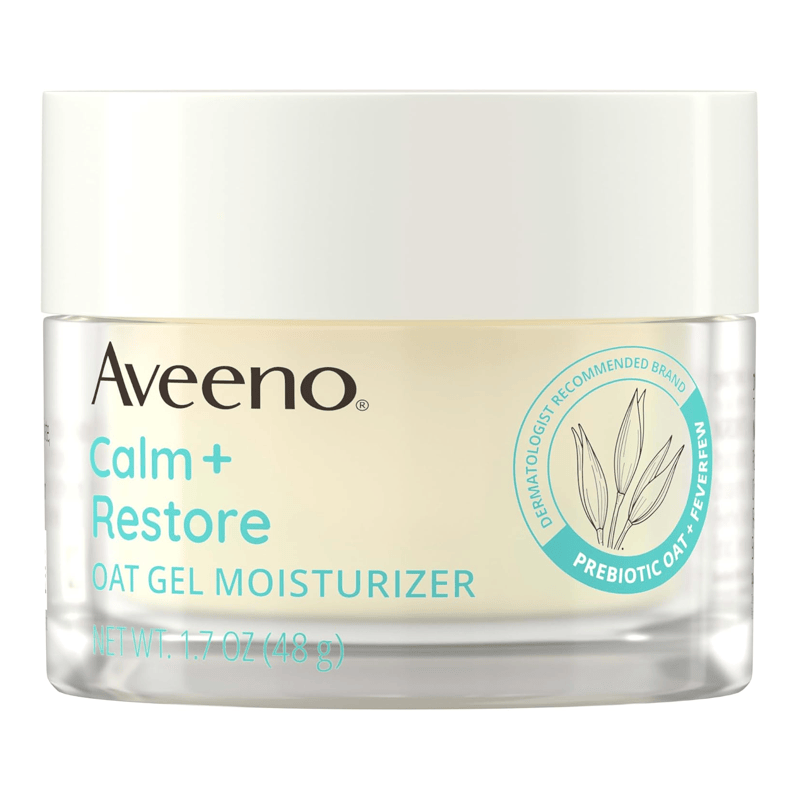
Heavy creams can feel like a blanket on skin that’s still warm. Aveeno Calm + Restore Oat Gel Moisturizer is a fragrance-free gel with oat and feverfew that sinks in fast and feels cool going on. It’s about $19, and it works morning and night while you’re healing and long after.
Sunscreen that hides the pink

Sun right after IPL raises the risk of dark marks and brings the spots right back, so daily SPF 30 or higher, plus a hat and shade, is a must. EltaMD UV Physical Tinted SPF 41 uses only mineral filters, 9% zinc oxide and 7% titanium dioxide, and stays put for 40 minutes of sweat or water. The tint softens leftover redness and the darkened spots while they flake, so many days you can skip foundation altogether. It’s about $50, the splurge of this routine. Any broad-spectrum SPF 30 or higher protects you just as well if you’d rather spend less.
Ask your provider when you can go back to makeup. Many people can wear it once the skin calms down, and it’s useful for covering spots while they shed.
Risks and who should skip it
Common side effects are pain during treatment, redness and swelling. Less common ones include blistering, crusting, bruising, dark or light patches, and, rarely, scarring. Higher settings, thinner skin and darker skin raise the odds of a problem. The skill of the person holding the handpiece matters a lot here.
If you get cold sores, say so. IPL can set off an outbreak, and some doctors give an antiviral medicine ahead of time to head it off.
Wait, or ask a dermatologist about other options, if any of these apply:
- You have medium-brown to deep skin, or a current tan or sunburn
- You have melasma
- You’re pregnant or breastfeeding
- You take isotretinoin, or did recently
- You have an active skin infection or a cold sore right now
- You take blood thinners such as warfarin or aspirin, bruise easily, or your skin reacts badly to light
Tell your provider about every medicine and supplement you take, including ones that make you more sensitive to the sun.
What to ask your IPL provider
Results depend heavily on who’s doing the treatment. A board-certified dermatologist is the safest pick. Spas and mall kiosks may not have the training or the doctor supervision. These questions sort clinics fast:
- Who will do the treatment, and is a dermatologist involved?
- Has a doctor checked my brown spots before you treat them?
- How many people with my skin tone have you treated, and what changes for me?
- Is IPL the right tool for my skin, or would a laser be safer?
- How many sessions do you expect, how far apart, and what’s the full price?
- What should I stop using before, and when can I go back to it?
- What do I do if I blister or a spot looks worse instead of better?
If the answer to the skin tone question is vague, keep looking.
Keeping your results
The spots IPL clears mostly stay gone, but new ones form every time you spend time in the sun. Summer makes the whole process harder, since you have to avoid tanning before each session and sun after it, so many people book their series in fall and winter. Whenever you start, a yearly touch-up and daily sunscreen are what keep your skin looking the way it did the week the last spot flaked off.


