
Maybe a friend is raving about her laser hair removal package, or you keep seeing before-and-after photos of acne scars that look half as deep. Then you scroll through the clinic’s gallery and notice something. Almost every face in it is light-skinned. If your skin is brown or deep, it’s fair to wonder whether lasers are even meant for you, and whether you’d come out with burns or dark patches instead of smoother skin.
Lasers can absolutely work on darker skin. There’s just less room for error, which makes the device and the person holding it matter a lot more. We’ll cover why melanin and lasers don’t always get along, which treatments tend to suit deeper skin, how to vet a provider, and how to care for your skin afterward so it heals evenly.
Why pigment changes the math
A laser sends a single kind of light into the skin, aimed at a target that soaks it up and heats. That target might be a hair root, a brown spot, tattoo ink or a tiny red blood vessel. Melanin, the pigment that gives skin its color, sits in the top layer of everyone’s skin, and deeper skin has more of it. To the laser, all that melanin is competition. If the device or settings are wrong, the heat lands in healthy skin instead of the target.
That’s where problems come from. The American Academy of Dermatology says lasers can be used on all skin types, but darker skin is more prone to burns and to dark marks after treatment. The American Society for Dermatologic Surgery adds that the idea that skin of color can’t have top cosmetic treatments is a myth, as long as the dermatologist is trained to treat it.
Your skin type, by the numbers
Dermatologists often describe skin with the Fitzpatrick scale, which runs from type I, very fair skin that always burns, to type VI, deeply pigmented skin that rarely burns. It’s a rough guide, but laser settings are built around it, and types IV through VI need extra care. A provider who never asks how your skin reacts to sun, scrapes or acne, or whether you form keloids, the thick raised scars some people get, probably isn’t adjusting the plan for you.
Treatments that tend to suit deeper skin
For hair removal, dermatologists say lasers work on all skin types as long as your hair is darker than your skin. The Nd:YAG laser at 1,064 nm uses a longer wavelength that passes by more of the skin’s pigment, which is why it’s the usual choice for deeper skin. Ask by name which laser they plan to use. Our comparison of laser vs IPL vs electrolysis lays out all the options, electrolysis included.
Brown spots and dark marks are the trickiest goal, because the treatment can cause the very thing you’re trying to fix. Short-pulse lasers may clear a spot in one or two sessions but carry a higher chance of leaving a dark mark behind. A gentler, slower plan, often paired with prescription fading creams and daily sunscreen, is usually the safer route. Many dark marks also fade on their own once whatever caused them stops.
For texture and acne scars, ablative lasers like CO2 and erbium remove layers of skin, and they usually aren’t a good match for very dark skin. Non-ablative lasers heat the skin below the surface without wounding it. They’re gentler, though they can still lighten or darken skin for a while. Radiofrequency and RF microneedling are considered safe for all skin tones because they rely on needles and heat rather than light. Our explainer on microneedling vs Morpheus8 vs RF microneedling goes deeper, and our guide to laser resurfacing for acne scars explains why the harsher kind is riskier for deeper skin.
For loose skin, ultrasound and radiofrequency tightening are considered safe for every skin color. The results are modest, and so is the risk.
Redness and broken vessels call for more caution. Intense pulsed light, or IPL, isn’t a true laser. It’s a broad flash of light, and dermatologic surgeons list dark skin as a reason someone may not be a good candidate. That’s why our guide to the face BBL, a type of IPL, says it’s generally not for deeper skin. Lasers made for blood vessels can work on all skin types, but only in experienced hands.
What a careful provider does differently
A good appointment starts with a long conversation before any device comes out. Your skin type, any history of dark marks, keloids or cold sores, the medicines you take and what you’re hoping for all shape the plan.
Next comes a test spot. The provider treats a small, hidden patch and checks it over the following weeks before doing your whole face or legs. On deeper skin, they’ll often choose gentler settings spread over more sessions, which means a little less change each visit but far less risk.
They’ll also tell you to come in untanned. A dermatologist shouldn’t treat skin that’s freshly tanned or sunburned, and you may be asked to pause retinoids or other strong products for a while beforehand. Some providers start a prescription fading cream a few weeks ahead to calm pigment cells down.
Finding the right dermatologist
The AAD’s Find a Dermatologist directory lets you filter by focus, including “Skin of Color” and laser procedures. At your consultation, ask how many patients with your skin type they’ve treated with this device, whether you can see before-and-after photos of people with skin like yours, which wavelength they’ll use and why, and who will treat dark marks if they happen. A confident provider will be happy to answer all of it.
Be wary of spas, mall kiosks and anywhere without a doctor on site. Dermatologists warn that limited training and supervision in those settings can put your safety at risk, and burns, blisters and color changes are more common in inexperienced hands.
Dark spots, light spots and burns
The most common problem is dark patches where the skin was treated, which doctors call post-inflammatory hyperpigmentation. Light patches can happen too. Burns and blisters mean the skin got more heat than it could handle, and scarring is possible, including keloids if you tend to form them.
Most color changes fade, though it takes patience. Marks a few shades darker than your skin usually fade within 6 to 12 months once the cause is gone. Color that sits deeper in the skin, often with a slate blue or gray tone, can take much longer. If you get a dark patch, keep it out of the sun, don’t scrub it or try bleaching it at home, and see a board-certified dermatologist for treatment.
Caring for your skin after a session
The weeks after a laser treatment are when dark marks are most likely to form, so aftercare matters as much as the appointment itself. Keep your routine short and gentle, skip scrubs and strong acids until your provider gives the okay, and protect the area from the sun every single day.
A soft, soap-free wash

Freshly treated skin doesn’t need anything fancy from a cleanser. Bioderma Sensibio Foaming Gel is unscented, soap-free and won’t clog pores, and it’s close to skin’s natural pH, so it cleans without that tight, squeaky feeling. It’s about $25 and works well as an everyday cleanser long after you’ve healed.
Why tinted sunscreen helps deeper skin
Sun protection does more than anything else to keep laser marks from forming or darkening. The AAD suggests a tinted sunscreen with iron oxide for darker skin that’s prone to dark spots, since iron oxide also blocks some visible light, which can trigger pigment too. All three sunscreens below have it, and each comes in a shade made for deep skin, so you skip the gray cast. A wide-brimmed hat is a nice backup.
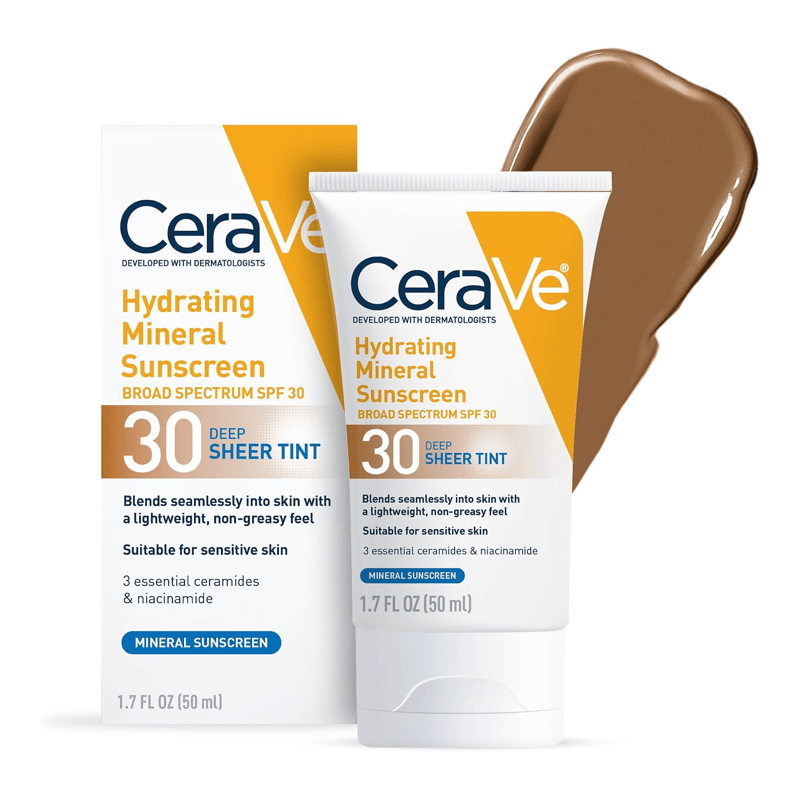
For an easy everyday option, CeraVe Hydrating Mineral Sunscreen SPF 30 Sheer Tint in Deep pairs 10 percent zinc oxide with 5.5 percent titanium dioxide, has no added fragrance and won’t clog pores. The Deep shade was made with dark skin in mind, and the tint is sheer, so it evens things out without looking like makeup. It’s about $11, which makes daily use painless.
A higher-zinc tint for sensitive skin
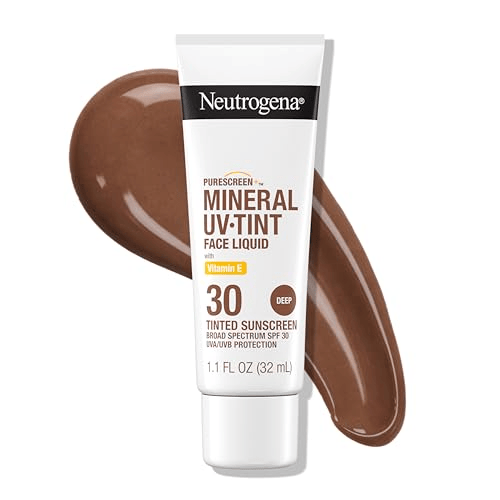
Neutrogena Purescreen+ Mineral UV Tint SPF 30 in Deep packs 21.6 percent zinc oxide plus 3.2 percent titanium dioxide and vitamin E. It’s fragrance-free, made for all skin types including sensitive, and leaves no white cast. About $15.
SPF 50 with a soft matte finish

If you want higher protection and a bit of blur, Australian Gold Mineral SPF 50 Tinted Face in Rich to Deep has 4 percent each of zinc oxide and titanium dioxide and dries down to a powdery matte finish that’s great under makeup or on oily days. It’s fragrance-free but contains eucalyptus extract, so wait until treated skin has fully healed and patch test first. About $19.
Where to begin
If laser hair removal is your goal, book with a dermatologist who treats deeper skin often and ask about a 1,064 nm Nd:YAG. If they can’t tell you which laser they use, keep looking. If dark marks from old breakouts are what bother you, start by getting the acne under control, wearing tinted sunscreen daily and following a dermatologist’s fading plan, since many marks fade without any laser at all. Mention keloids right away if you get them, because that changes what’s safe for you. And if you’ve already had a reaction, stop further treatments, keep the area out of the sun, and see a board-certified dermatologist rather than going back to whoever caused it. There’s more in our skin archive.


