
Is that afternoon mug of green tea doing anything for your skin? Probably less than the wellness accounts promise, and that’s fine, because it’s still a nice mug of tea. One early trial of a special green tea drink looked exciting, but two later, more careful trials of green tea pills found no sun protection and no lasting change in sun damage. Green tea on your skin has a stronger story for one particular job, since small trials suggest a green tea extract can calm red, inflamed acne spots. None of it stands in for sunscreen. So keep drinking it because you love it, and if you want green tea working on your face, put it on your face.
Sipping it and smoothing it on are two different stories
Wellness posts tend to blur the two together, as if the tea in your cup and the extract in your moisturizer do the same thing. They don’t, and the research splits along that line. When people drank green tea or took it as capsules, the results for sun redness were mixed and the results for long-term sun damage faded to nothing. When people put green tea extract on their skin, there were fewer inflamed acne spots and, in a couple of tiny studies, a little less oil. Neither way replaces sunscreen.
The drink study everyone quotes
Most “green tea for glowing skin” headlines trace back to one study from a German university. Sixty women drank either a drink packed with green tea’s plant compounds, called catechins, at 1,402 mg a day, or a look-alike drink without them, for twelve weeks. Nobody knew who was getting which.
When the researchers shone a small, measured dose of artificial sunlight on the women’s skin, the green tea group got less red, about 16% less at six weeks and 25% less at twelve. Their skin also measured as a bit more elastic, smoother and better hydrated, with more blood flow reaching it.
That’s a real result, with real limits. Sixty women over twelve weeks is a small, short look. The drink was made just for the study, so there’s no easy way to know how many home-brewed cups it equals, and a redness reading under a lab lamp is a long way from your shoulders at the beach.
Then a closer look found no sun protection
A team at the University of Manchester looked at the idea more directly. They gave 50 healthy adults with fair skin that burns easily either green tea capsules, with 1,080 mg of catechins a day and a little vitamin C, or a dummy pill for three months. They even checked urine samples to make sure everyone was really taking them.
Then came the artificial sunlight again, and this time the researchers measured just about everything, from how much light it took to turn skin pink to the signs of inflammation underneath. The two groups came out the same. Green tea didn’t calm the skin’s reaction to UV at all.
This trial was small too, and it used capsules in fair-skinned people only, so it’s not the last word. Still, it measured more than the German study did and found nothing. When two small trials disagree like that, the fair way to describe green tea for sun protection is unproven.
Two years of capsules for sun damage
A Stanford team ran the longest test. Fifty-six women between 25 and 75 took either green tea capsules or a dummy pill twice a day for two whole years, while a dermatologist who didn’t know who was taking what scored the sun damage on their faces along the way.
At six and twelve months, the green tea group looked a little better on a few things, like sun damage, redness and tiny visible blood vessels. By the two-year mark, though, green tea did no better than the dummy pill, and small skin samples showed no difference either.
Put all three together and the story of drinking green tea for your skin goes something like this. There was a hopeful early result, a careful follow-up that didn’t back it up, and a long trial where the benefit simply faded away. That matches our matcha vs. coffee comparison, which found neither drink is a skincare miracle, and our foods for sun protection post lands in the same place on green tea and UV. It’s a pleasant habit to keep, just not a form of sun protection.
Where green tea earns its spot, on breakouts
The stronger case for green tea is on your skin, not in your cup. Doctors at a hospital in Seoul pulled together the best trials of green tea extract for acne, five of them with about 250 people in all, and found that green tea extract cut down on inflamed spots, the red, sore kind.
The benefit came from green tea applied to the skin, which reduced both inflamed spots and clogged pores like blackheads and whiteheads. Green tea taken by mouth barely moved the needle, and nobody reported serious side effects. It’s still early, and each trial used its own extract, so a cream that happens to list green tea isn’t the same thing as what was studied. For now, it’s a gentle helper rather than a treatment on its own.
A little help for shine
The evidence on oil is even smaller. In one study, ten men smoothed a cream with 3% green tea extract onto their cheeks for eight weeks, and the oil on their skin dropped noticeably. Ten people is a promising start, not proof. If midday shine is your main frustration, green tea makes a nice extra in a light moisturizer, and a salicylic acid cleanser is the more usual place to begin.
Reading a green tea label
Green tea shows up on a lot of labels, at very different strengths. Ingredient lists run from most to least, so where green tea sits tells you something. In some products green tea leaf water is the second ingredient, and in others the extract is tucked near the bottom of a long list. Neither tells you whether the product matches the extracts used in the studies. The same goes for the old trick of pressing cooled tea bags on your face. It makes a soothing little ritual after a long day, but those bags aren’t the extracts from the acne trials, so enjoy the calm and don’t expect a treatment.
So it makes sense to buy a green tea product for the product itself, whether that’s a cleanser you enjoy using, a moisturizer that suits your skin or a sunscreen you’ll happily wear every day. The green tea is a bonus. If your breakouts won’t settle, a dermatologist can get you onto treatments with far stronger evidence, and our complete guide to acne-prone skin walks through them. Here are the green tea products we’d reach for, in the order they go on.
A gentle foaming wash
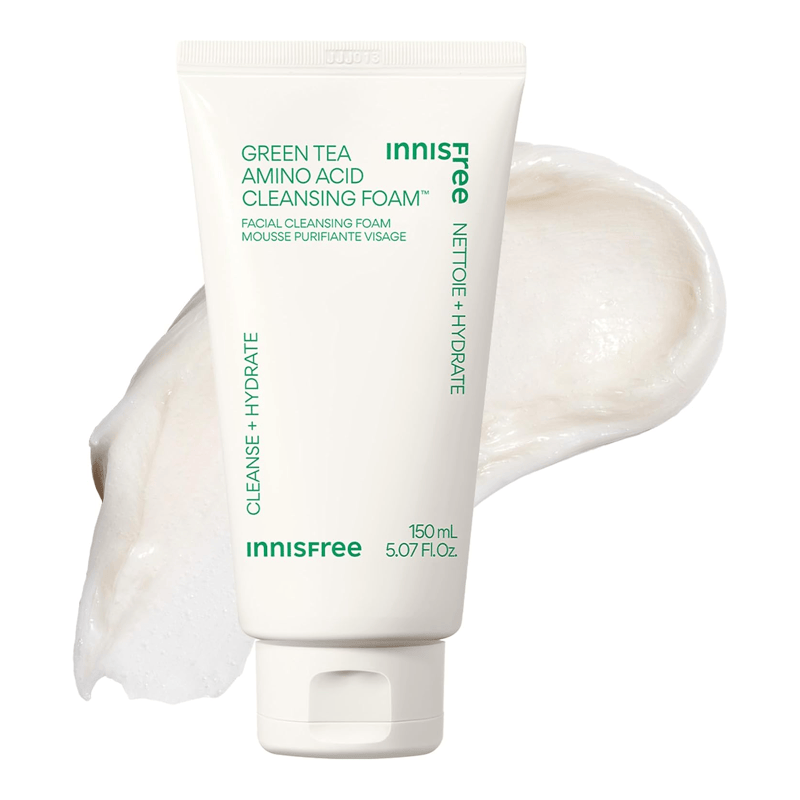
innisfree Green Tea Amino Acid Cleansing Foam is a sulfate-free foaming cleanser made with glycerin, a few amino acids and green tea leaf extract. The amino acids help keep the wash gentle, so your face feels clean without that tight, squeaky feeling. It does contain fragrance, so skip it if fragrance tends to bother your skin. It’s about $14, though prices change often.
A calming serum with the most green tea
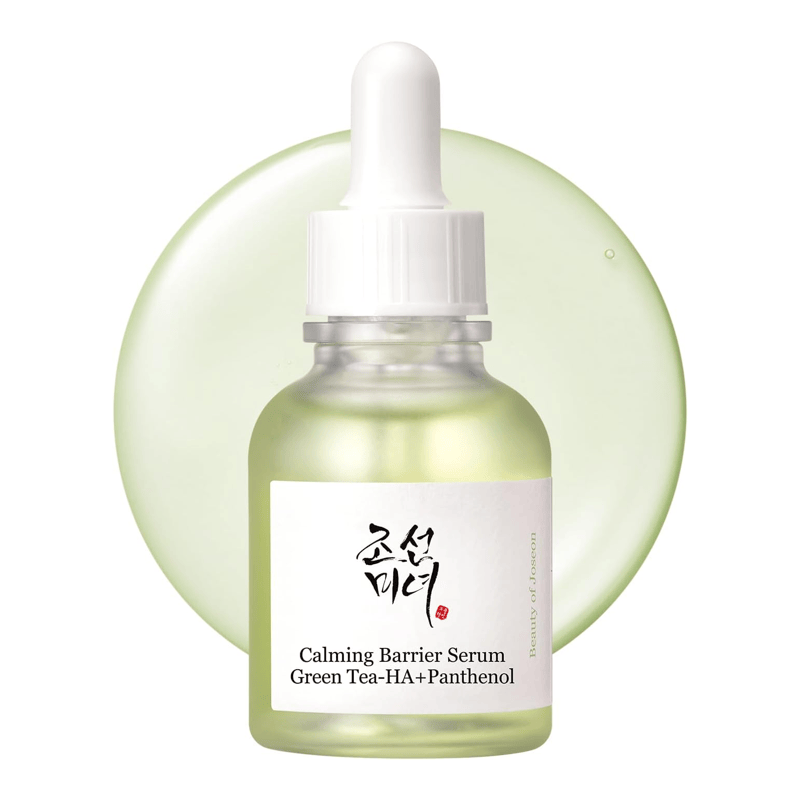
If you want green tea near the very top of the list, the Beauty of Joseon Calming Barrier Serum is the one. Green tea leaf water comes right after water, followed by niacinamide and glycerin, with hyaluronic acid, panthenol and a ceramide further down. It’s a soothing pick for dry or sensitive skin, about $17, and it slips easily under a plain moisturizer.
A light gel cream for shine
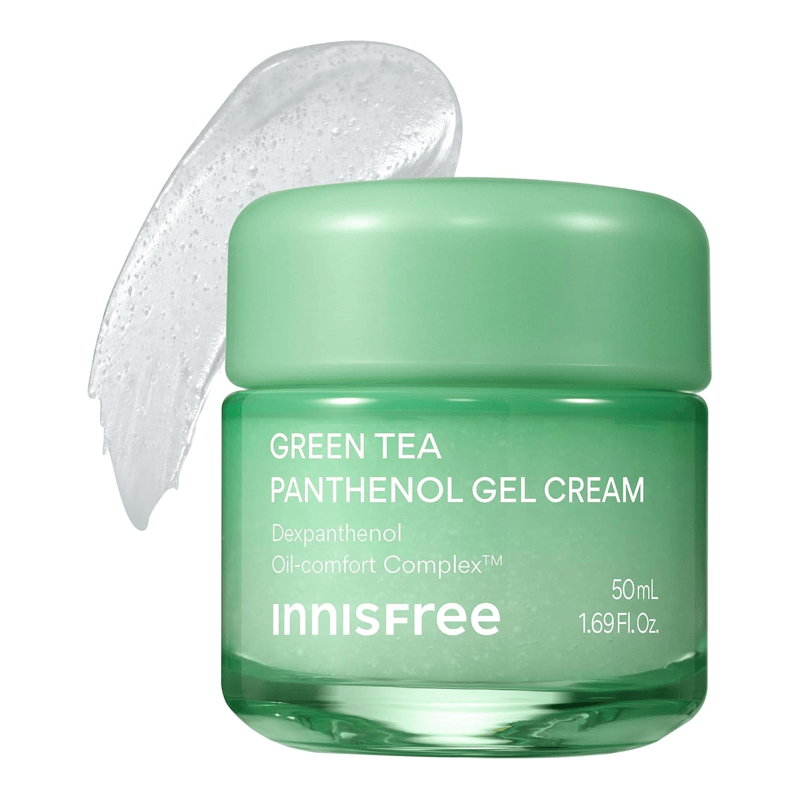
innisfree Green Tea Panthenol Gel Cream is a light gel moisturizer made for oily or breakout-prone skin. Green tea leaf water is the third ingredient, alongside panthenol and squalane, plus a gentle cousin of salicylic acid and a couple of other ingredients that help with excess oil and dead skin. Use it morning and night after your serum. Paired with a salicylic acid cleanser, it’s a sensible combo if your face is shiny by lunch. About $23.
A richer cream for dry skin
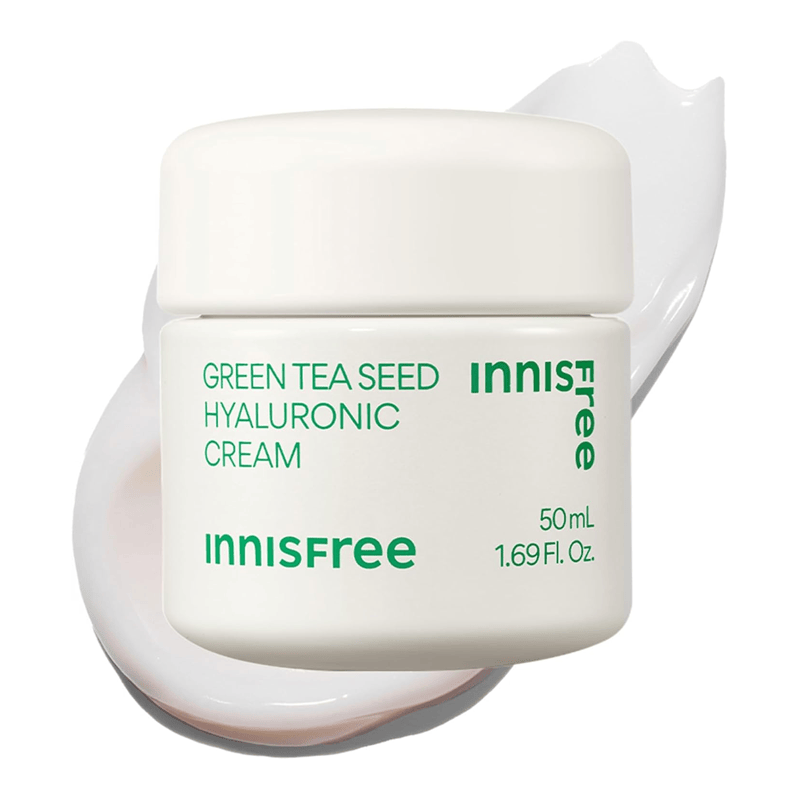
innisfree Green Tea Seed Hyaluronic Acid Cream is the cozier option, with squalane, a ceramide, panthenol, allantoin and several forms of hyaluronic acid, plus green tea seed oil and extracts. The green tea sits well down the list, so what you’re really getting is a good moisturizer for normal to dry skin that happens to include some. About $30.
The step that does the sun protection

Since the trials all point the same way, sun protection has to come from sunscreen, and innisfree Daily UV Invisible Barrier Sunscreen Serum SPF 47 makes that step easy. It’s a broad-spectrum chemical sunscreen with avobenzone 2.5%, homosalate 5% and octisalate 4.5%, plus some green tea extracts, in a light serum texture. Apply it generously at least 15 minutes before you head out, and reapply every two hours and after swimming or sweating. About $20.
Still wondering about green tea?
Is matcha better for skin than regular green tea? Matcha is the whole leaf ground into powder, so a serving packs more of the tea’s compounds than a steeped cup, and our matcha guide explains more. The skin trials used study drinks and capsules, though, not matcha, so nothing shows matcha does more for your skin.
Should I try green tea capsules for my skin? The capsule trials didn’t hold up for skin. If you want them for another reason, check with your doctor first, since a concentrated extract isn’t the same as a cup of tea.
Is green tea skincare safe for sensitive skin? The green tea itself is rarely the problem. Check the rest of the ingredient list for fragrance or anything else your skin dislikes, and patch test anything new. If redness or breakouts won’t settle, a dermatologist is your best next step, and there’s more to explore in our skin care archive.
Studies cited: Heinrich U et al., Journal of Nutrition (PubMed); Farrar MD et al., American Journal of Clinical Nutrition (PubMed); Janjua R et al., Dermatologic Surgery (PubMed); Kim S et al., Phytotherapy Research (PubMed); Mahmood T et al., Bosnian Journal of Basic Medical Sciences (PubMed).


