
Day three after a facelift often looks worse than day one, and that’s completely normal, because swelling and bruising peak around days three and four before they start to fade. From there, recovery runs on a fairly steady clock. Plenty of patients look presentable and are back at a desk job by about two weeks, your face takes two to three months to feel normal, and scars keep fading for up to a year. Call your surgeon right away for swelling that keeps growing, pain your medicine doesn’t touch, fever, pus or a wound that opens. And whatever you read here, your surgeon’s instructions come first.
Before day one: set yourself up
The easiest recoveries are planned in the weeks before surgery. Your surgeon will likely ask you to stop smoking, change some medicines, and avoid aspirin, ibuprofen-type painkillers and herbal supplements, since they can increase bleeding and bruising. Please don’t make those changes on your own. Go through every pill and supplement with the surgeon’s office so they can tell you what to stop and when.
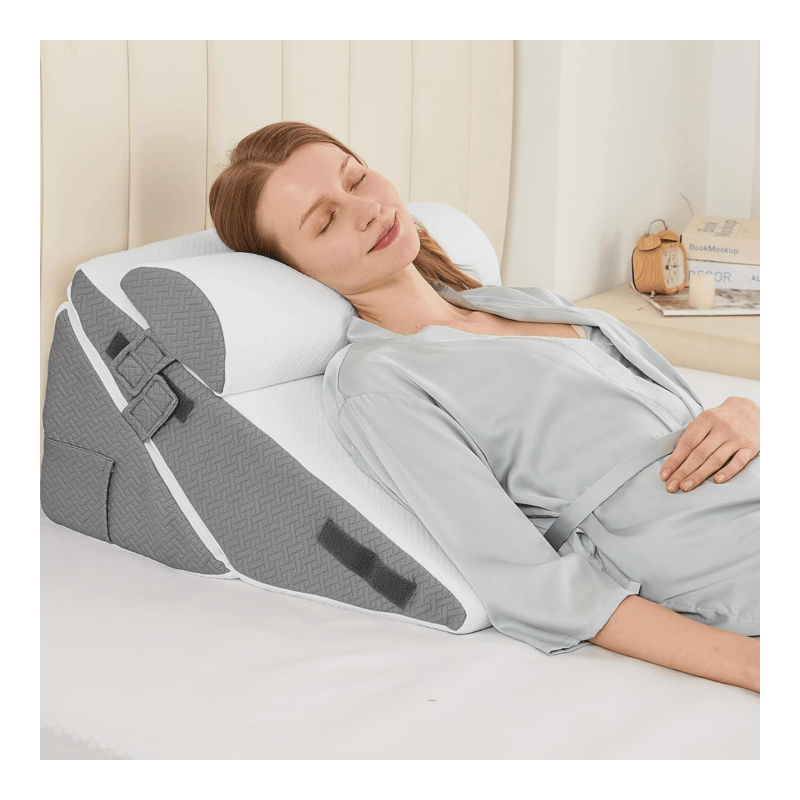
You’ll also need a ride both ways and an adult to stay with you the first night. Set up a cozy resting spot where you can sleep with your head raised, with easy food and plenty to watch, and stock up on button-front tops so you won’t have to pull anything over your head. Stackable memory foam wedges like the Sasttie Adjustable Wedge Pillow Set make that actually work, because a pile of loose pillows rarely lasts the night, and these stay put. Plan on two to three weeks away from work and social plans, which is a great excuse to finally start that show everyone keeps talking about.
Days 1 to 3: groggy, wrapped, swollen
You’ll wake up with a bandage around your face and maybe small tubes, called drains, under the skin to carry off extra blood and fluid. Day one is when you’ll lean on pain medicine the most, and you’ll feel sleepy and unsteady, which is exactly why that overnight helper isn’t optional.
Around day two there’s usually a check-up where your surgeon changes or removes the bandage, looks at the cuts and the swelling, and often pulls the drains. Your surgeon will also tell you how to care for the cut lines. Some want a plain, fragrance-free ointment like Vaseline Healing Jelly Original on them and some prefer their own product, so use it only the way your surgeon says. Day three is for resting, and yes, it may look like the worst day of the whole thing.
Keep your head raised whenever you lie down, keep your activity low, and ask your surgeon whether you should use cold packs.
Days 4 to 7: turning the corner
By days four to six, many people no longer need prescription pain medicine and can move around more easily, and the swelling should start going down. Light housework is often fine if you feel up to it, but this is not the week to clean out the garage.
Some surgeons take out stitches or staples in this window. The American Academy of Facial Plastic and Reconstructive Surgery puts it at five to ten days, while other surgeons leave some in until week two or three.
Week 2: numb, tight, nearly presentable
Some swelling and bruising will hang around in week two, and this is also when you’ll notice numbness, tingling and tightness, especially around your ears and jaw. Those feelings are expected, and they fade with time.
Most patients look presentable within 10 to 14 days, according to the American Society of Plastic Surgeons, and by the end of week two many are back at work and taking easy walks. Makeup can cover leftover bruising once the cuts have healed enough and your surgeon gives you the okay. If your job is physical, or your face is your work, give yourself more time.
Weeks 3 and 4: looking like yourself
Any leftover stitches are usually out by now. You may still feel some swelling and tightness, but this is often when your new jaw and cheek line starts to show, and it’s a fun moment. The cut lines look pink to red at this stage, and that color is just part of normal healing.
Your surgeon will tell you when you can exercise again, and many people ease back toward their usual workouts around one month. Ask about hair color and haircuts too, since the cuts run through your hairline.
Months 2 to 3: when you look “done”
It takes two to three months for your face to feel normal again, from the skin itself to that pulled-tight feeling. Your friends will think you look finished well before you feel it, so judge your result around three months, not two weeks.
Months 6 to 12: the scars settle
Scars take a long time to mature. For several months they can look red and a little bumpy, which is a sign your body is still repairing them, and then somewhere between six months and a year the redness fades and the scar flattens out. A little swelling, tightness or numbness can take up to a year to fully go away, though by then usually only you notice it.

Two things help most at this stage. The first is sun protection, since plastic surgeons advise keeping new scars out of direct sun for about six months, with a wide-brimmed hat for face scars and a high-SPF mineral sunscreen once the skin is closed. Blue Lizard Sensitive Mineral Sunscreen SPF 50, with zinc oxide and titanium dioxide, is a nice fit once your cuts have healed, and like every sunscreen it isn’t for broken skin. The second, if your surgeon suggests it, is silicone gel or tape, which some surgeons use to smooth scars and ease itching. Clear, cut-to-fit sheets like ScarAway Advanced Clear Silicone Scar Sheets can stay on for up to 7 to 10 days each, but they’re for closed, healed incisions only, so start once the stitches are out and check with your surgeon first. If a scar turns thick and raised, go back to your surgeon, because there are in-office treatments for that.
The red flags: when to call, not wait
Most recoveries go smoothly. In one study of more than 11,000 facelift patients, under 2% had a major complication, and the two most common were a hematoma (blood pooling under the skin) and infection. A growing hematoma is urgent, so call your surgeon’s office right away, day or night, for any of these:
- Swelling that keeps getting bigger instead of settling, especially with new or worse pain or tightness
- Bleeding that doesn’t stop after 10 minutes of firm pressure
- More redness or warmth, yellow or green pus, or a lot of clear fluid from a cut
- A fever of 100°F or higher that lasts more than four hours
- Pain your prescribed medicine doesn’t ease
- A cut that opens up, or skin at the edges that turns dark or black
- New weakness in your face, like a lopsided smile or trouble closing an eye
Chest pain or shortness of breath is an emergency, since blood clots are a rare risk of surgery, so call 911.
Before surgery, ask who to call after hours and save that number in your phone. Trust us, you don’t want to hunt for it at 2 a.m. with a swollen face.
Things that slow recovery down
Smoking and nicotine top the list, because they slow healing. Bending over, heavy lifting and hard exercise too soon can set you back, which is why surgeons limit them, and sun on fresh scars can darken them in a way that’s hard to undo. Skipping follow-ups means small problems get caught late. Really, your face just wants a quiet few weeks.
Timing tips for your own recovery
If you’re timing surgery around an event, leave at least two weeks before anything with photos, and ideally a month, since three months is when your result has fully settled.
If you look worse on day three than on day one, that’s the expected peak. But if the swelling keeps growing after that, or one spot swells fast with pain, call.
If you live alone, line up help for longer than the first night, because the first few days are when you’re least steady and most likely to need someone to make a pharmacy run.
If your cheeks and ears are still numb at week three, that’s common and usually improves over months, so bring it up at your follow-up. Call sooner only if your smile or blink changes.
If you’re having your eyelids done at the same time, ask about eye care and dryness too. Our guide to eyelid surgery walks through that recovery.
More facelift recovery basics
When can you wear makeup after a facelift? Once your surgeon clears you, often around one to two weeks. Until then, keep makeup off the cut lines.
How long should you sleep on your back after a facelift? Usually about two weeks, with your head raised. Your surgeon will tell you when side sleeping is okay.
How long do facelift results last? Often around ten years. Your face keeps aging, but it usually stays ahead of where it would have been.
Is there a facelift alternative with less downtime? Yes, nonsurgical options heal much faster, though the results are smaller. Our guide to alternatives to a facelift covers them, and you’ll find more in our skin archive.


