
Many people give up on acids after one strong glycolic toner leaves their cheeks hot and pink. The fix is often a gentler acid, and lactic acid is a good one to try. It does the same smoothing job more gently, and it pulls water into your skin while it works. That’s why we love it for dry, rough or flaky skin, and for those little “chicken skin” bumps on the backs of your arms.
What lactic acid does
Lactic acid is an alpha hydroxy acid, or AHA, from the same family as glycolic acid. Your skin is always making new cells, and the old ones on top are supposed to flake off on their own. When they hang around too long, your skin starts to look dull and feel rough. Lactic acid loosens the bonds that hold those dead surface cells together, so they let go and shed more easily. What’s left underneath looks smoother and catches the light better.
The big difference from glycolic is size. Glycolic acid is the smallest AHA, so it slips into the skin fast and can feel strong. Lactic acid is a bigger molecule, so it moves in more slowly and works more gently. You still get the smoothing, with less of that hot, prickly feeling. If glycolic already works well for you, our glycolic acid guide covers it in full.
Lactic acid has a second job, too. It’s a humectant, which means it draws water into the top layer of your skin. Your skin even makes some of its own lactic acid as part of its natural moisturizing factor, the built-in mix that keeps it soft and supple. You’re exfoliating and hydrating in the same step, which is a big deal if your skin is dry. The American Academy of Dermatology lists lactic acid among the ingredients to look for in a cream for very dry skin.
Is it right for your skin
Lactic acid is a great pick if your skin is dry, dull or rough, if glycolic felt like too much, or if you’re new to acids and want an easy place to start. It also suits normal skin that could use a little glow, and rough arms and legs.
A quick tingle for a minute is normal with any acid. Burning, redness that sticks around or peeling means you’re using too much or too often, so rinse it off and give your skin a break. Hold off if your skin is broken, sunburned or already irritated from another product. If you have eczema or rosacea, check with your dermatologist first. And if you get dark marks easily, stay with a low percentage and go slowly, because irritation can leave marks behind.
Percentages and pH
Face serums usually have 5% to 10% lactic acid, and body lotions often go up to around 12%, since the skin on your arms and legs is tougher. How strong a product feels depends on both the percentage and the pH, so a 10% serum will do more than a 5% one. Every AHA can also make your skin burn more easily in the sun. The FDA recommends using sunscreen while you use an AHA and for a week after you stop, so daily SPF comes with the territory.
Building it into your night routine
Lactic acid works best at night. Wash your face, let it dry completely, then smooth on your lactic acid before your moisturizer. Start two or three nights a week, and patch test any new acid on a small spot first, like the side of your neck, waiting a day to see how it reacts. Below are three face options, from a gentle starter to a splurge, so you can move up as your skin gets comfortable.
A gentle 5% to start with
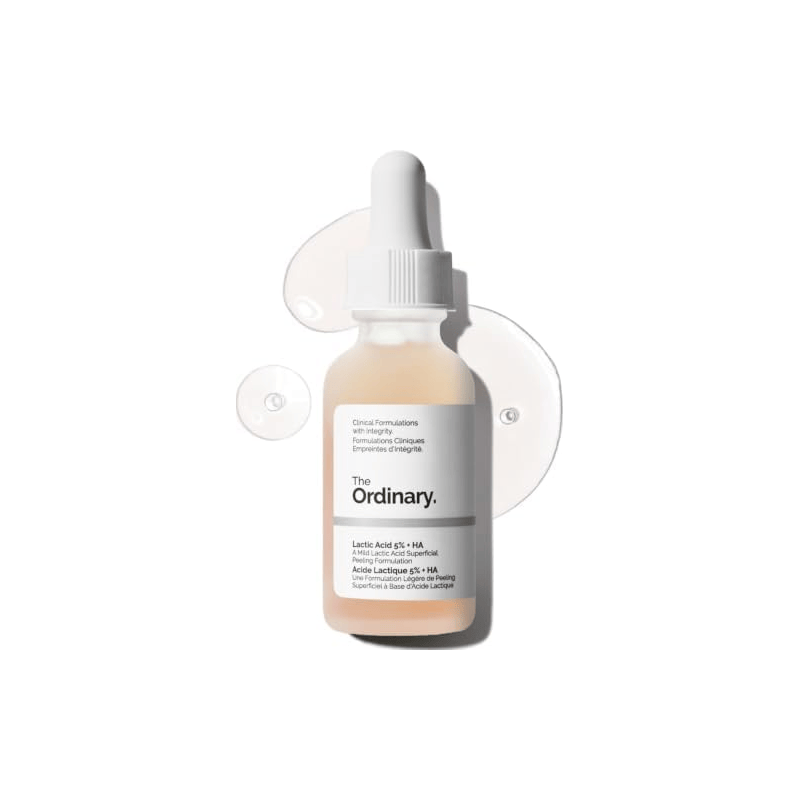
The Ordinary Lactic Acid 5% + HA pairs a low dose of lactic acid with hyaluronic acid, so it smooths and hydrates at once. The texture is thin and watery and sinks in fast. Honestly, this is where we’d tell most friends to start, since it’s gentle, budget-friendly and a low-stakes way to see what lactic acid can do. Use a few drops on clean, dry skin a few nights a week at first. It’s about $8.
A silky 10% step up

Once 5% feels easy, Biossance Squalane + 10% Lactic Acid Resurfacing Night Serum gives you more smoothing without giving up comfort. Squalane, a lightweight oil, keeps skin soft while the acid works, and it feels silky going on. It’s a great match for rough texture and dullness. Smooth a thin layer over clean skin two or three nights a week to start. It’s about $68.
A cult favorite for dull, uneven tone
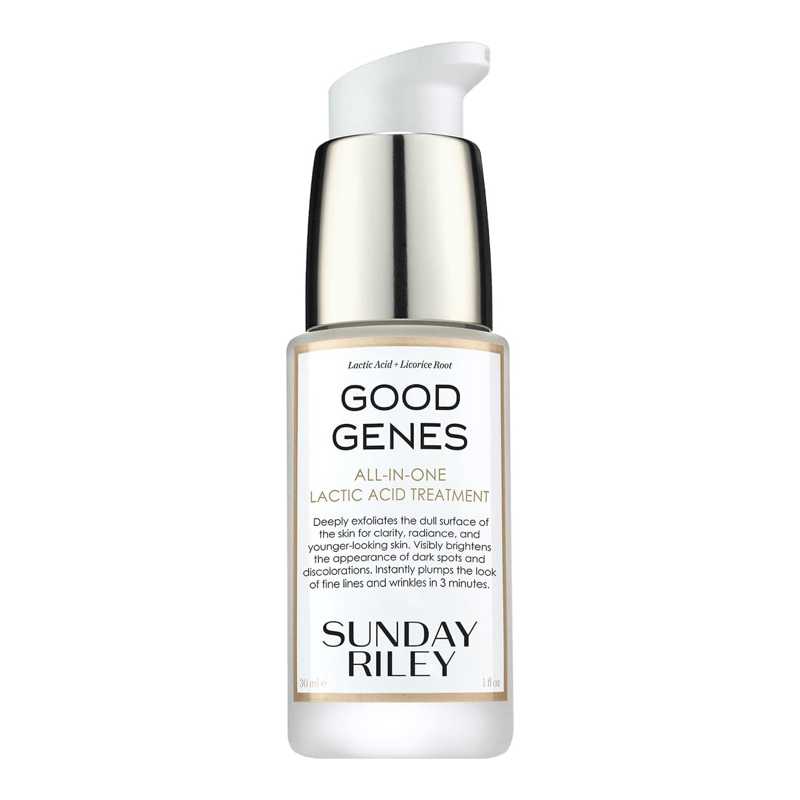
If dullness and uneven tone are your main concerns, Sunday Riley Good Genes All-in-One Lactic Acid Treatment is the splurge that feels a little luxe. It’s built around lactic acid with licorice root to help brighten the look of dark spots, and it has a creamy, lotion-like texture with no fragrance. It’s known for giving skin a quick glow. Apply a thin layer at night and let it sink in before moisturizer. It’s about $85.
Whichever one you pick, follow with moisturizer, and finish with sunscreen every morning, even when it’s cloudy. If your skin stays calm after a few weeks, you can add more nights or move up in strength. Stop there if it starts to feel tight or sore, though, because more isn’t always better.
Pairing it with other actives
Keep other strong actives off the same night, including retinoids, glycolic or salicylic acid, and vitamin C serums. Alternating works well, so you might do lactic acid one night and retinol the next. If you can’t decide which acid fits your skin best, our PHA vs AHA vs BHA breakdown sorts them by skin type.
Smoother arms and legs
The same combo of exfoliating and hydrating is why lactic acid shows up in so many body lotions for keratosis pilaris. Those rough little bumps form when dead skin plugs up hair follicles. Lactic acid helps loosen the buildup while keeping the skin around it moisturized, and it can make the bumps feel much smoother, though they tend to come back if you stop.

AmLactin Daily Nourish Body Lotion, 12% Lactic Acid is a drugstore favorite for exactly this. It’s fragrance-free, with a rich but easy-to-spread texture, and it does a great job on dry legs, elbows and those chicken-skin bumps. Smooth it on after a shower once or twice a day, skipping freshly shaved or nicked skin since it can sting, and use sunscreen on any areas that see the sun. It’s about $12.
If those arm bumps are your main reason for being here, our keratosis pilaris guide has even more ideas.
How long until you see a difference
Give it time. Smoother texture usually shows up within a few weeks, and the glow builds from there as long as you stay consistent. Skin that suddenly gets red, raw or flaky is telling you to back off, so drop to fewer nights or a lower strength. And if you’re still dealing with stubborn roughness or irritation after a couple of months, a dermatologist can help you figure out whether something else is going on.


