
You slept eight hours, drank your water, and the bathroom light still shows a gray little ditch running from the inner corner of each eye down toward your cheek. Concealer helps until about lunchtime. If you’ve started wondering whether filler could take care of it for good, you’re far from alone. Tear trough filler can soften that shadow, sometimes beautifully, but only if the shadow comes from the right cause. Picked well, it’s a quick appointment with a soft result. Picked badly, it can leave you puffier than before.
Below we walk through what the treatment does, who it suits, what the visit and recovery look like, and how to care for the area afterward.
Where the shadow comes from
The tear trough is the curve that runs from the inner corner of your eye down and out toward the cheek. When that area loses some volume, or the lower lid and the cheek stop meeting in a smooth line, the curve turns into a groove. The groove catches a shadow, and the shadow reads as tired even on your most rested day.
Tear trough filler is a hyaluronic acid gel placed into that groove so less shadow forms. It’s a narrow job. It’s great for one kind of under-eye problem and wrong for a few others that look almost the same in a bathroom mirror. Two fillers are FDA-approved for this area, Juvéderm Volbella XC and Restylane Eyelight, both for adults over 21. Other fillers used under the eyes are used off-label, meaning they haven’t been approved for that spot.
A hollow, not a bag
Doctors who study this area say filler works best for carefully chosen patients with a mild hollow, healthy skin, and very little loose lid skin or bulging fat. For moderate to severe cases, surgery tends to give a more predictable and longer-lasting result.
In everyday terms, you’re a good fit if you see a dip or groove rather than a bulge, your under-eye skin isn’t very thin, crepey or loose, and you don’t wake up with puffiness that comes and goes.
Bags are a different story. Under-eye bags are often small fat pads that have pushed forward with time or genes, and filler can’t flatten a bulge. Adding gel next to one can make it look bigger. If you see a pouch with a shadow under it, or your bags get worse in the morning, lower eyelid surgery is usually the better conversation. Our piece on the subtle surgery making people look years younger covers it.
Dark circles that come from pigment or visible veins aren’t hollows either. Filler fills space. It doesn’t change skin color, so ask the doctor what’s causing your darkness before anyone picks up a syringe.
The approved products also aren’t for people with a history of severe allergic reactions, several serious allergies, or allergies to certain bacterial proteins or to lidocaine, a numbing drug. Safety hasn’t been established during pregnancy or breastfeeding, or for people who form keloids or raised scars. Injections should wait if the skin is inflamed or infected.
Inside the appointment
The injector maps the hollow, cleans your skin and places small amounts of gel between the lower lid and the cheekbone, using either a fine needle or a blunt-tipped tube called a cannula. Both approved products have lidocaine mixed in to dull the sting, so it usually feels like pressure and a pinch rather than pain.
Needle or cannula is a fair question with no single right answer. Needles tend to cause a bit more bruising and cannulas a bit more swelling, and overall results look similar. What matters more is that your injector uses the one they know best.
Right after, the area can look slightly overfilled, swollen or red. That settles over the next few days. Many people need one or two sessions to reach their best result, so expect a follow-up visit, and be wary of anyone who fills the area heavily all at once. Under the eyes, less really is more.
How long it lasts and what it costs
Both approved fillers may last up to about 12 months. Gel can stay in the tissue longer than that, though, so a year passing isn’t a reason on its own to top up. Your injector should look at the area first.
The American Society of Plastic Surgeons puts the average fee for this type of filler at about $715. That covers the treatment only, and prices swing a lot by city and by injector. Insurance doesn’t cover it.
Bruising, swelling and other filler risks
Bruising and swelling are the most common, and they usually clear within a few days to a couple of weeks. The ASPS suggests skipping hard exercise for the first 24 to 48 hours to keep both down.
Lumps and unevenness can happen, especially where skin is thin. Early lumps often ease with ice and gentle massage within hours or days, and some need treatment. If the gel sits too close to the surface, it can show through as a bluish tint, which doctors call the Tyndall effect. It can last a long time, and it’s treated with hyaluronidase, an enzyme that dissolves this kind of filler.
Late swelling and lumps can also show up many months after treatment, sometimes more than a year later, and swelling near filler can flare after an illness, a vaccine or dental work. If the area starts to look heavy or blue, don’t top it up. See an experienced injector about dissolving the old filler first. Our piece on signs filler has migrated covers what to watch for.
The rare, serious one is a blocked blood vessel. If filler goes into or presses on a vessel, it can cut off blood flow. The FDA lists tissue death, vision problems including blindness, and stroke among reported results, and near the eyes a blockage can affect your sight. Get help right away for unusual pain, any change in vision, or skin near the injection that turns white, gray or blue. Your injector should have a plan for this and hyaluronidase on hand.
Because this kind of filler can be dissolved, a result you don’t like usually isn’t permanent. That’s a big plus over permanent fillers, which can be hard or impossible to remove.
Caring for the area in the first week
Your injector’s instructions come first, since they know what they placed and where. Our injectable aftercare guide walks through the whole week. In general, keep things cool, gentle and sun-safe, and wait to cover bruises until you get the okay.
Something cold for the first evening
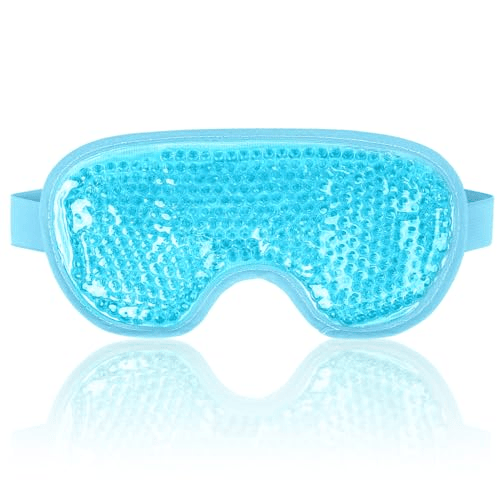
A chilled mask is the comfiest way to calm early swelling. The NEWGO Cooling Eye Mask is a reusable gel mask that lives in the fridge or freezer, and at about $8 it’s an easy thing to have ready before your appointment. Wrap it in a thin cloth instead of putting it right on your skin, and let it rest lightly. Fresh filler shouldn’t be pressed hard, so this is for comfort, not pressure.
A cleanser that skips the scrubbing

For the first few days, wash with your fingertips and a mild cleanser, and skip washcloths, scrubs and rubbing your eyes. Bioderma Sensibio Foaming Gel is unscented, soap-free and made for sensitive skin, and it won’t clog pores. It rinses off cleanly without any rubbing, which is what a tender under-eye wants. About $25.
Sun protection that stays out of your lashes
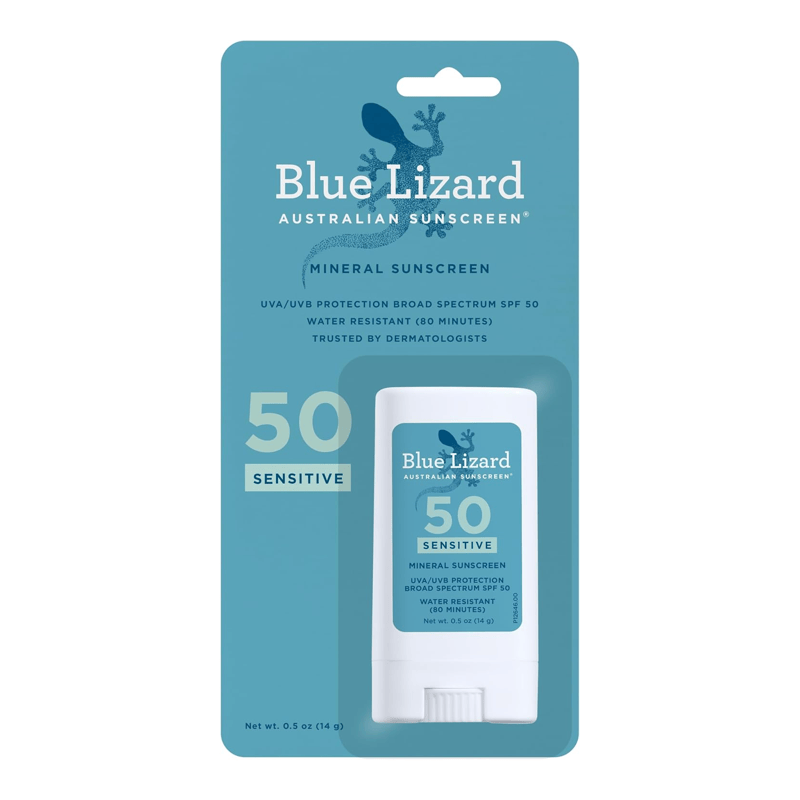
Keep wearing sunscreen and sunglasses like always, since bruised skin can darken in the sun. A stick makes it easy to cover the area under your eye without smearing lotion toward your lashes. Blue Lizard Sensitive Mineral Sunscreen Stick SPF 50+ is 20% zinc oxide, broad spectrum and water resistant for 80 minutes, and it runs about $9. Glide it on gently and keep it out of the eyes themselves.
Covering a bruise once makeup is okay
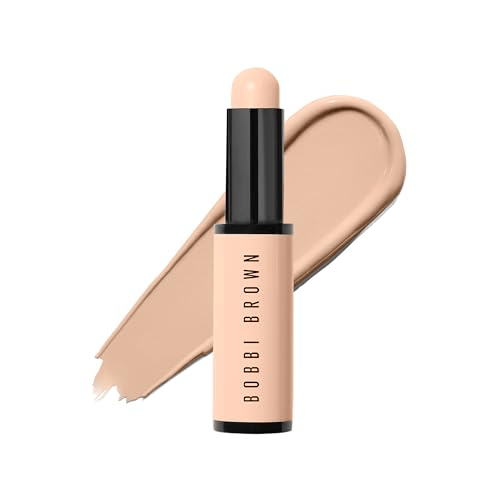
Ask your injector when makeup is fine before you cover anything. After that, a color corrector does more for a bruise than concealer alone. The Bobbi Brown Skin Corrector Stick comes in two shade families. The bisque shades are made for blue and purple tones, and the peach shades for green and brown, and a healing bruise moves through most of those colors. Pat it on with a clean finger over your sunscreen, then add concealer on top if you need it. It’s about $35, and it keeps working for everyday dark circles long after the bruise is gone.
Choosing who does it
Pick the injector before the product. Book a consultation with a board-certified dermatologist or plastic surgeon who treats under-eyes often, and ask which approved product they use, how many sessions they expect, and what they’d do if a vessel were blocked. If an injector is cheap, rushed, or can’t answer that last question, walk away. This isn’t the spot on your face to save money.
Plan the timing too. You can usually go back to normal life right away, minus hard workouts for a day or two, but bruising and swelling can take a week or two to clear. Don’t book it right before a wedding or a big trip.
If you’re still sorting out which injectable does what, our Botox vs filler explainer lays it out. More on skin and treatments is in our skin archive.


