
You turn over a vitamin C serum to read the back and there it is again, right after vitamin E: ferulic acid. It’s on so many labels that it’s easy to assume you need it. You don’t, but it’s a helper worth knowing about, because it makes your vitamin C serum work harder and last longer.
Ferulic acid is a plant antioxidant found in fruits, vegetables and some grains. Despite the name, it doesn’t peel or exfoliate like glycolic or salicylic acid. It almost never comes in a bottle on its own, and its main job in skincare is protecting a more famous, more fragile ingredient.
Why it’s always sitting next to vitamin C
Vitamin C is one of the best-studied antioxidants in skincare. It’s also delicate. Cleveland Clinic dermatologists point out that it breaks down easily once it meets air, light and heat, and ferulic acid helps it last longer on the shelf and work better on your face. Vitamin E is the usual third partner, which is how “C E ferulic” got its name.
Lab research at Duke University found that adding ferulic acid to a serum with 15% vitamin C and 1% vitamin E kept the vitamins more stable and roughly doubled how well the mix protected skin from simulated sunlight. That’s why the trio shows up on so many labels.
Antioxidants help protect skin from free radicals, the unstable molecules made by things like UV light and air pollution. Over time, free radicals add to wrinkles, dark spots and dullness. Serums that pair ferulic acid with other antioxidants may help with redness, sun spots and uneven tone. Ferulic acid seems better at preventing damage than undoing it, so starting early pays off. Our vitamin C vs vitamin E guide explains how the two vitamins split the work.
One thing it isn’t is sunscreen. These antioxidants back up your SPF by mopping up what gets through. They don’t block the sun on their own.
Choosing a strength
Ferulic acid is gentle and usually well tolerated by every skin type. When a C E ferulic serum causes trouble, vitamin C is the more likely cause, because it’s acidic. Dryness, itching or redness can happen, though they’re not common. Anything over 20% vitamin C is more likely to irritate, so sensitive skin should start lower.
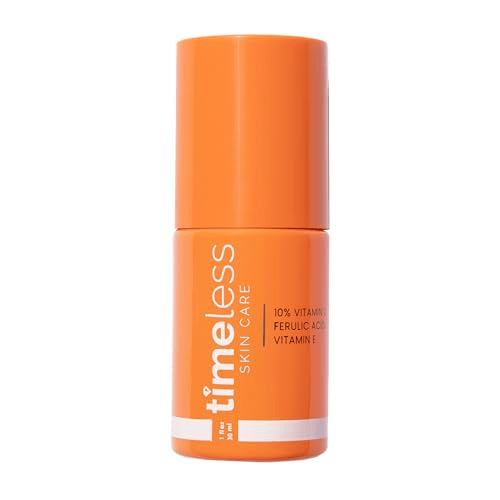
For a first vitamin C serum, Timeless 10% Vitamin C + E Ferulic Acid Serum is the gentle version of the brand’s best seller. It’s made for all skin types, sensitive included, and it’s fragrance-free and dye-free. It’s about $28 for one ounce.
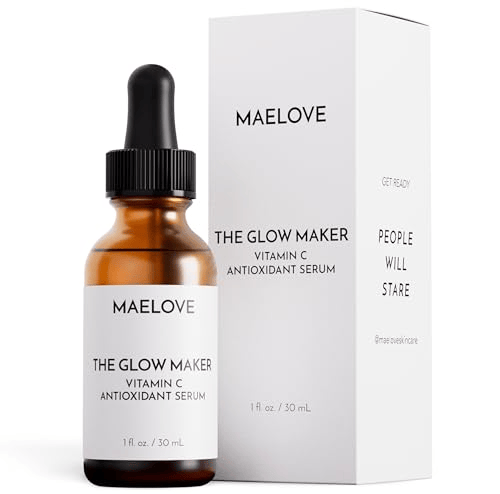
Maelove Glow Maker sits in the middle with 15% vitamin C, the same strength used in the Duke research, plus vitamin E, ferulic acid, aloe and hyaluronic acid. It’s watery, sinks in fast and has no artificial fragrance. These serums are known for a funky smell, and Maelove made this one nearly odorless, with no “hot dog water” scent. Because ferulic acid is a natural ingredient, the color, scent and texture can vary a little from batch to batch. It’s about $40.

Once a lower strength has gone well, step up to Timeless 20% Vitamin C + E Ferulic Acid Serum. It has 20% vitamin C as L-ascorbic acid, plus vitamin E, ferulic acid and hyaluronic acid. It’s fragrance-free and about $28 an ounce.
If vitamin C doesn’t agree with you
Some skin stings no matter how low the vitamin C goes. You can still get ferulic acid on its own, without the acidity.
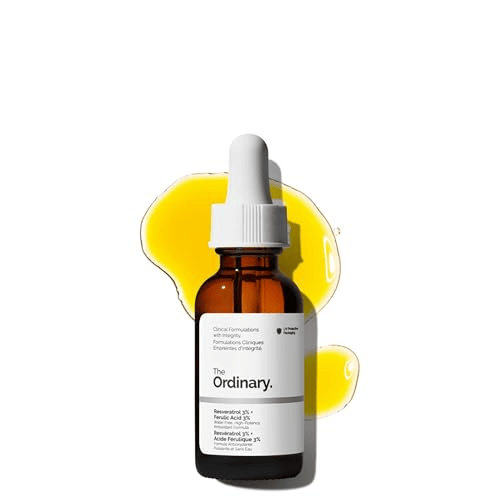
The Ordinary Resveratrol 3% + Ferulic Acid 3% is the cheapest way to get ferulic acid, at about $10. It’s a light, oil-like serum with no water and no alcohol, made from just three ingredients, and there’s no vitamin C in it. Use it morning and evening, and don’t use it with copper peptides.
Whatever you choose, patch test first. Dermatologists suggest putting a quarter-sized amount on the inside of your arm or the bend of your elbow twice a day for seven to 10 days. No redness, itching or swelling means you’re good to go. If a product stings or turns your face red, rinse it off and stop. If you’re pregnant or breastfeeding, check with your doctor before adding new serums.
Putting it into your morning
Ferulic acid doesn’t add a step, since it’s already in your serum. Wash your face, use toner if you like one, and smooth a thin layer of serum over your face and neck. Let it sink in, then add any spot treatment and your moisturizer, and finish with sunscreen every time.
Morning is the best time, because the serum backs up your sunscreen during the day. If mornings are rushed, night is better than skipping it. If you also use a retinoid or a strong acid, put those at night and keep the vitamin C in the morning. Give it about three months before you judge the results. Our list of vitamin C serums for sensitive skin has more gentle options.
Color, smell and storage
A fresh C E ferulic serum is usually clear or pale yellow. As the vitamin C oxidizes, it slowly turns darker yellow, then orange, then brown. A light yellow tint is normal. Dark orange or brown means it has likely oxidized and won’t do much anymore, so replace it. Color is a better test than smell for whether a bottle has turned.
To make a bottle last, buy dark or tinted glass, since vitamin C is sensitive to sun, heat and light. Keep it somewhere cool and dark, or in the fridge, and use it up within three to six months of opening. If yours keeps browning or seems to do nothing, our post on why your vitamin C serum isn’t working walks through the usual causes.


