
It’s late, you’ve washed your face, and your cheeks feel tight in that dry, wintry way even after moisturizer. Somewhere in your feed, someone is calling rosehip oil nature’s retinol and a scar eraser in a bottle. Those labels go too far. Rosehip oil does contain small amounts of vitamin A compounds, and one small study on surgical scars looked hopeful, but that’s a long way from a retinoid or a scar treatment.
What rosehip oil does well is simpler, and still worth having. It’s a light oil that softens dry skin and sinks in fast without feeling greasy. Below you’ll find what’s behind the hype, who should pass, how to use it, and three bottles to try.
Where rosehip oil comes from
Rosehip oil is pressed from the seeds of wild roses, often the dog rose. It’s rich in fatty acids, especially linoleic acid, which help skin hold onto moisture and support the outer barrier that keeps water in and irritants out. It also carries vitamins A, C and E. Cleveland Clinic notes that its vitamin A may help with fine lines and its fatty acids help moisturize.
The vitamin A part is where the hype starts. A review in the NIH’s research library confirms rosehip seed oil contains a natural form of vitamin A. But the amount in a bottle isn’t standardized, and nothing shows it works like the retinoids in a retinol serum or a prescription cream. If you want what a retinoid does, use a retinoid. Rosehip oil is a moisturizer with a nice extra.
Where it shines is the feel. It’s thin and absorbs quickly, which is why it often turns up in lists of the best face oils for dry skin.
Can it help scars and dark marks?
The scar reputation comes mostly from one study. In it, 108 people put rosehip oil on new surgical scars twice a day, and by 12 weeks the scars looked less red and less discolored. That’s encouraging, but it’s one small study, and the same NIH review calls the evidence for rosehip products mixed.
It may help a newer, flat mark fade a bit faster, the way good moisture helps healing skin. It won’t fill in pitted acne scars or flatten raised ones. Those need a dermatologist, and our guide to the types of acne scars explains what treats each kind. Only use it on skin that’s closed and healed, never on an open wound.
Who should pass on it
- Acne-prone skin. Many face oils can clog pores and cause breakouts, according to Cleveland Clinic, and the AAD suggests choosing products labeled non-comedogenic if you break out. If oils have caused trouble before, try a lighter option like squalane oil, or skip face oil altogether.
- Very oily skin. You probably don’t need the extra oil.
- Rosacea or seborrheic dermatitis. Cleveland Clinic advises people with these to avoid face oils.
- Allergies. Any plant oil can cause a reaction, though it’s not common. Itching, redness or a rash means stop.
Patch test before it goes on your face. The AAD’s method is to dab it on a quarter-sized spot, like the inside of your arm, twice a day for seven to 10 days. If it reacts, wash it off and don’t use it again.
Unrefined rosehip oil is also orange and can stain towels, pillowcases and white T-shirts, and it has an earthy smell that comes from its fatty acids, not from going bad.
How to use it
Two or three drops cover your whole face. Warm them between your fingertips and press them in rather than rubbing.
Night is the easy time. Cleanse, apply any serum or treatment, then moisturizer, then the oil last to seal it all in. Some people put the oil before moisturizer instead, and either order works on dry skin. Mornings are fine too if your skin likes it. Use one or two drops, let it sink in, and put sunscreen on top, since the oil doesn’t protect you from the sun.
Start slow, every other night for the first week or two, so you can see how your skin reacts. It plays well with retinol and vitamin C, as long as it goes on after them. On normal skin it can sometimes stand in for moisturizer, but dry skin does better with both, because oil holds water in without adding much on its own. Softer skin can show up within days. Any change in marks is slow and modest, on the order of months.
One mix-up to avoid: rosehip oil isn’t rose oil. Rose oil is a fragrant essential oil from the petals, and it’s a very different product.
Buying and storing it
Look for “cold-pressed” on the label. Cold pressing skips heat, which helps the oil keep more of its nutrients. Pick a dark or amber bottle, since light breaks the oil down. Store it somewhere cool and dark, like a drawer instead of a sunny bathroom shelf, and try to use it within about six months of opening. If the oil starts to smell sharp or different from when you opened it, replace it.
Three bottles to try
An easy first bottle
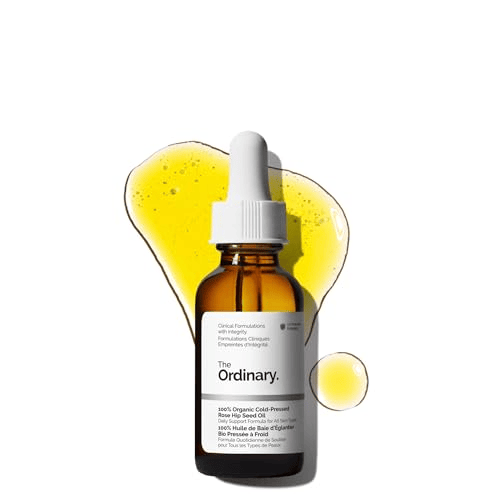
The Ordinary 100% Organic Cold-Pressed Rose Hip Seed Oil is organic, cold-pressed and unrefined, in a small dark bottle with a dropper. Use a few drops once a day, ideally at bedtime. At about $11, it’s a low-risk way to find out whether your skin likes face oil before spending more.
A pure oil for sensitive skin

Trilogy Certified Organic Rosehip Oil is pure cold-pressed rosehip seed oil with nothing added. It’s fragrance-free, tested on sensitive skin and made for both face and body, so it’s nice on dry elbows and cuticles too. Trilogy suggests using it before your moisturizer. It’s about $23 for a small bottle.
A richer splurge for very dry skin
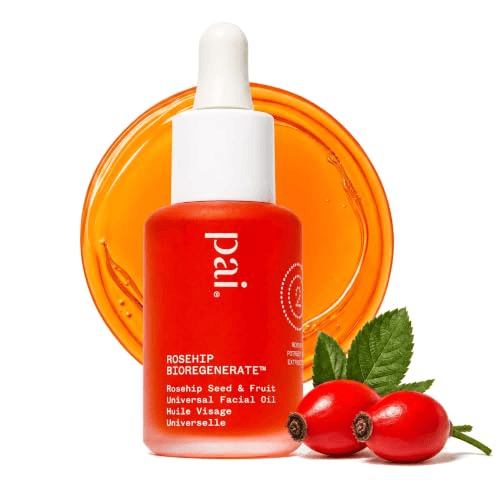
Pai Rosehip BioRegenerate Oil is made a different way. Pai uses CO2 extraction on both the fruit and the seed instead of cold pressing, which gives it a deep orange color and a richer feel. It’s fragrance-free and non-comedogenic, and the best way to start is two or three evenings a week. Keep it out of heat and direct sun. It’s the splurge at about $54.
If you’ve had rashes, persistent redness or breakouts that don’t settle, see a dermatologist before adding oils to your routine. There’s more on ingredients and routines in our skin archive.


